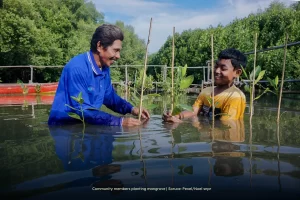
Climate action is often associated with carbon markets, emissions targets, and international agreements. Yet one of the most effective climate solutions begins far from conference rooms along the world’s coastlines. Here, mangrove forests quietly protect communities, store vast amounts of carbon, and restore the health of coastal ecosystems.
As climate change and biodiversity loss accelerate, nature-based solutions are becoming essential. Among them, mangrove restoration stands out as a practical approach that strengthens climate resilience while supporting local livelihoods.
blue carbon: nature’s powerful carbon sink
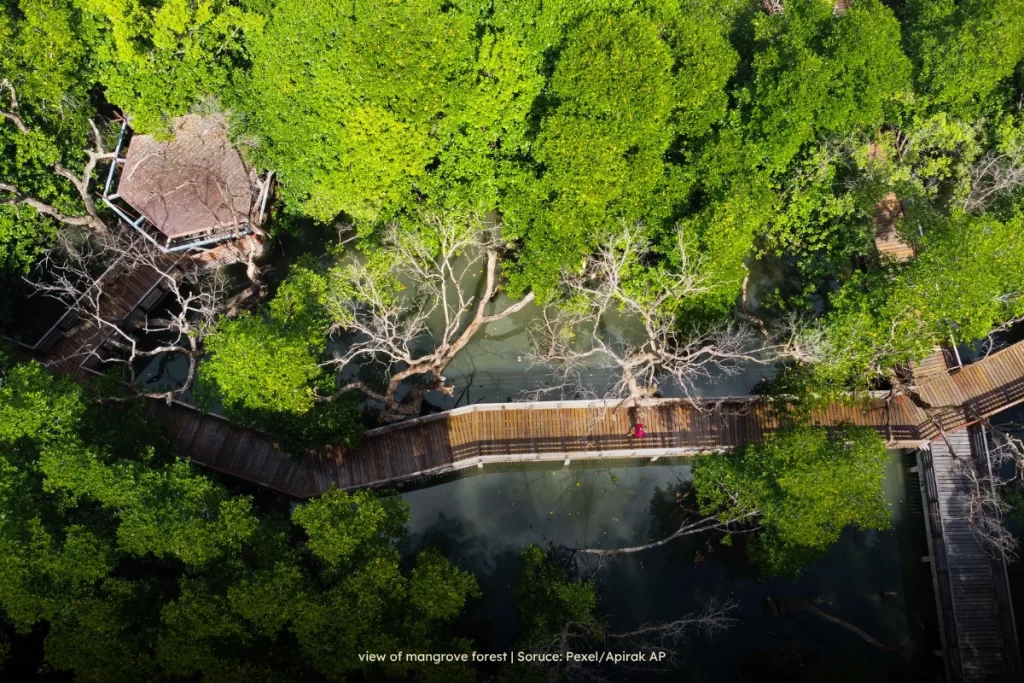
Mangrove forests are among the planet’s most efficient natural carbon sinks. Unlike terrestrial forests, which store much of their carbon in trunks and leaves, mangroves capture and lock carbon deep within waterlogged coastal soils. This process, known as blue carbon, allows carbon to remain stored for centuries because the oxygen-poor sediments significantly slow decomposition.
Their climate benefits are remarkable:
- Mangroves can absorb carbon up to four to five times faster than many terrestrial forests.
- Around 90% of their carbon is stored below ground in the soil.
- Waterlogged sediments protect stored carbon from fires and other disturbances, making mangroves one of the most stable long-term carbon reservoirs.
When mangroves are cleared for aquaculture, infrastructure, or coastal development, these sediments are exposed to oxygen, releasing decades of stored greenhouse gases back into the atmosphere. Protecting existing mangrove ecosystems is therefore one of the most effective climate actions available.
restoring entire ecosystems
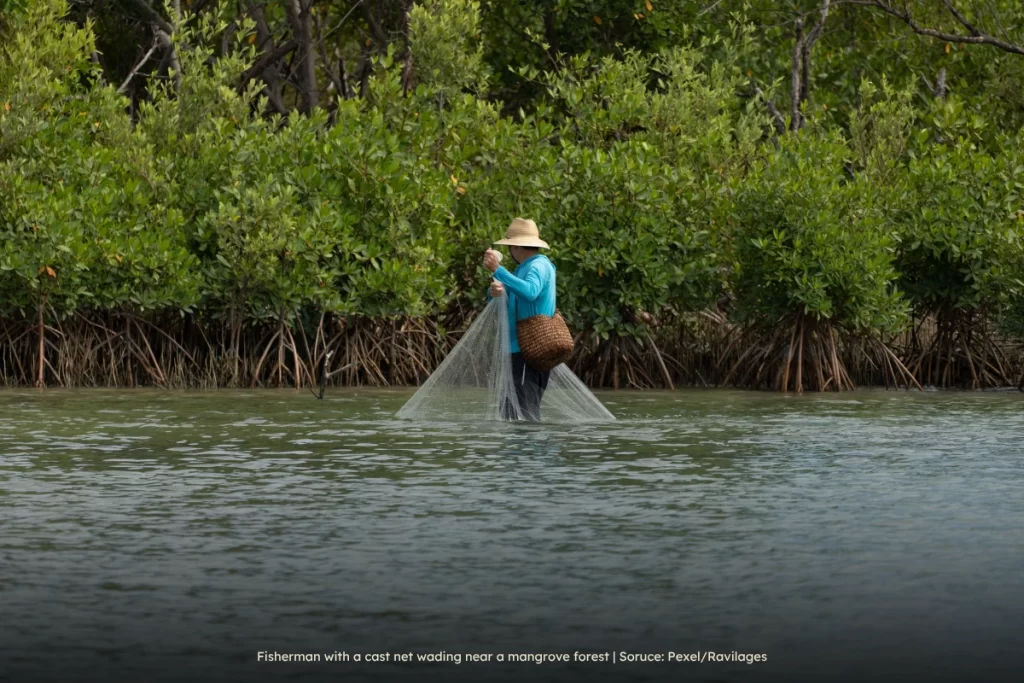
Successful mangrove restoration is about far more than planting seedlings. Traditional tree-planting campaigns often overlook local environmental conditions, leading to poor survival rates and limited ecological impact.
Today, restoration increasingly follows the principles of Ecological Mangrove Rehabilitation (EMR), which focuses on restoring natural coastal processes before planting takes place.
This approach typically includes:
- Assessing tidal flows and site hydrology.
- Removing barriers such as abandoned aquaculture ponds or damaged embankments.
- Restoring natural water circulation.
- Allowing native mangrove seedlings to regenerate naturally.
By rebuilding the ecosystem rather than simply planting trees, EMR creates healthier, more diverse forests that are better equipped to withstand storms, disease, and changing climate conditions.
community-led restoration through the penta-helix model
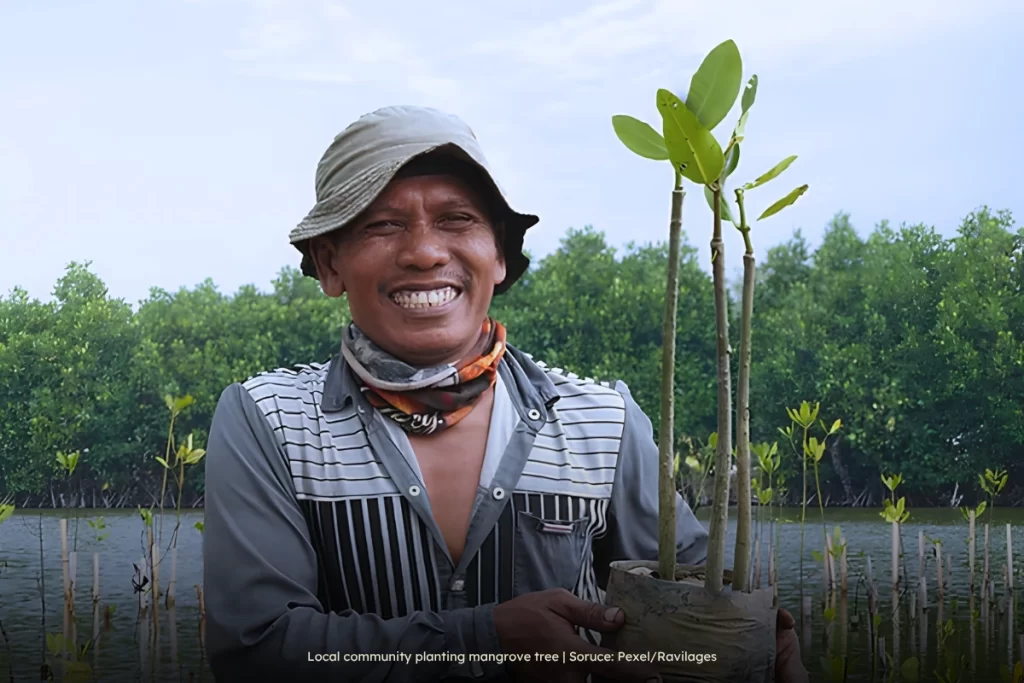
Long-term restoration depends on collaboration. Successful mangrove conservation combines the expertise and commitment of governments, businesses, researchers, NGOs, and local communities through a Penta-Helix approach.
Each stakeholder plays a distinct role:
- Communities manage and protect restored ecosystems.
- The government provides policies, land rights, and environmental regulation.
- The private sector invests in sustainable value chains and restoration projects.
- Academia monitors ecosystem recovery using scientific methods and data.
- NGOs provide technical support, capacity building, and access to climate finance.
When local communities share both responsibility and economic benefits, conservation becomes a long-term investment in livelihoods rather than a short-term environmental project.
Also read: Community Action in Pramuka Island
world mangrove day: turning awareness into action
The International Day for the Conservation of the Mangrove Ecosystem, celebrated each year on 26 July, highlights the importance of coordinated action to protect and restore coastal ecosystems.
As the country with the world’s largest mangrove area, Indonesia continues to demonstrate global leadership in mangrove rehabilitation. National initiatives bring together government agencies, researchers, businesses, NGOs, and local communities to restore degraded coastlines through coordinated action.
Private sector participation is also expanding. Large-scale restoration commitments from companies such as Freeport Indonesia demonstrate how blue carbon is becoming an increasingly important component of corporate climate strategies and long-term sustainability investments.