Modern executives operate in an environment saturated with digital information. Research from San Diego State University indicates that senior leaders process more than 100,000 digital words each day. Emails, dashboards, notifications, and market reports continuously compete for their attention, placing significant demands on the brain’s prefrontal cortex, the region responsible for strategic thinking, planning, and decision-making.
This constant exposure creates cognitive fatigue. As mental resources decline, leaders become more reactive and less capable of long-term strategic evaluation. Instead of making thoughtful decisions, executives often shift into defensive management patterns focused on immediate threats rather than sustainable growth. Over time, this pressure contributes to executive burnout, reduced forecasting accuracy, and weakened organizational resilience.
The human brain was not designed to sustain uninterrupted streams of information. Without periods of recovery, working memory becomes overloaded, emotional regulation declines, and innovation suffers. In many corporations, the result is a leadership culture trapped in cycles of urgency rather than clarity.
nature as a cognitive recovery system
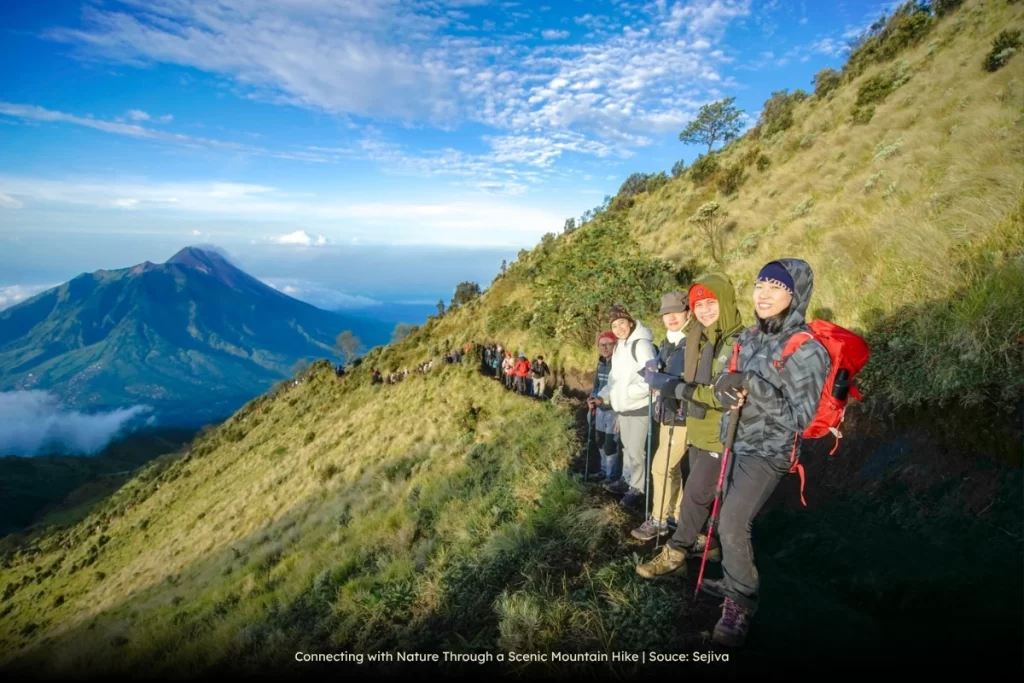
Natural environments offer a powerful counterbalance to digital overload. Psychologists describe this restorative effect as soft fascination, a form of attention that gently engages the mind without exhausting it. Unlike urban environments filled with alerts and interruptions, forests, rivers, and mountains provide calm sensory input that allows the brain to recover.
Studies from the University of Utah found that individuals who spent four days disconnected from communication networks improved their creative problem-solving performance by up to 50 percent. Exposure to natural landscapes reduces mental fatigue while restoring focus, emotional stability, and strategic thinking capacity.
Simple environmental elements such as trees, flowing water, and open horizons help calm internal mental noise. Silence in wilderness settings interrupts the constant internal dialogue that many executives experience during periods of market uncertainty. As stress decreases, leaders regain the ability to evaluate challenges objectively and allocate resources more effectively.
Field studies in natural environments have also demonstrated measurable physiological benefits. Blood pressure decreases, heart rates stabilize, and stress hormone levels decline within relatively short periods of time. These biological responses create the mental conditions necessary for sustained leadership performance.
hormonal stability and leadership resilience

Corporate leadership is often associated with chronic stress. Executives working in high-pressure urban environments frequently maintain elevated cortisol and adrenaline levels, which can distort emotional judgment and encourage short-term decision-making.
Time spent in natural ecosystems helps regulate these stress responses. Research involving outdoor leadership exercises has shown that exposure to wilderness environments lowers cortisol production and reduces inflammation linked to long-term cardiovascular risk. Nature acts as a stabilizing force for the nervous system, helping leaders regain emotional balance during periods of uncertainty.
The visual complexity of forests and natural landscapes also plays an important role. Organic fractal patterns found in tree canopies and natural terrain appear to support neurological recovery and improve psychological resilience. Leaders who regularly spend time in wilderness settings often report better sleep quality, improved emotional regulation, and stronger focus during high-stakes negotiations.
For organizations, these benefits extend beyond individual wellbeing. Companies that integrate outdoor recovery programs into executive development strategies often experience lower medical leave rates and stronger leadership retention. In this context, nature is no longer viewed as a luxury; it becomes an operational investment in long-term organizational performance.
Also read: outdoor team building activities: meaningful ways to strengthen workplace bonds
the future of executive performance
Forward-looking companies are beginning to recognize cognitive energy as a finite resource that requires deliberate maintenance. In the coming years, structured exposure to natural environments may become a standard component of executive development and corporate governance.
Long-term organizational success depends not only on technology and financial capital, but also on the mental resilience of leadership teams. Data from corporate wellness programs already suggests that organizations incorporating nature-based recovery strategies retain senior talent longer and reduce burnout-related costs.
As global markets become increasingly volatile, leaders will require stronger emotional regulation, clearer thinking, and greater adaptability. Wilderness immersion offers a practical method for restoring these capabilities.
The future of leadership may therefore depend not on greater connectivity, but on strategic disconnection creating space for the mind to recover, reflect, and think beyond the noise of continuous digital demand.
Reference
Atchley, R. A., Strayer, D. L., & Atchley, P. (2012). Creativity in the wild: Improving creative reasoning through immersion in natural settings. PLOS ONE, 7(12), Article e51474. https://doi.org/10.1371/journal.pone.0051474
Bohn, R. E., & Short, J. E. (2009). How much information? 2009 report on American consumers. Global Information Industry Center, University of California, San Diego.
Kaplan, S. (1995). The restorative benefits of nature: Toward an integrative framework. Journal of Environmental Psychology, 15(3), 169–182. https://doi.org/10.1016/0272-4944(95)90001-2