A cold wind sweeps across the volcanic craters of Mount Kelimutu, rising 1,639 meters above sea level. Here lie the iconic three-colored crater lakes, one of Flores’ most extraordinary natural landmarks. For the Indigenous Ende Lio people, these lakes are more than a geological wonder, they are a sacred meeting point between the human world and the realm of the ancestors.
In the mountainous region of Ende Regency, East Nusa Tenggara, the Ende Lio people place offerings upon ancient stone altars. Through a ritual known as Pati Ka Du’a Bapu Ata Mata, they call upon the spirits of their ancestors. Literally translated as “feeding the ancestors who have passed away,” the ceremony reflects a belief that death is not an end, but a transition. The spirits of their forebears are believed to remain present, watching over their descendants and dwelling within the sacred landscape of Kelimutu, which has served as a spiritual center for the Ende Lio people for centuries.
a sacred bond between the living and the ancestors
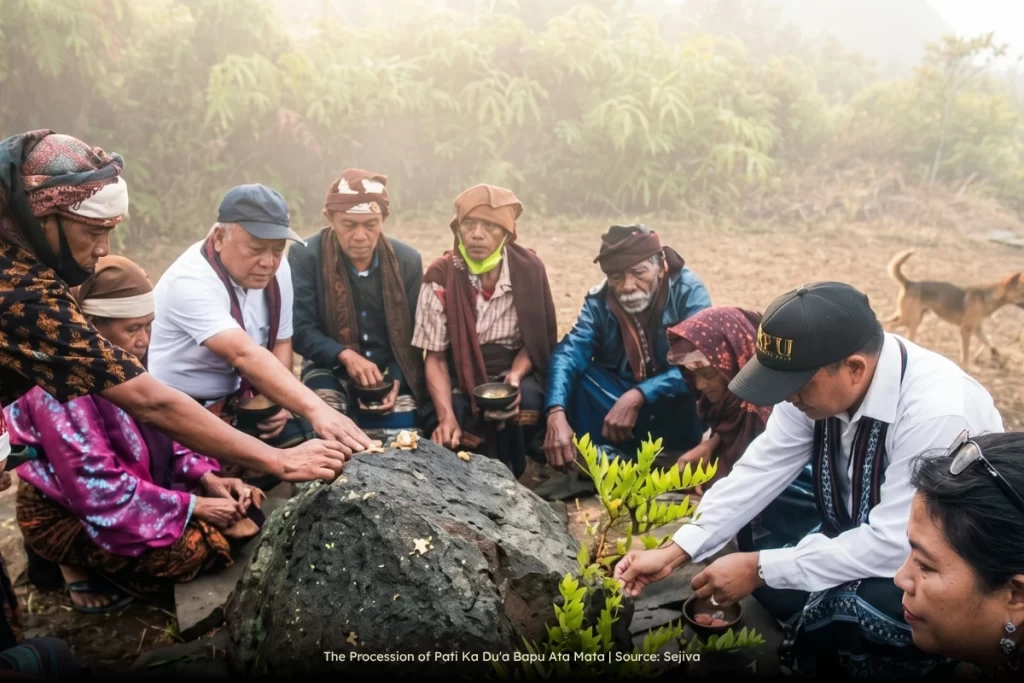
Pati Ka Du’a Bapu Ata Mata is rooted in the Ende Lio worldview, which emphasizes the interconnected relationship between humans, ancestors, nature, and God. Within this belief system, life does not end with death. Instead, the spirits of ancestors are believed to remain present, continuing to guide and protect their descendants while helping to maintain harmony within the community.
The community also believes that nature possesses a sacred power that must be respected and protected. When the relationship between humans, nature, and the ancestral realm is kept in harmony, life flourishes. Conversely, environmental degradation or the erosion of ancestral values is believed to disrupt this balance, bringing disharmony to both the community and the natural world.
a closer look at the ceremony
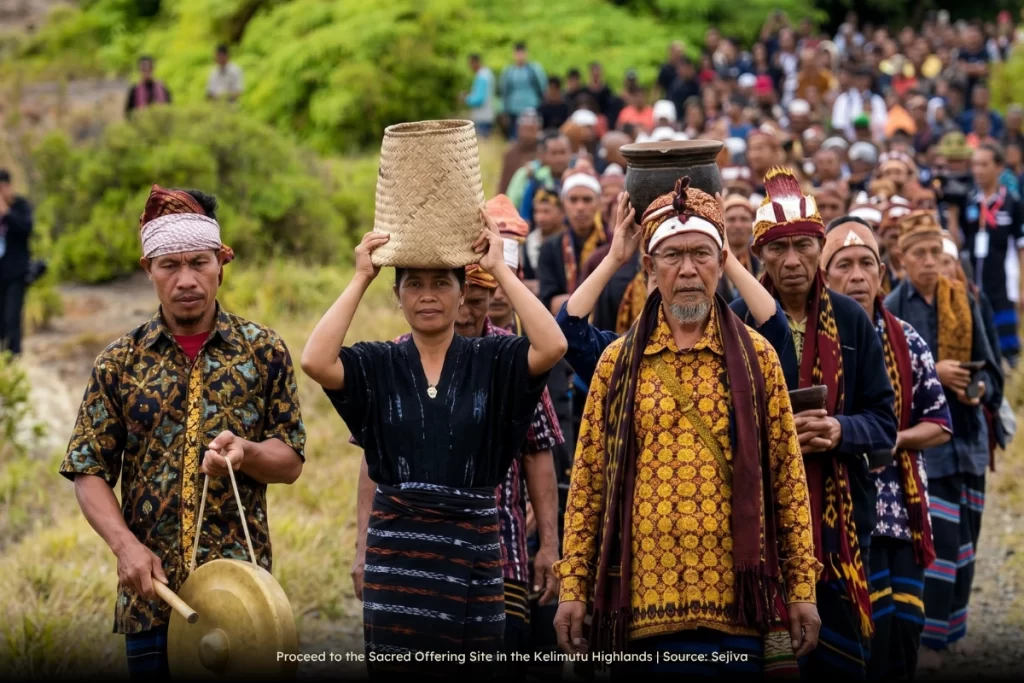
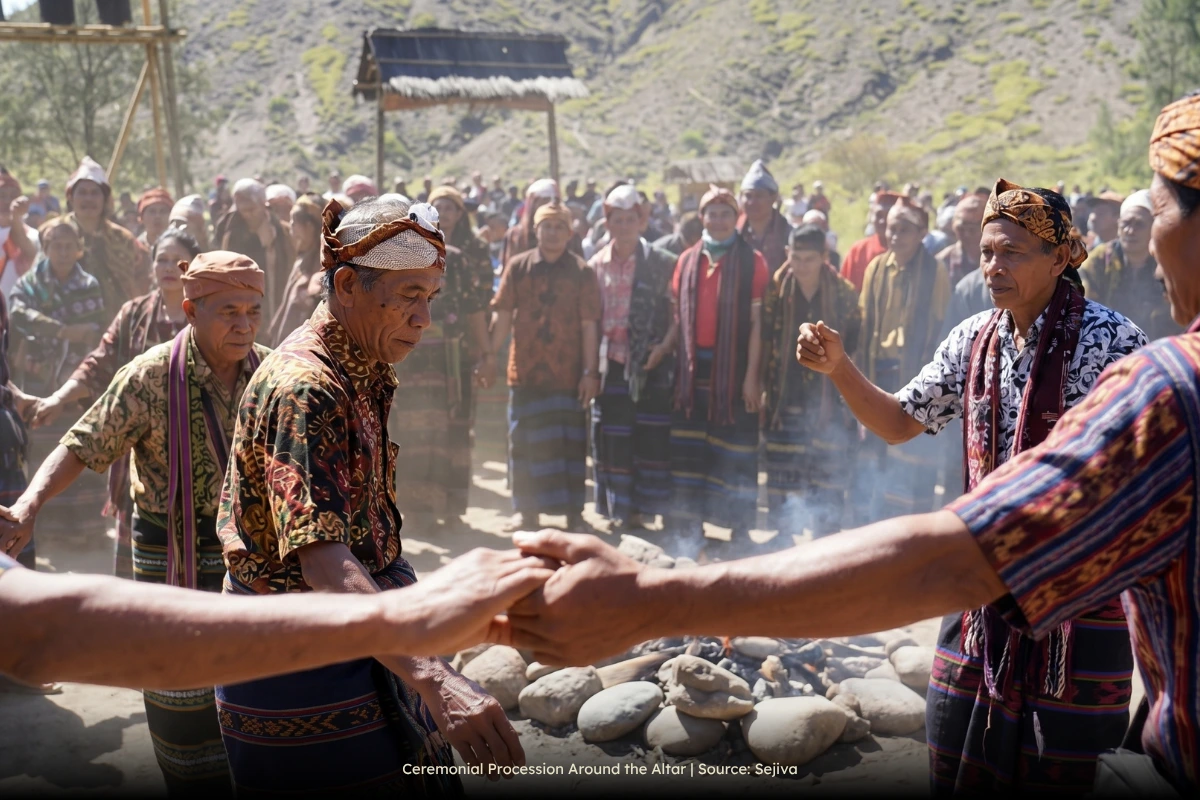
Pati Ka Du’a Bapu Ata Mata is typically carried out by the Ende Lio Indigenous community living around the Kelimutu area, particularly in Woloara Village and Mani Village, on August 14th each year. The ritual is led by the Mosalaki, traditional leaders who play a vital role in preserving and passing down ancestral customs.
The ceremony usually begins with a customary gathering involving the Mosalaki and members of the community. Following the gathering, participants proceed to the sacred offering site in the Kelimutu highlands. At this revered location stands an ancient stone altar where offerings are placed.
During the ritual, community members bring agricultural produce and traditional foods as expressions of gratitude for the blessings and sustenance they have received. The Mosalaki then lead traditional prayers that honor the ancestors while seeking protection, good health, abundant harvests, and prosperity for the community.
a living legacy of the ende lio people
Pati Ka Du’a Bapu Ata Mata tradition demonstrates how a community sustains its connection with its ancestors, honors the natural world, and preserves the delicate relationship between humanity, nature, and the spiritual realm.
If you are interested in witnessing these living traditions, Sejiva’s Sacred Weaving of Flores Island offers an opportunity to experience the cultural and natural richness of Flores in a deeper and more meaningful way. This five-day journey takes travelers from the sacred lakes of Kelimutu to traditional weaving villages, waterfalls, and coastal communities, creating space for authentic encounters with local people who continue to preserve their ancestral heritage. More than a sightseeing trip, it is an invitation to slow down, connect with local culture, and gain a deeper appreciation for the stories, traditions, and wisdom that shape Flores today.