What comes to mind when you hear the word “graveyard”? For many people, it’s a quiet place associated with loss and mourning. But in Tana Toraja, South Sulawesi, a centuries-old tradition offers a completely different perspective.
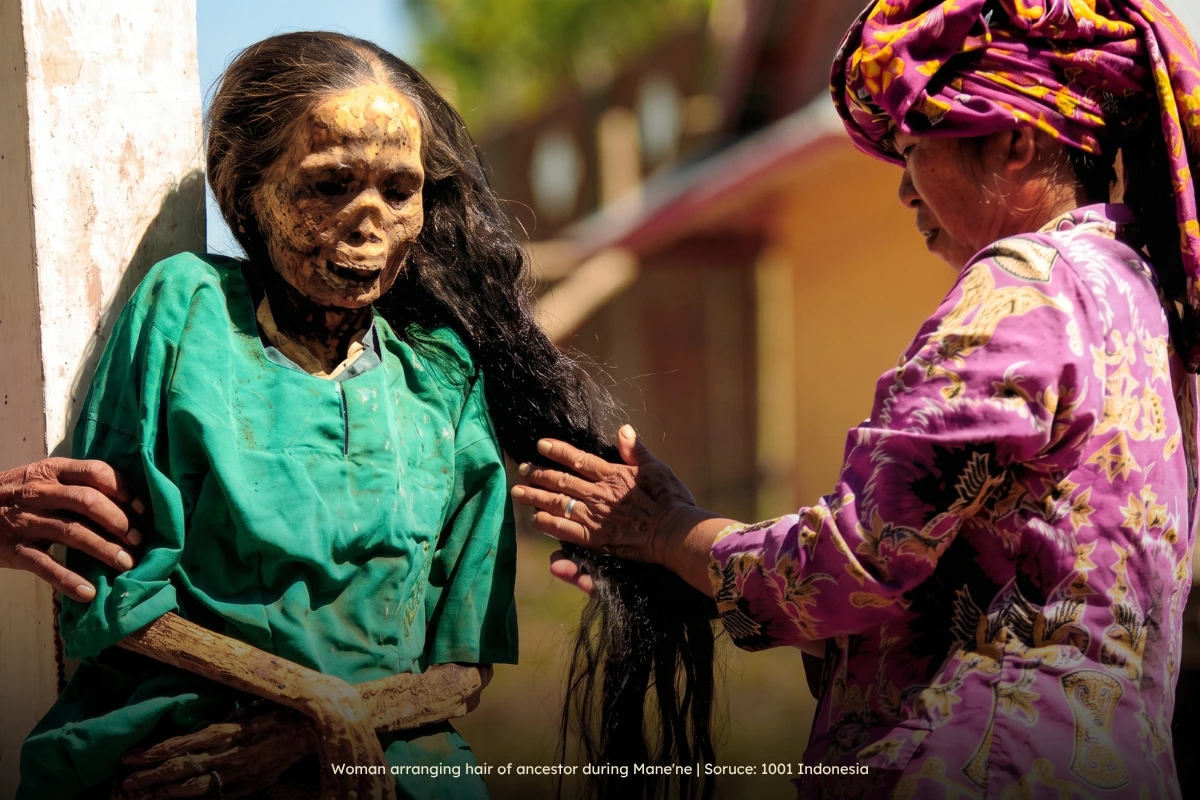
Known as Ma’nene’, this sacred ritual is a time when families reunite with their ancestors. The preserved bodies of loved ones are carefully cleaned, dressed in fresh clothing, and respectfully returned to their resting places. While the ceremony may seem unusual to outsiders, for the Toraja people it is a profound expression of love, gratitude, and remembrance.
gathering with ancestors
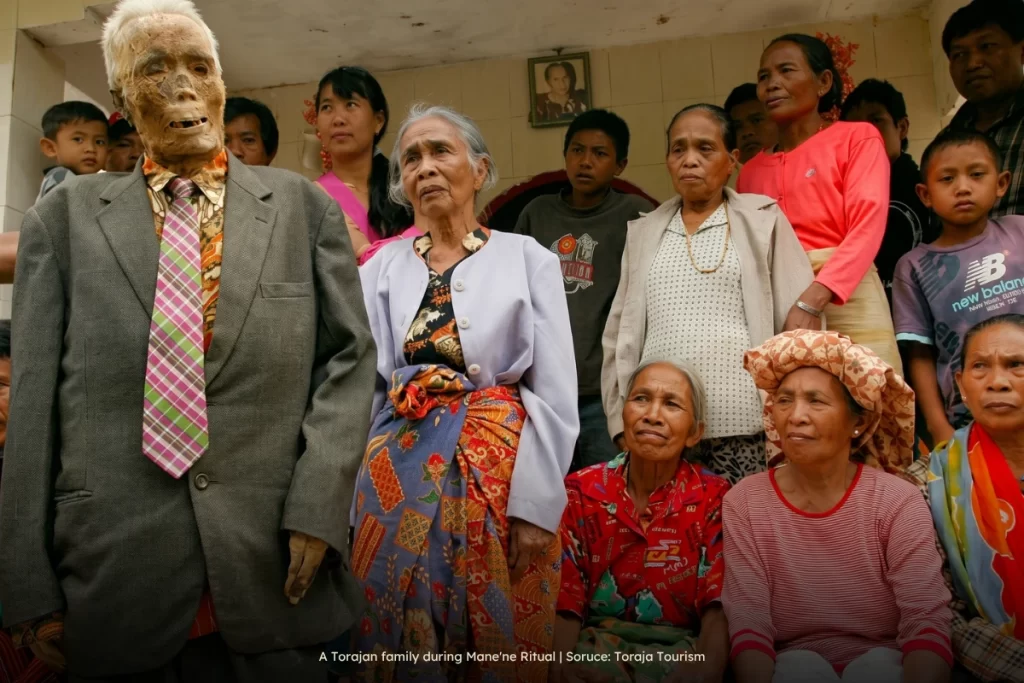
Passed down through generations, Ma’nene’ remains one of the most treasured traditions in Torajan culture. After the harvest season, families travel back to their ancestral villages to reunite with relatives. They gather at family burial sites, share stories, and pay tribute to those who came before them. Rather than mourning, the atmosphere is filled with warmth, togetherness, and respect. Children, parents, and grandparents all take part, reinforcing the belief that family bonds continue long after death.
the ma’nene’ ritual, step by step
Although each village may follow slightly different customs, the ritual generally unfolds through the following stages:
- Ma’bungka Ba’ba Kaburu’ – The ancestral tomb is ceremonially opened to begin the sacred ritual.
- Masseroi Kaburu’ – Family members clean and prepare the burial site with great care.
- Ma’papangngan – Relatives visit the graves, bringing symbolic offerings and prayers for their ancestors.
- Ma’angka Nene’ na Manggalloi Nene’ – The ancestors are respectfully lifted from the tomb and laid out to dry.
- Ma’kassa’i – The bodies are carefully cleaned, rewrapped, and dressed in fresh clothing.
- Ma’ Palengka Nene’ – Some ancestors are relocated to reunite generations within a shared family tomb.
- Ma’nanna – The ancestors are gently returned to their resting place after the ceremony.
- Mepare Lapu – Families and the wider community gather for a thanksgiving celebration.
- Ma’ Ika’ Tedong na Ma’ Ika’ Bai – Buffaloes and pigs are traditionally sacrificed to honor the ancestors.
- Ma’tutu’ Ba’ba Kaburu’ – The tomb is ceremonially sealed, marking the conclusion of Ma’nene’.
when is the best time to visit?
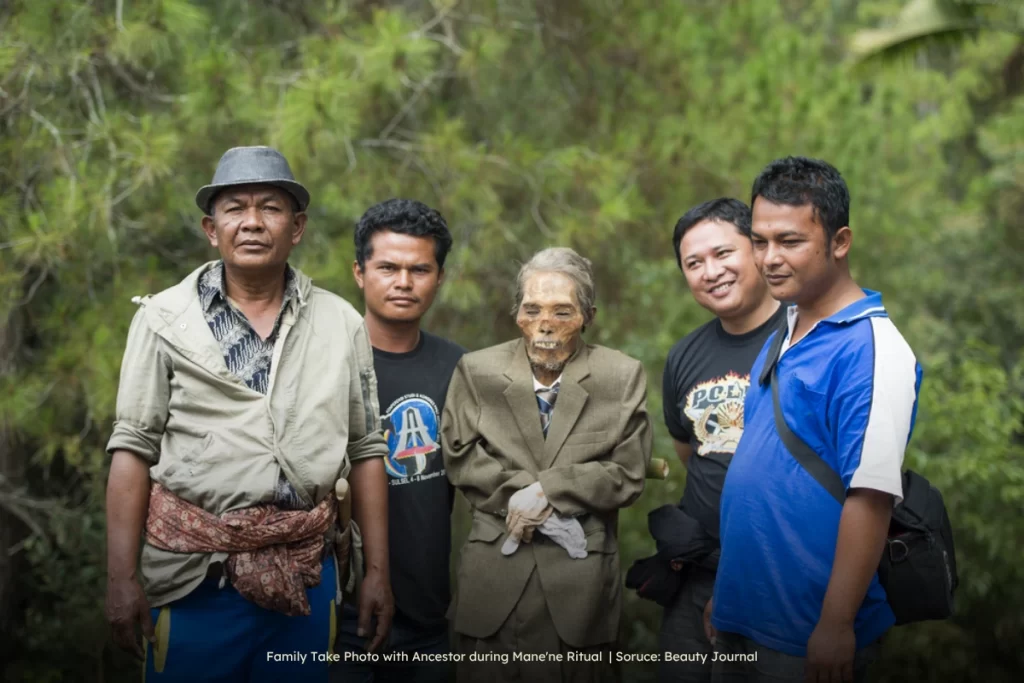
Ma’nene’ is typically held after the harvest season, between August and September, although the exact dates vary from village to village according to local customs.
For travelers, witnessing Ma’nene’ offers far more than a cultural spectacle. It is a rare opportunity to experience a living tradition that has been preserved for centuries. Every stage of the ceremony reflects the Toraja people’s deep respect for family, ancestry, and cultural heritage.
If you plan to attend, remember that you are a guest at a sacred family ceremony. Dress modestly, ask for permission before taking photographs, and always follow the guidance of the local community. Showing respect is the best way to appreciate the significance of this remarkable tradition.
experience toraja’s living culture
Inspired to witness the Ma’nene’ ritual for yourself? With Sejiva, you can experience Toraja through thoughtfully curated Impact Trips that connect travelers with local communities while supporting the preservation of cultural heritage. If Ma’nene’ has sparked your curiosity, discover Tana Toraja Weaving Traditions and explore how meaningful travel can bring you closer to Toaraja’s living traditions, timeless stories, and the people who keep them alive.