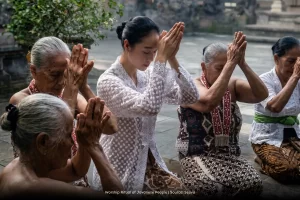
In the Javanese spiritual tradition, wening rasa, a state of clarity, purity, and inner stillness of feeling, lies at the heart of meditative practice and spiritual awakening. Unlike Western perspectives that emphasize logic and rational observation, Javanese tradition is deeply heart-centered, placing the ati (heart) and the faculty of profound intuitive feeling (Rasa) at the core of spiritual perception. Through this cultivated awareness, one is able to experience the Divine free from the distortions of the ego.
the three stages of wening rasa: heneng, hening, and eling
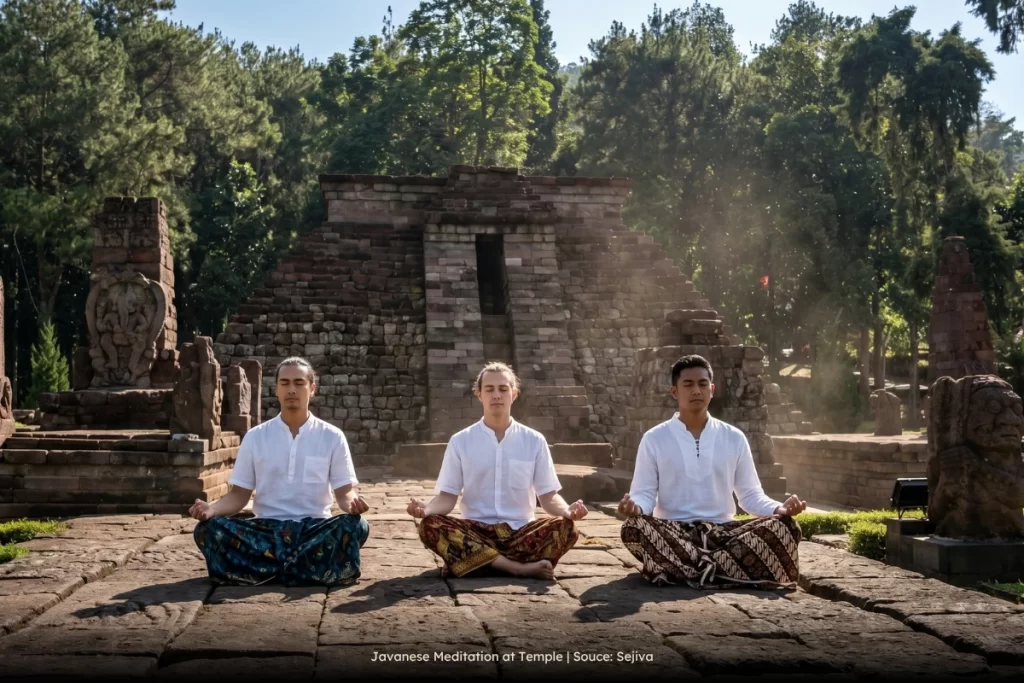
Javanese meditation focuses on internal emotional and mental mastery through three sequential states:
- Heneng (Stillness): Derived from meneng (to be quiet), it is the deliberate cultivation of inner stillness that calms the emotional realm (rasa dalam). In the Serat Madurasa, this state is likened to a turbulent, murky ocean stirred by worldly desires. Through stillness, the waters of the heart become calm, allowing deeper intuitive awareness to emerge.
- Hening/Wening (Clarity): As stillness deepens, worldly impurities naturally settle (meneb). The soul becomes crystal clear, allowing the practitioner to perceive spiritual realities with absolute clarity.
- Eling (Awareness): To prevent the profound tranquility of stillness from slipping into a trance-like state or sleep, the practitioner must maintain conscious awareness and remembrance of the Divine.
When all three states are sustained simultaneously, one attains a condition known as mati sajroning urip (“death within life”), in which the ego is transcended and direct communion with the Creator becomes possible.
Also read: Javanese Philosophy (Wiraga, Wirasa, Wirama)
sembah rasa: the pinnacle of worship
Detailed in the classical text Serat Wedhatama outlines four ascending stages of spiritual practice:
- Sembah Raga: Physical rituals and bodily worship.
- Sembah Cipta/Kalbu: Mental control and subduing passions.
- Sembah Jiwa: Inner purification of the soul.
- Sembah Rasa: The highest mystical tier (makrifat) utilizing the deepest core of the soul (telenging kalbu). The boundary between the practitioner and the Creator dissolves, achieving Manunggaling Kawula Gusti (The Union of Servant and Lord).
how is it different from hindu-buddhist meditation?
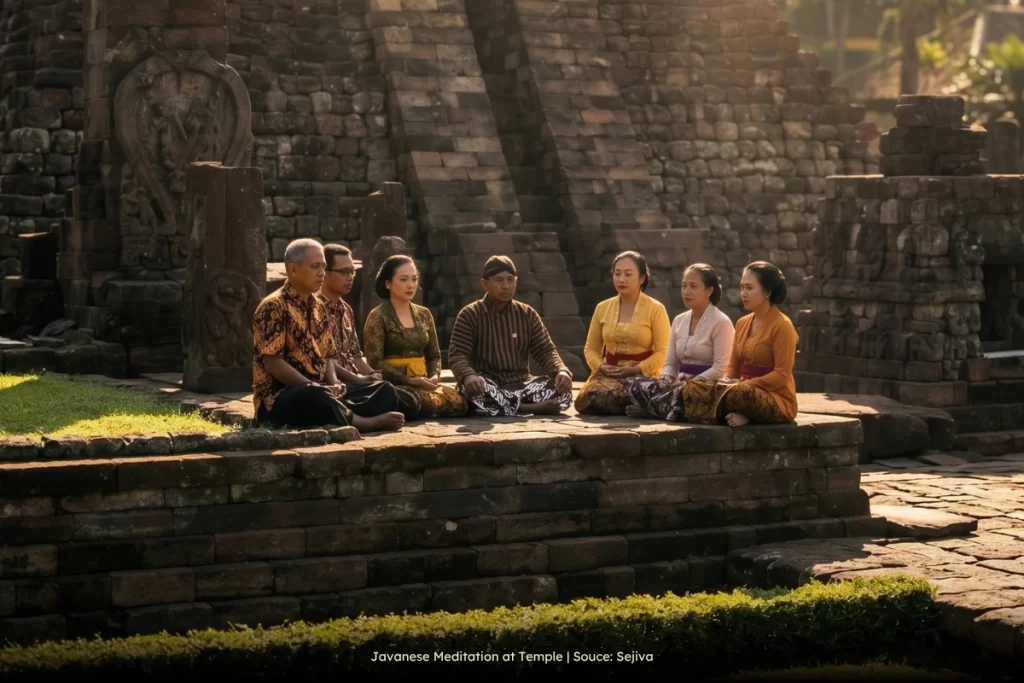
Although Wening Rasa was historically influenced by Hindu and Buddhist traditions, there are several key differences.
Hindu-Buddhist meditation often emphasizes mastery of the mind, concentration, and detachment from worldly attachment. In contrast, Wening Rasa focuses more on the refinement of feeling (rasa) and maintaining a devotional connection with the Divine.
Another important distinction is its practical orientation. Rather than withdrawing from society, Javanese meditation encourages people to remain spiritually centered while actively participating in everyday life.
a timeless wisdom
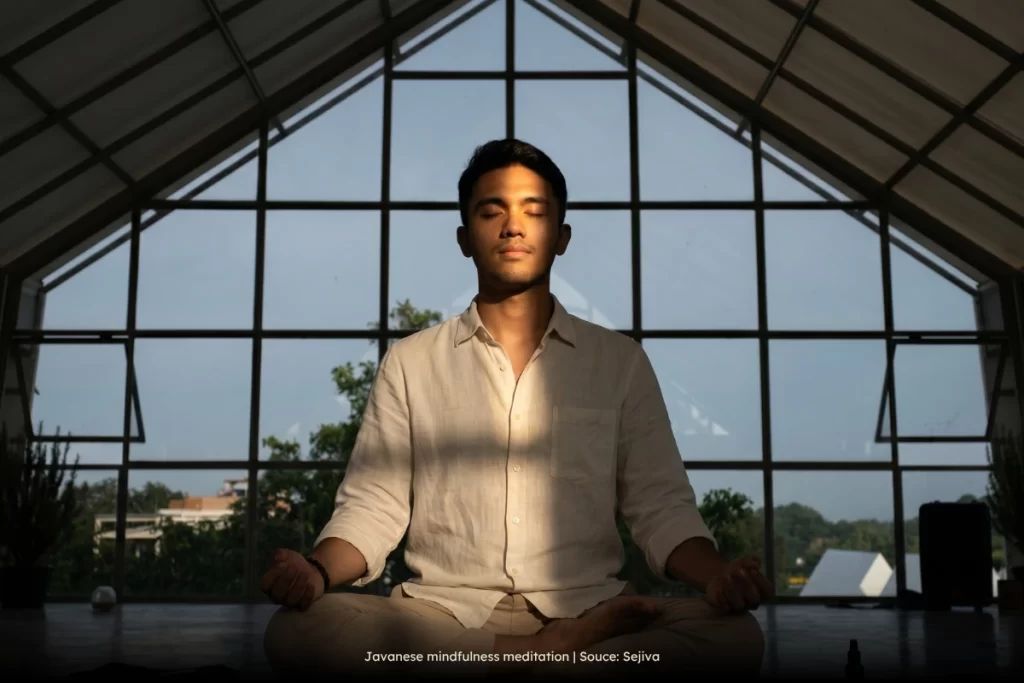
In an age filled with noise and distraction, the philosophy of Wening Rasa offers a timeless reminder: clarity comes through stillness. By learning to quiet the mind and listen to the heart, we may discover a deeper sense of peace, awareness, and harmony not only within ourselves, but also in the world around us.
This wisdom is also reflected in the experience of Trip Among Rasa Yogyakarta. A cultural and spiritual journey designed to slow down, reflect, and reconnect with the essence of Javanese life. Throughout the journey, you will explore practices rooted in rasa, including meditation, philosophy, and meaningful encounters with cultural guardians. One of these experiences introduces the practice of Wening Meditation with Gamelan instruments. This gives you the opportunity to learn how inner silence, awareness, and feeling are cultivated within the Javanese spiritual tradition.