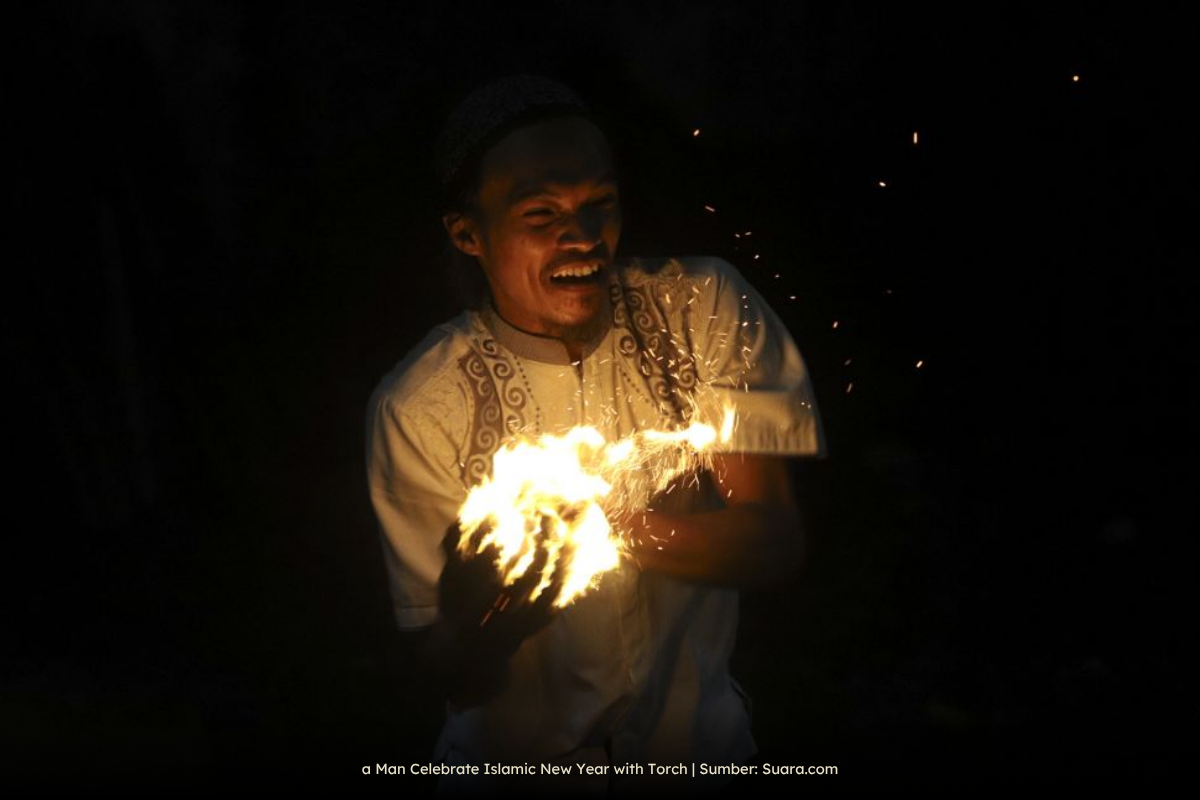
According to data released by the Ministry of Religious Affairs in 2022, Indonesia is home to approximately 242 million Muslims, representing around 87% of its population. This vibrant community maintains a rich variety of traditions to welcome the Islamic New Year. While torch parades, religious gatherings, and communal meals at mosques are common across the country, several regions celebrate Muharram through distinctive cultural traditions that offer unique experiences for visitors.
tapa bisu, yogyakarta: welcoming the new year in silence
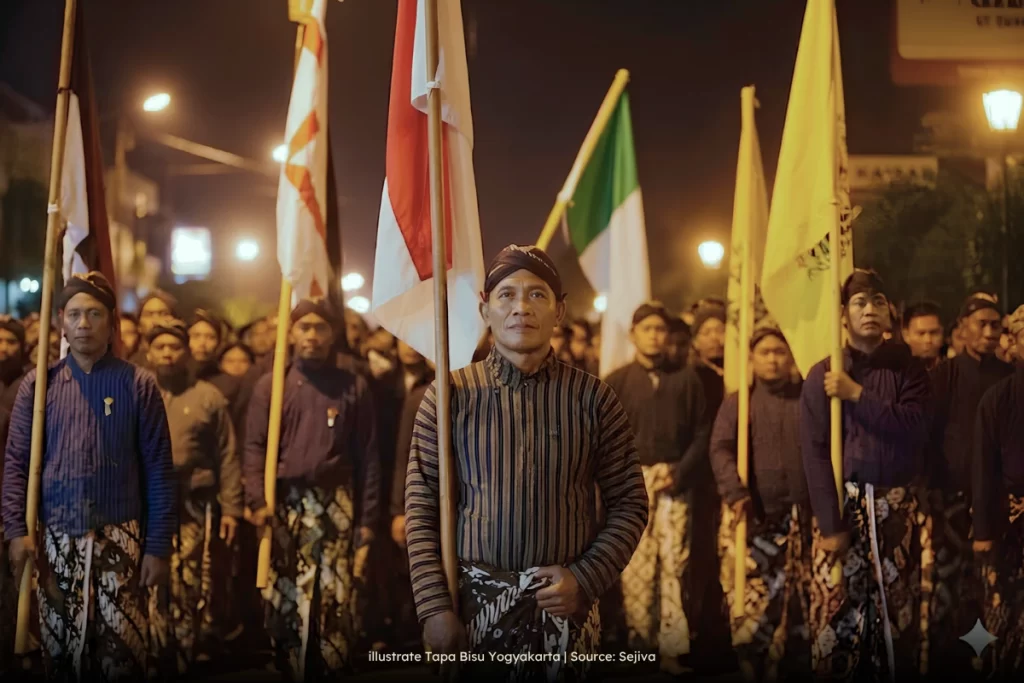
In Yogyakarta, Muharram coincides with the Javanese New Year, known as 1 Suro. One of the most iconic traditions observed during this time is Tapa Bisu Lampah Mubeng Beteng, a silent procession around the walls of the Yogyakarta Palace. The ritual symbolizes self-reflection, humility, and spiritual renewal as participants welcome the new year.
Before the main procession begins, the Yogyakarta Palace holds the 1 Suro Night Parade, featuring royal heirlooms and the the renowned Kebo Bule Kyai Slamet, an albino buffalo that carries deep symbolic significance within palace traditions. Participants then walk silently around the palace fortifications, passing through the North Square, the eastern side of the fort, the South Square, and the western side before returning to the palace. The route spans approximately 4–5 kilometers.
This tradition serves as a reminder that celebrations are not always defined by crowds and festivities. Sometimes, the deepest meaning is found in silence.
tabuik festival, pariaman: ten days of coastal cultural celebration
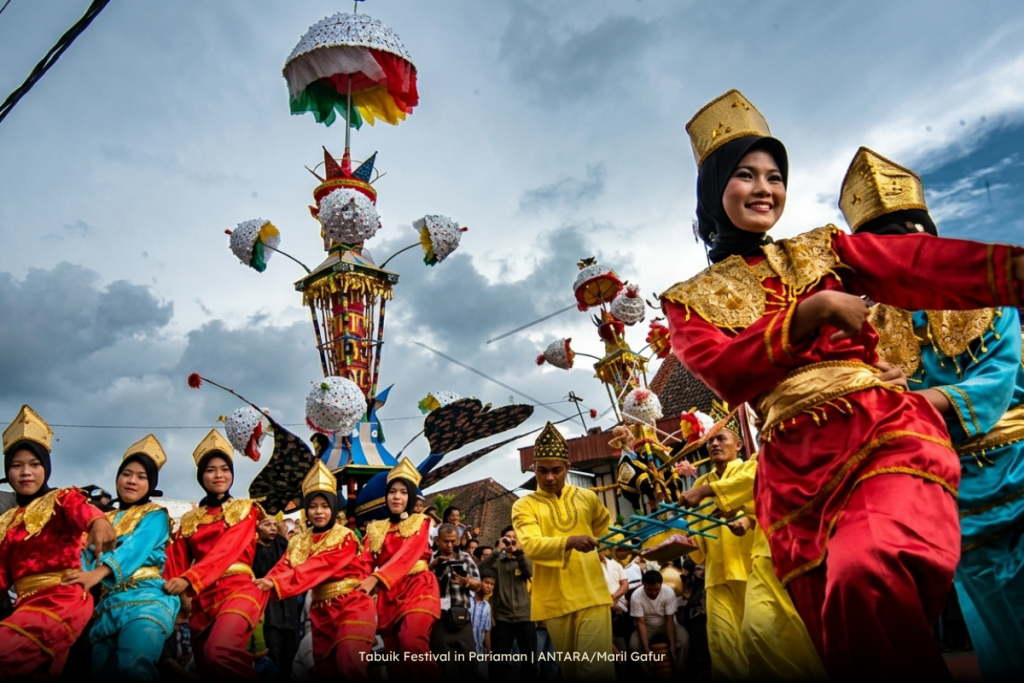
West Sumatra marks Muharram through the Tabuik Festival in the coastal city of Pariaman. This event spans the first ten days of the Islamic month. The word Tabuik originates from the Arabic term at-tabut, meaning a coffin or casket. While not a direct celebration of the Islamic New Year, the festival is held during Muharram and has grown into one of Pariaman’s most iconic cultural events, showcasing the region’s rich history, artistic heritage, and community traditions
In Pariaman, it takes the form of towering structures made from bamboo, wood, and rattan, decorated with colorful ornaments.The festival schedule follows strict ritual steps:
- 1 Muharram: The Maambiak Tanah ritual occurs, where participants gather ceremonial soil from the riverbed.
- 5 Muharram: Locals cut a banana tree stem during the Manabang Batang Pisang ceremony.
- 7–8 Muharram: The Maarak Panja and Maarak Sorban processions draw large crowds through the city streets.
- 9 Muharram: Engineers assemble the structural segments during the Naiak Pangkek phase.
The celebration reaches its peak on 10 Muharram (Ashura Day) during the Hoyak Tabuik procession, when two Tabuik structures are paraded and ceremonially shaken through the streets of Pariaman, accompanied by the rhythmic sounds of gandang tasa drums and thousands of spectators. The festival concludes at Gandoriah Beach, where the Tabuik structures are cast into the sea as a symbolic farewell and the closing of the Muharram commemoration.
For nearly two centuries, this tradition has remained one of the most significant cultural attractions along the coast of West Sumatra, offering visitors an unforgettable cultural experience.
roah segare, lombok: a coastal tradition of gratitude
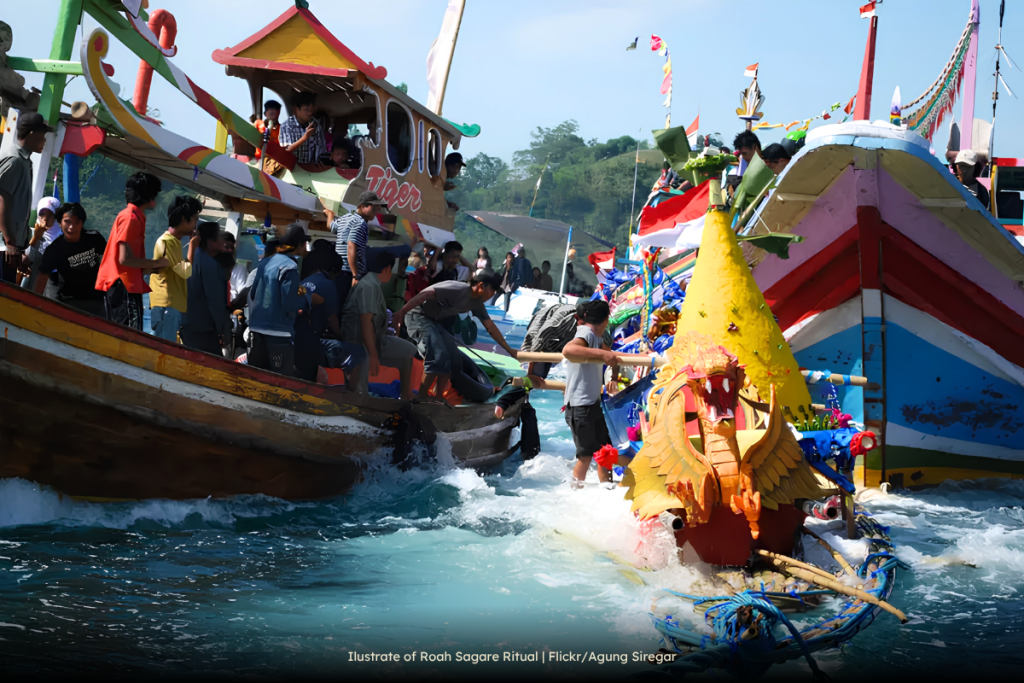
Along the shores of Kuranji Beach, West Lombok, fishing communities welcome Muharram through Roah Segare, a traditional sea thanksgiving ritual that expresses gratitude for the ocean’s bounty and hopes for future blessings.
The ceremony begins with zikir and communal prayers. Afterwards, trays containing agricultural produce and food offerings are carried to the shoreline and released into the sea. The ritual symbolizes gratitude while also reflecting the community’s respect for the ocean and the importance of preserving the coastal ecosystem that sustains their livelihoods.
Following the ceremony, local fishermen traditionally refrain from going to sea for several days. The event concludes with begibung, a communal meal shared among residents and visitors, fostering a strong sense of togetherness and hospitality.
why is muharram the perfect time for cultural tourism?
The diverse Muharram traditions found across Indonesia demonstrate how local communities continue to preserve cultural heritage passed down through generations. Each celebration reflects the identity, values, and way of life of the communities that practice it. More than cultural attractions, these traditions offer a unique opportunity to experience Indonesia’s rich cultural diversity firsthand and witness the ongoing process of cultural acculturation that has shaped the archipelago for centuries.