Long before the advent of modern technology like weather satellites or forecasting apps, the people of the Indonesian archipelago had their own way of understanding the natural world. One of the most fascinating systems is Pranata Mangsa, a traditional Javanese calendar that functions not only as a timekeeper but also as a reflection of the astronomical knowledge possessed by past generations.
understanding pranata mangsa as a knowledge system
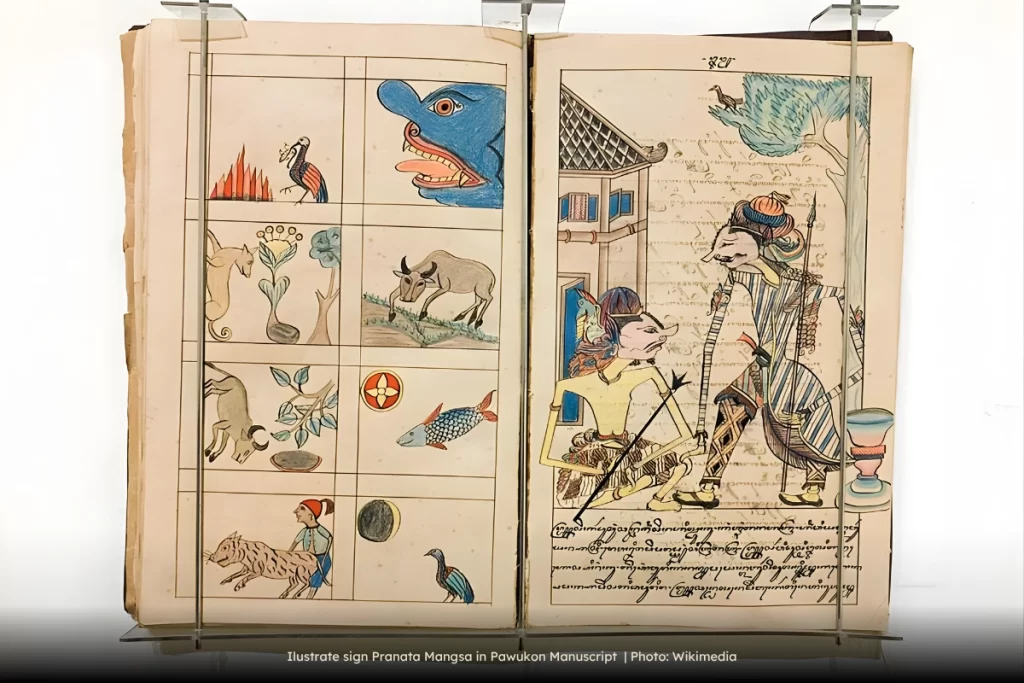
Pranata Mangsa, literally meaning “the arrangement of seasons,” is a traditional Javanese calendar system that divides the year into periods called mangsa based on dynamic natural observations. According to Subandi Giyanto, this system is a form of empirical knowledge built through long-term observation of solar movements, weather shifts, and animal behavior. It serves as evidence that ancient societies possessed a profound understanding of their ecosystem, moving beyond mere coexistence to successfully mapping out predictable environmental patterns.
From an astronomical perspective, this system is deeply rooted in the apparent annual motion of the sun, which dictates day length, temperature, and the transition between rainy and dry seasons. Although these ancient communities did not use modern scientific terms like “solstice” or “equinox,” they accurately identified crucial solar positions through direct experience. This sophisticated understanding formed the foundation for the distinct characteristics of each mangsa, establishing Pranata Mangsa as a highly accurate and contextual guide for daily life and survival.
the night sky: a celestial timetable
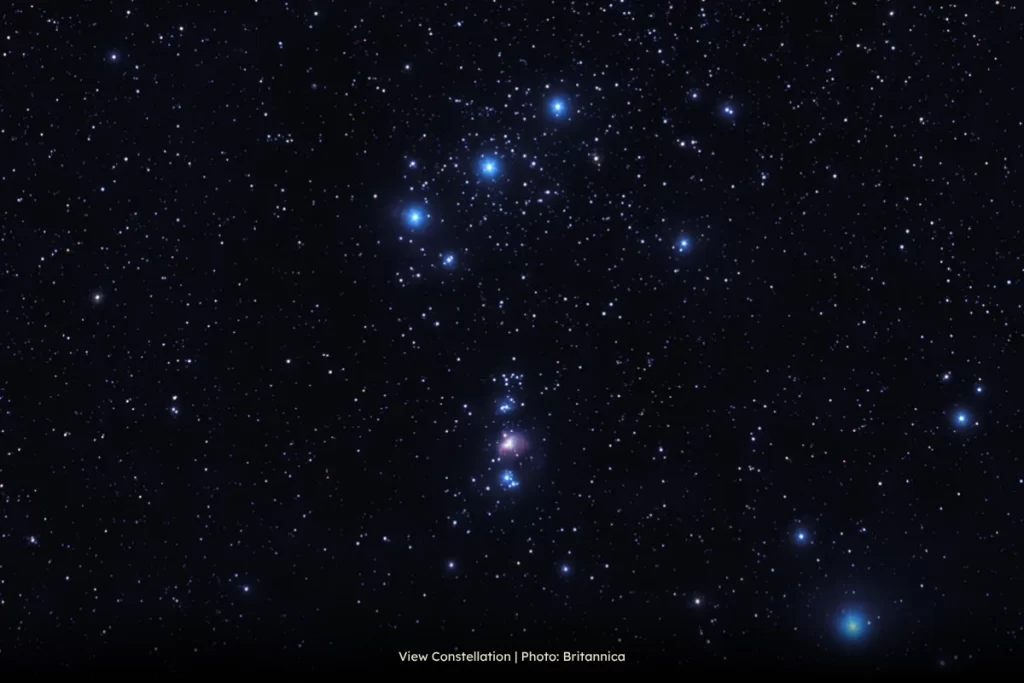
Although based on solar movement, Pranata Mangsa is inseparable from observations of the night sky. Ancient people realized that seasonal shifts were accompanied by changes in visible constellations. In other words, the night sky served as a supplementary “time map.”
As seasons changed, so did the stars appearing overhead. These recurring patterns eventually became part of their knowledge system. Unconsciously, the community understood the relationship between the positions of the Earth, the sun, and the stars.
A famous example is the appearance of the constellation Orion, known in Javanese culture as Lintang Waluku (The Plow Star). Its distinct shape is easily recognizable and is traditionally likened to a plow used in rice fields. This naming was not mere imagination; it held practical significance. The appearance of Lintang Waluku in the night sky signaled the right time to begin tilling the land.
This highlights a highly contextual form of astronomy. Stars were not viewed merely as distant objects, but as integral parts of daily life, connecting heaven and earth into a single unity.
papan sangatan
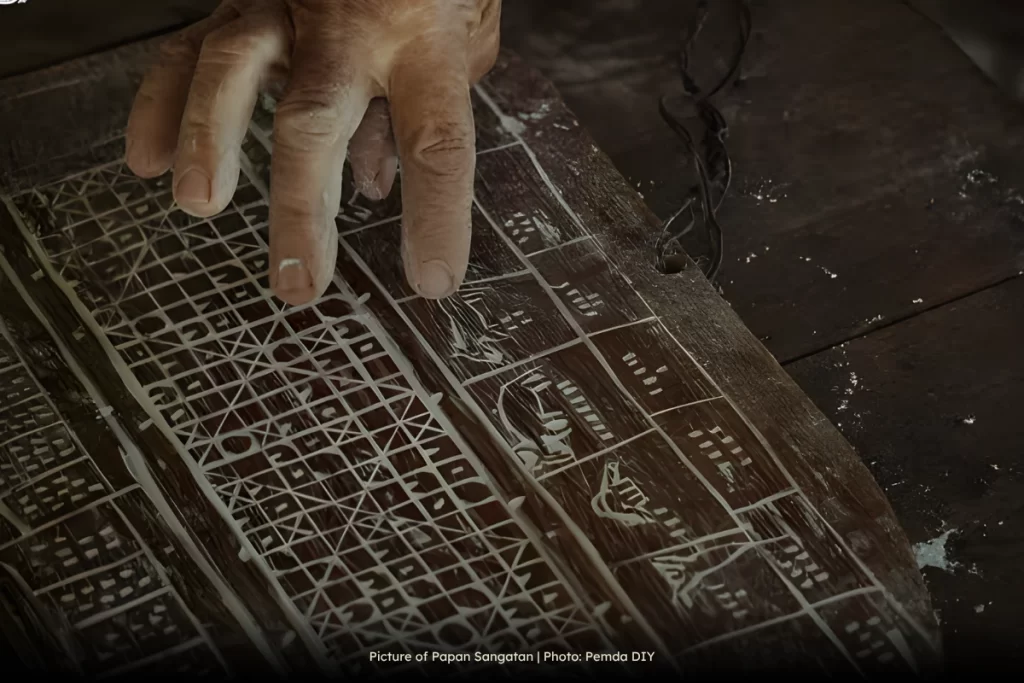
As this knowledge evolved, it was visualized in concrete forms, such as the Papan Sangatan. According to regional government records, these boards were used to illustrate the Pranata Mangsa cycle in a way that was easy for the public to understand.
A Papan Sangatan typically contains information regarding:
- The division of mangsa (seasons).
- Natural signs characteristic of each period.
- The appropriate timing for specific activities.
The existence of these boards shows that Pranata Mangsa was not just an oral tradition but was developed into an educational tool to help younger generations preserve this ancestral wisdom.
pranata mangsa and temporal precision
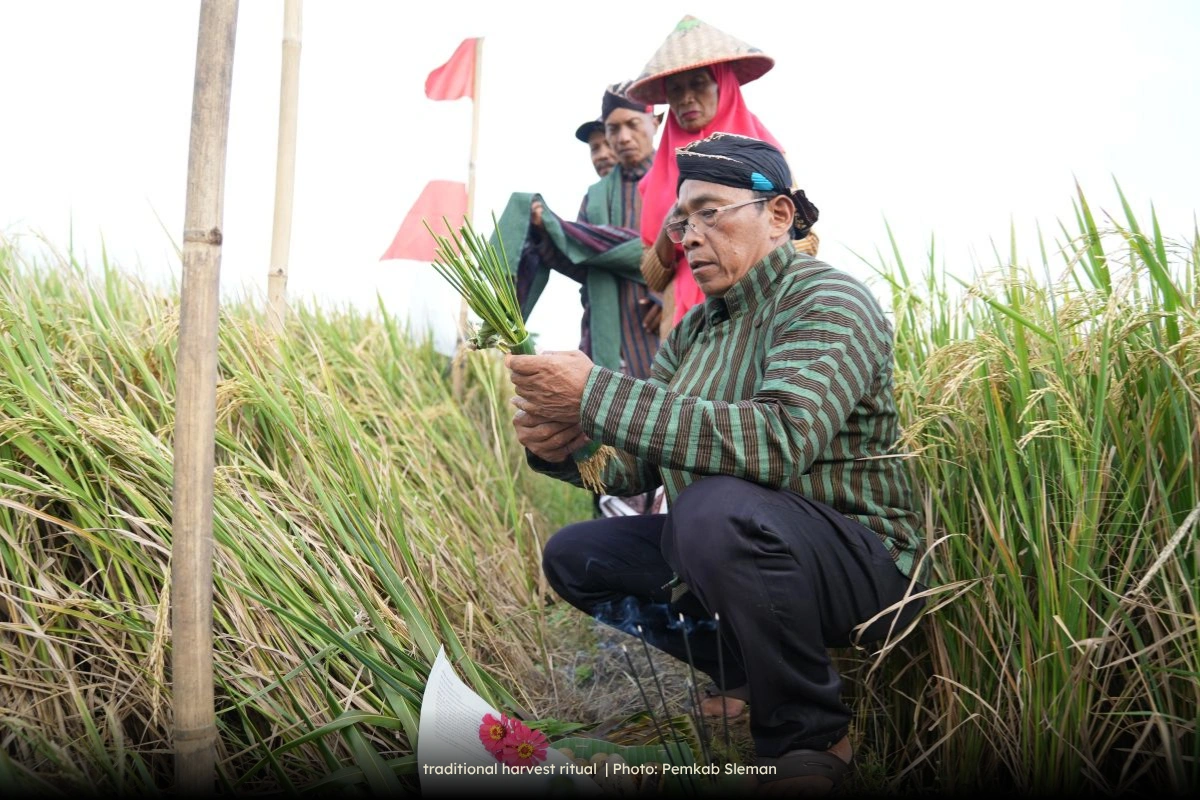
One of the system’s greatest strengths is its ability to help the community determine the optimal timing for various activities, particularly in agriculture. Farmers do not rely solely on dates; they read the signs of nature. This makes them more flexible and adaptive to environmental changes. In many cases, this system remains more relevant than modern calendars because it relates directly to real-world conditions.
Within the framework of Pranata Mangsa, a solar year (365 days) is divided into 12 dynamic periods, each carrying specific bioclimatological messages:
- Mangsa Kasa (June 22 – August 1): The sky begins to cool. Leaves fall, and farmers burn old rice stalks, preparing the “womb of the earth” for the next cycle.
- Mangsa Karo (August 2 – August 24): The earth begins to crack. Kapok and mango trees start to bloom, a visual sign of growing hope.
- Mangsa Katelu (August 25 – September 17): The harvest season for secondary crops (palawija). Tubers begin to fill, providing nutrients for those who diligently read the signs.
- Mangsa Kapat (September 18 – October 12): The sun is directly overhead. Strong winds begin to blow, bringing news of the long-awaited rainy season.
- Mangsa Kalima (October 13 – November 8): The first rains fall. Tamarind trees sprout young shoots, washing away the long-settled dust.
- Mangsa Kanem (November 9 – December 21): Rice planting begins. Peals of thunder become the background music for farmers plowing the fields.
- Mangsa Kapitu (December 22 – February 2): The peak of the rainy season. Nature is at its wettest, testing the resilience of roots deep within the soil.
- Mangsa Kawolu (February 3 – February 28): Rice plants turn vibrant green. The sound of nocturnal insects can be heard, signaling a balanced ecosystem.
- Mangsa Kasanga (March 1 – March 25): Rice grains begin to fill. Farmers tend to their fields with great care, awaiting the “golden era.”
- Mangsa Kasapuluh (March 26 – April 18): Birds begin to build nests. Gentle breezes carry the scent of ripening yellow rice.
- Mangsa Desta (April 19 – May 11): The Great Harvest arrives. Joy overflows in every field, the result of patience in following the rhythm of the seasons.
- Mangsa Saddha (May 12 – June 21): The land rests. Water recedes, giving the earth space to recover its energy before starting a new cycle.
Pranata Mangsa is proof that ancient societies possessed a profound understanding of nature. By relying on the observation of solar movements and constellations, they created a timekeeping system that was both accurate and beneficial.
Through symbols like Lintang Waluku and tools like Papan Sangatan, this knowledge continues to be passed down. It demonstrates that astronomy does not always require high technology; it can exist in simple forms deeply intertwined with life. In an increasingly modern world, Pranata Mangsa reminds us to look back at nature and the sky as an invaluable source of wisdom.