As Eid al-Adha approaches, many regions across Indonesia become lively with preparations for the annual sacrifice ritual. However, in Pasuruan Regency, East Java, there is a unique tradition that makes this sacred celebration even more remarkable. The local community has its own special way of honoring sacrificial animals through an Eid al-Adha celebration as Manten Sapi.
For travelers visiting just a few days before Eid Adha, this experience feels completely different from ordinary Eid al-Adha celebrations. The sacrificial cows are not only carefully cared for and well-fed, but they are also decorated like brides. Wrapped in white cloth, adorned with flower garlands, prayer mats, turbans, and floral crowns, these cows become the center of a deeply symbolic cultural procession.
a tradition rooted in spiritual and cultural values
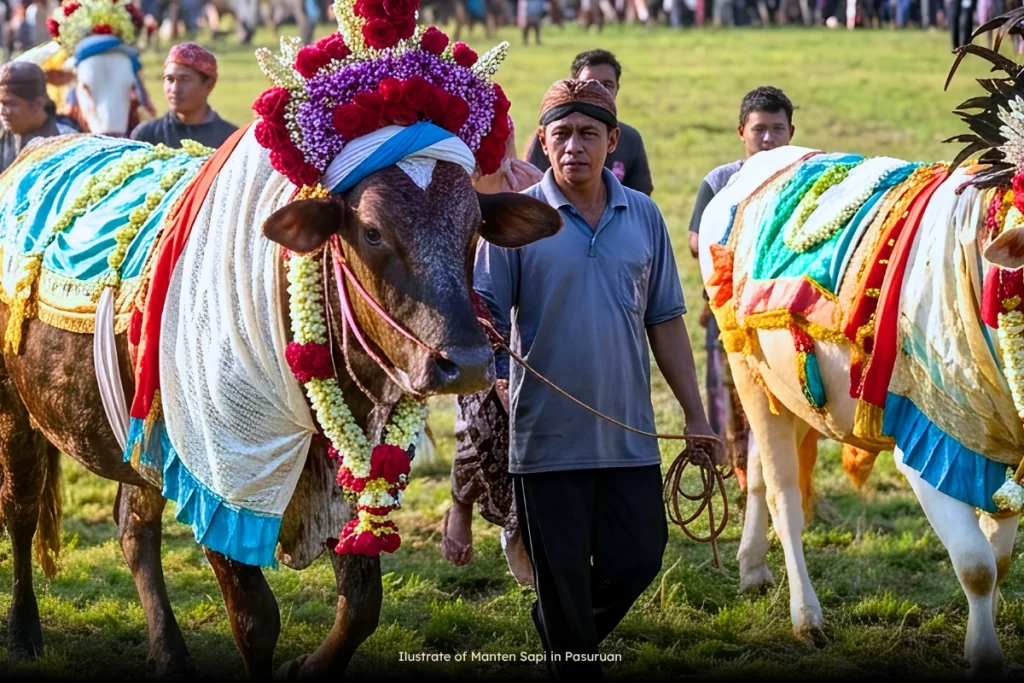
The community believes that sacrificial animals should be treated kindly before slaughter. This principle aligns with the Islamic concept of ihsan, which encourages compassion and goodness toward all living beings, including animals.
For this reason, decorating the cows is seen as a final gesture of respect. They believe that by treating the animals with care and affection, the cows will feel calmer and less fearful before the sacrifice takes place. This belief gives Manten Sapi a profound spiritual meaning.
The ritual also symbolizes gratitude for the blessings provided by God. In traditional Javanese agrarian culture, cows are more than livestock; they represent prosperity, family assets, and economic security. This philosophical value remains deeply rooted in Pasuruan society today. As a result, sacrificial cows are treated almost like honored guests before fulfilling their sacred destiny.
decorating the cow like a bride
The most fascinating part of the Manten Sapi tradition is undoubtedly the decoration process itself. Preparations usually begin several days before Eid al-Adha. The cows first undergo health examinations to ensure they are healthy and suitable for sacrifice. Once declared healthy, they receive special treatment, including abundant food and attentive care.
On the night before Eid al-Adha, villagers hold a selametan, a communal prayer gathering and shared meal. Neighbors and relatives come together to pray for a smooth sacrificial process and blessings for everyone involved.
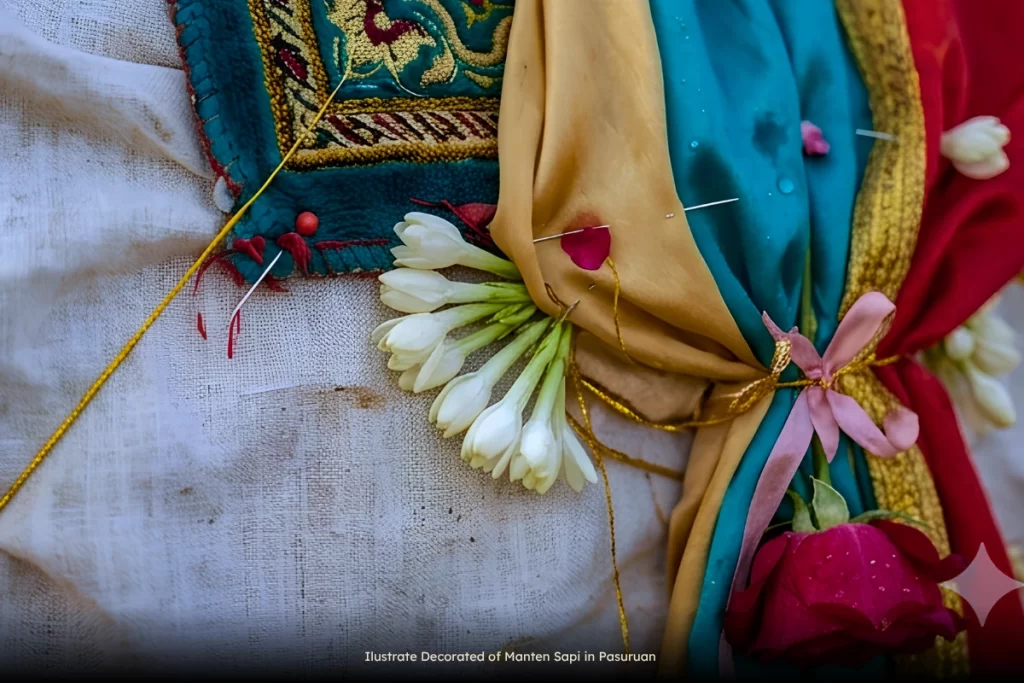
After the prayers, the decorating ritual begins. Family members and neighbors work together to adorn the cow with symbolic ornaments, each carrying its own meaning.
white shroud cloth
The cows are wrapped in white shroud cloth symbolizing purity, sincerity, and spiritual cleanliness in worship. The white color reflects pure intentions and submission to God.
prayer mats and turbans
Prayer mats draped over the cow’s back symbolize closeness to God, while turbans emphasize the Islamic spiritual values embedded within the sacrifice ritual.
seven-flower garland
Flowers such as roses, jasmine, kenanga, kantil, and tuberose are used as garlands and decorative accessories. Besides creating a fragrant atmosphere, these flowers are believed to carry prayers and blessings for the family offering the sacrifice.
floral crown
To complete the appearance, the cow’s head is often decorated with a floral crown, making it truly resemble a ceremonial bride or groom. This visual element is especially captivating for visitors and photographers.
Once the decorating process is complete, the cows are paraded toward the slaughter area. This procession becomes a celebration of togetherness. Villagers walk side by side while carrying cooking utensils, firewood, groceries, rice, spices, and other necessities that will later be shared and cooked together after the sacrifice ceremony.
witnessing the cow’s “final journey” with respect
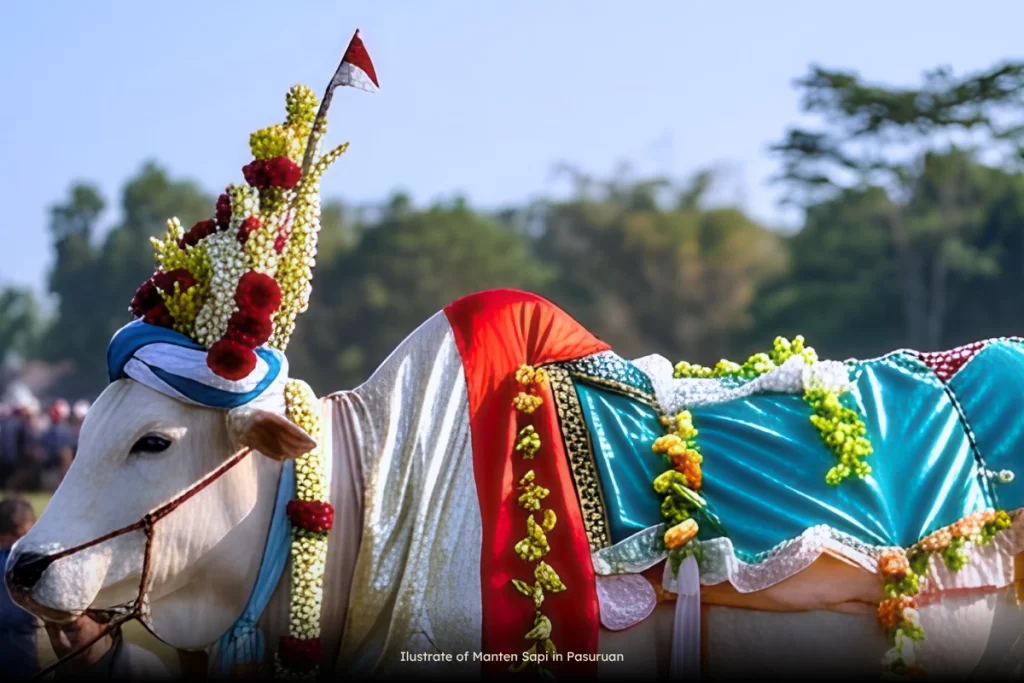
There is something deeply moving about watching these decorated cows slowly walk toward the sacrifice area surrounded by prayers and flower garlands. The community does not see the sacrificial animal merely as part of a ritual, but as a living being worthy of dignity and respect until its final moments.
Manten Sapi offers a more humane and spiritual perspective on the practice of sacrifice. It reminds people that sacrifice is not only about slaughter, but also about intention, compassion, gratitude, and reverence for God’s creations.
So, if you ever find yourself in Pasuruan before Eid al-Adha, take the time to witness this extraordinary tradition. Behind the flowers, white cloth, and festive procession lies a profound philosophy about humanity, spirituality, and cultural heritage that continues to live on today.