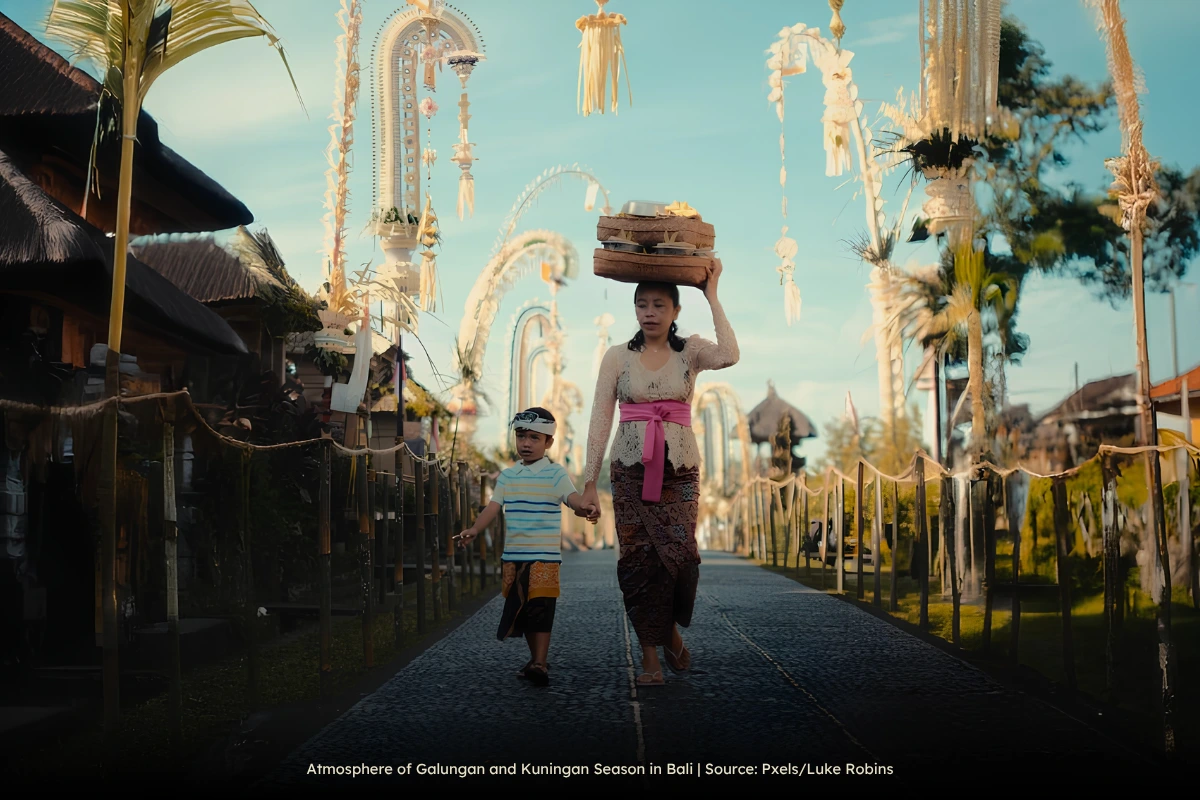
Across Bali, towering bamboo poles line village roads, temples overflow with offerings, and families gather to honor traditions passed down through generations. This is Galungan and Kuningan, one of the most important celebrations in Balinese Hinduism.
Observed every 210 days according to the Pawukon calendar, Galungan marks the victory of dharma (righteousness and cosmic order) over adharma (chaos and wrongdoing). It is also believed to be the time when ancestral spirits descend from heaven and return to their former homes, allowing families to reconnect with those who came before them.
the meaning behind galungan
At its core, Galungan is a reminder that goodness requires effort. The celebration reflects the ongoing balance between positive and negative forces and encourages people to live according to moral and spiritual values.
Unlike symbolic holidays, Galungan is expressed through action. Communities spend weeks preparing temples, homes, and offerings, turning spiritual beliefs into visible acts of devotion.
preparing for the ancestors
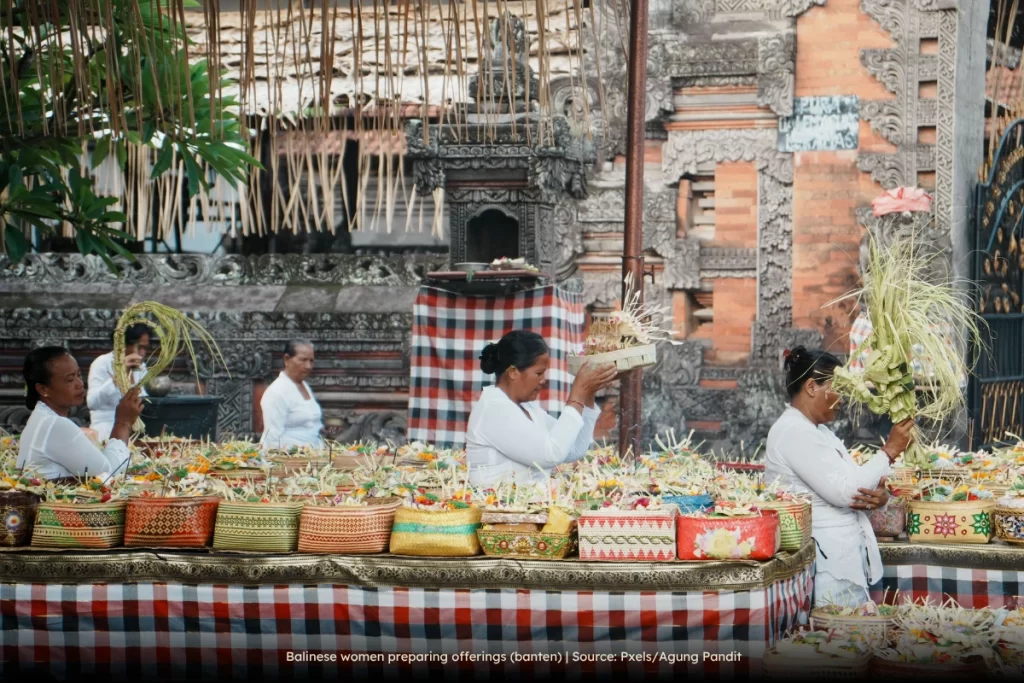
In the weeks leading up to Galungan, families prepare banten, intricate offerings made from woven palm leaves, flowers, rice, fruits, and traditional cakes. These offerings are more than ceremonial decorations. They are expressions of gratitude and respect, created to welcome ancestral spirits and maintain harmony between the human and spiritual worlds.
Preparation involves the entire community. Villages organize temple clean-ups, families repair shrines, and households work together to prepare food and ceremonial materials. Across the island, the scent of incense and festive cooking becomes part of the atmosphere.
the symbolism of the penjor
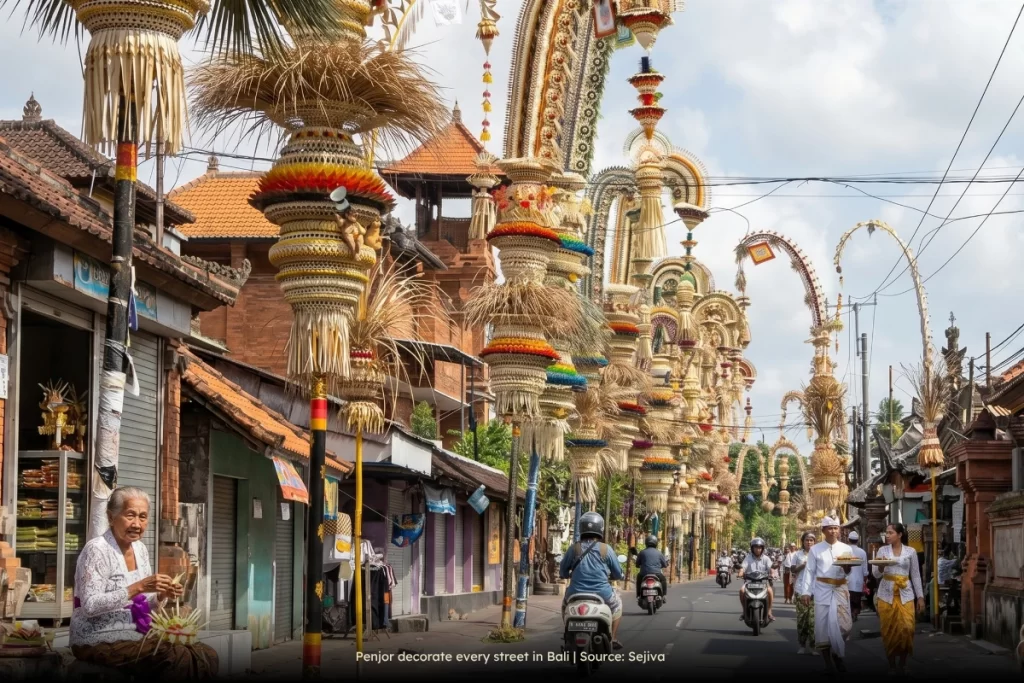
One of the most recognizable symbols of Galungan is the penjor, the tall bamboo pole displayed outside homes and temples. Its graceful curve is often associated with Mount Agung, Bali’s most sacred mountain, while the decorations attached to it represent the abundance provided by nature.
- Bamboo Pole: Mount Agung
- Coconut : Water
- Rice Sheaves : Food and Sustenance
- Cassava Roots : Earth
- Palm Leaves : Clothing and Daily Needs
Together, these elements reflect gratitude for the resources that support life and the connection between people, nature, and the divine.
tri hita karana in practice
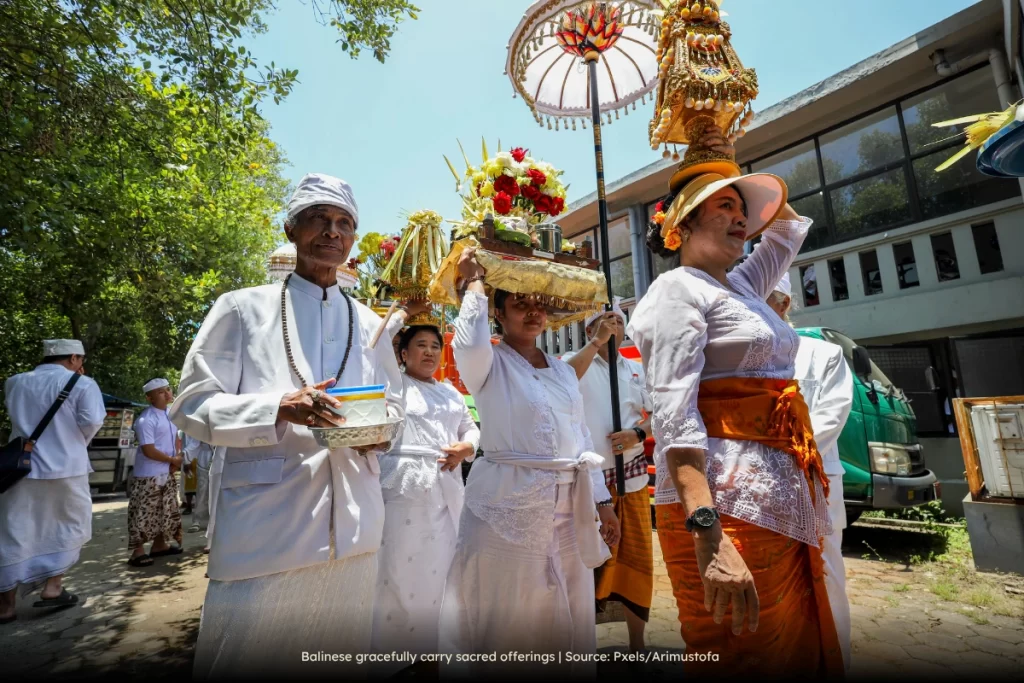
Galungan and Kuningan also embody Tri Hita Karana, a Balinese philosophy centered on harmony in three relationships. Parahyangan focuses on the relationship between humans and God through prayer and offerings. Pawongan emphasizes harmony among people through cooperation and shared responsibilities. Palemahan highlights the relationship with nature, reminding communities to respect and care for the environment.
Throughout the celebration, all three principles are visible at once. Families pray together, neighbors support one another, and many organic offerings eventually return to the earth.
kuningan: the farewell
Ten days after Galungan comes Kuningan, the closing day of the festival cycle. According to Balinese belief, ancestral spirits return to the heavens at noon. Offerings on this day often feature yellow rice colored with turmeric, symbolizing prosperity, blessings, and gratitude. While Galungan celebrates arrival, Kuningan marks a respectful farewell and the completion of the sacred journey.
experiencing galungan as a visitor
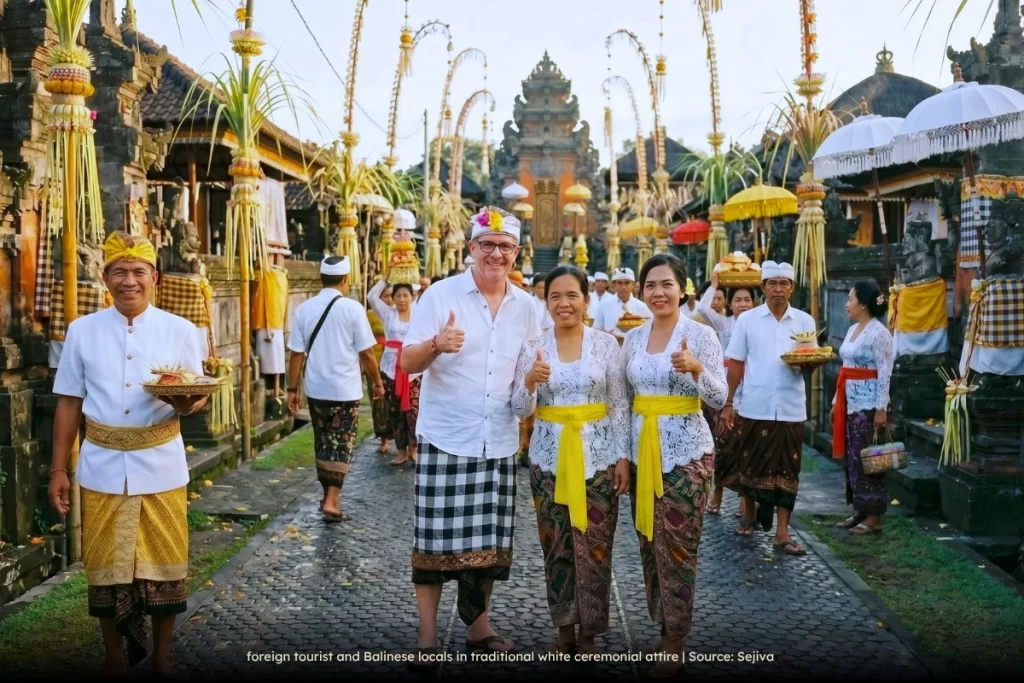
For travelers, Galungan and Kuningan offer a chance to witness Bali’s living traditions rather than a performance created for tourism. The most respectful approach is simple: observe, listen, and learn. Ceremonies are deeply meaningful to local communities, and understanding their significance often provides a richer experience than trying to participate.
Visitors entering temples should wear appropriate attire, including a sarong and sash, and remain mindful during prayer ceremonies. By approaching these moments with respect, travelers gain a deeper appreciation for the values that continue to shape Balinese life.
a celebration of balance
More than a religious festival, Galungan and Kuningan are a reflection of how spirituality, community, and nature remain interconnected in Bali. Every 210 days, the celebrations remind people to honor their ancestors, strengthen relationships, and maintain harmony with the world around them. In doing so, they keep alive a worldview where balance is not simply an ideal, but a way of life.