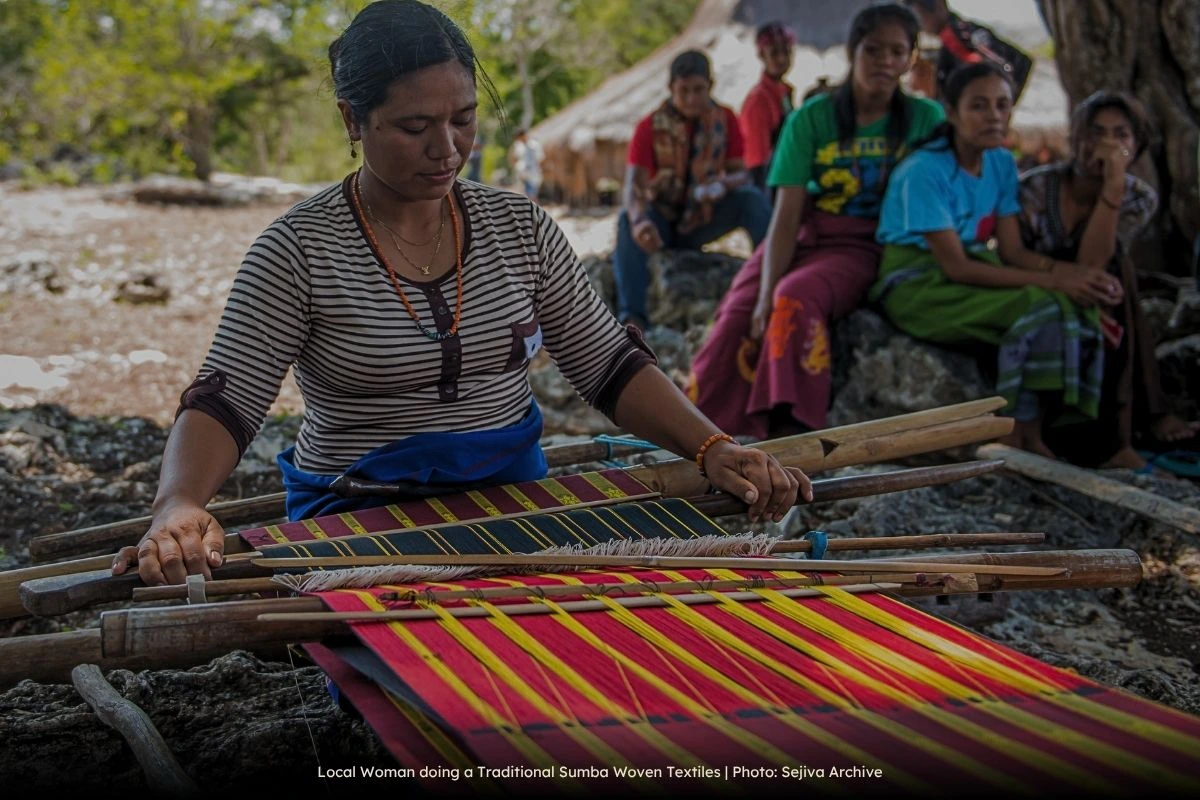
Have you ever noticed the woven fabrics on your tablecloths or wall decorations? Looking at those beautiful patterns, have you ever wondered why every region in Indonesia has its own unique style? Or why most weavers in Indonesia are women?
For thousands of years, weaving tradition has been more complex than just making cloth. It is a way to show identity and tell stories. Through detailed patterns and designs, these fabrics can tell the history and identity of a tribe. When words aren’t enough to explain complex feelings, the colors and textures of the fabric take over.
cultural meaning: the fabric of life
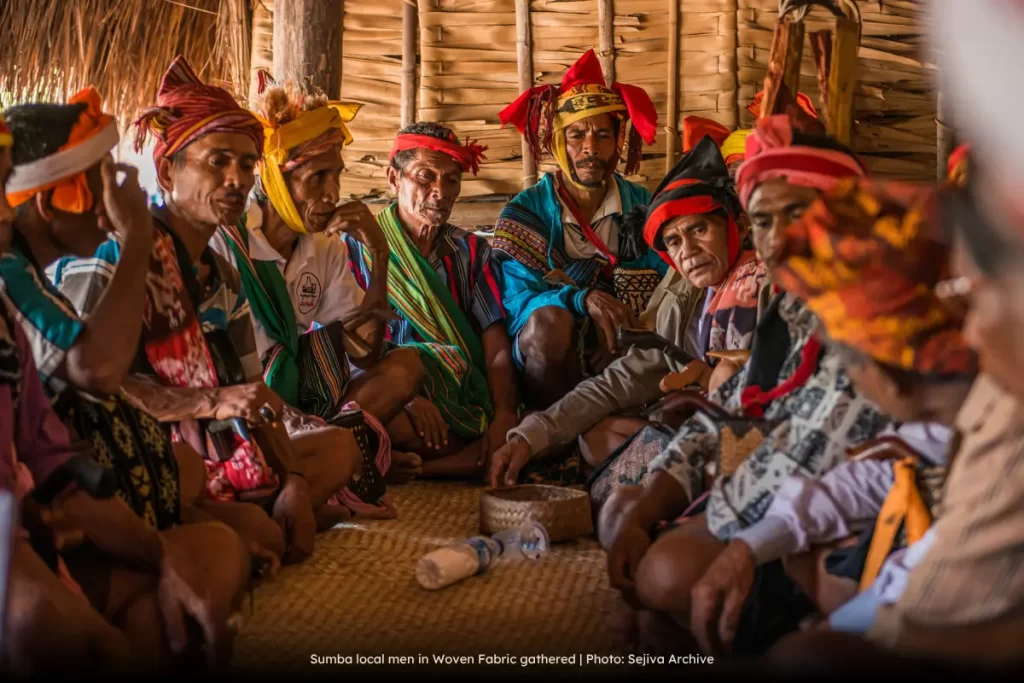
In traditional cultures, woven cloth is much more than just decoration. It is a sacred tool that protects people throughout their lives, from the moment they are born until the day they die. It isn’t just about looking good, it is about power and tradition.
- Ceremonial Tools: These fabrics are used in important rituals. Every thread is believed to hold spiritual or even magical meaning.
- Social Identity: A single pattern can act like an ID card. Just by looking at the design, you can tell someone’s tribe and their social status.
- A Sacred Gift: In many places, weaving is part of a marriage. A groom must give woven cloth to his bride along with gold. This represents two lives being woven together into one shared future.
types of motifs and their visual philosophy
Each motif in woven textiles is not just decorative, but a visual language that expresses cultural values.
1. geometric motifs (balance)
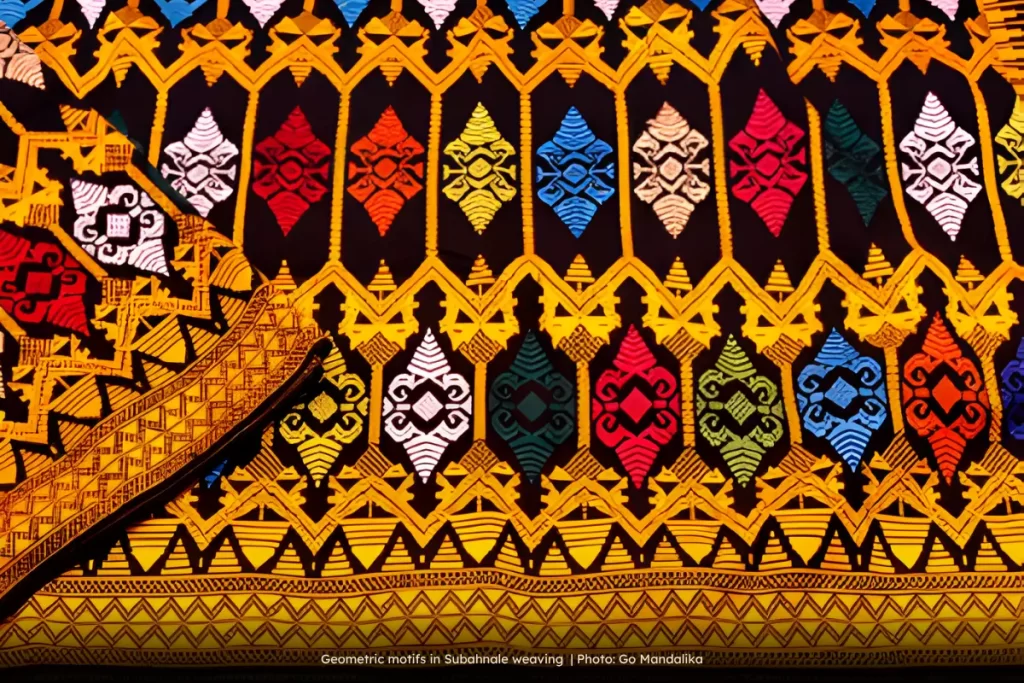
Lines, squares, and triangles (tumpal) represent order and harmony in life. These motifs often form the base of more complex designs. As these foundational shapes evolve into more intricate configurations, in Lombok is the most revered pattern. The Motif Tenun Lombok known as Subahnale is the crown jewel. It’s a geometric masterpiece of hexagons and stars, symbolizing the interconnectedness of the human and the divine. Legend says the pattern was so complex that the weaver would constantly exclaim “Subhanallah” (Praise be to God) while creating it.
2. flora and fauna motifs (life)
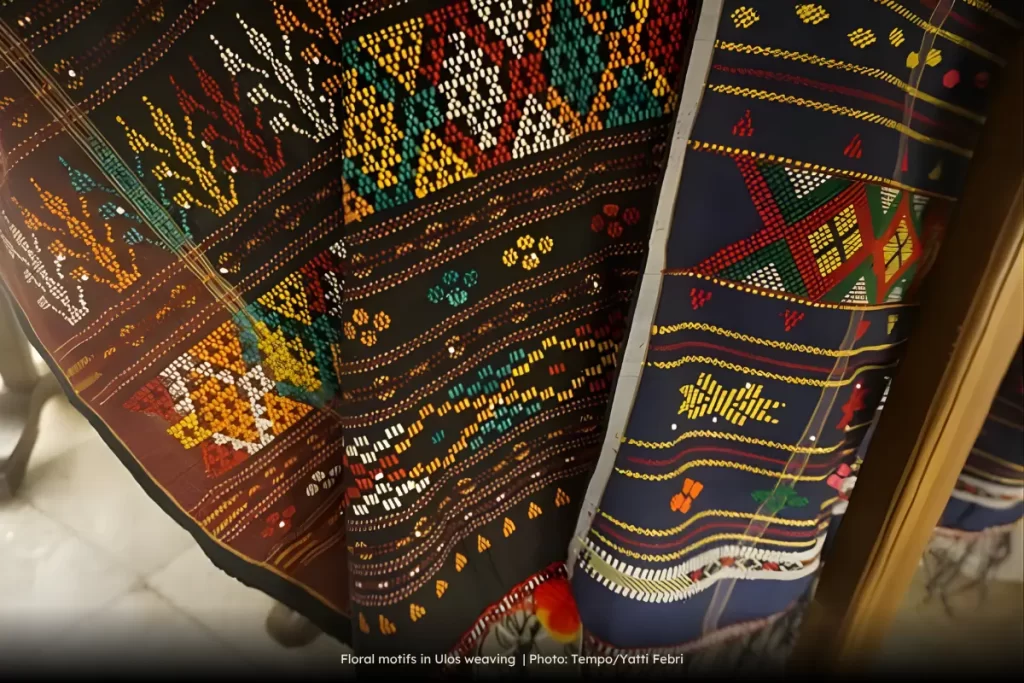
The Flora and Fauna motif in weaving is inspired by the environment. A great example of this is the Ulos Batak.
- Flora (Plants): These patterns carry moral advice on how to live a useful life. They also represent prayers and good hopes for the future.
- Fauna (Animals): Like the plant designs, animal symbols are used to share life lessons and guidance with the community.
3. anthropomorphic motifs (ancestors)
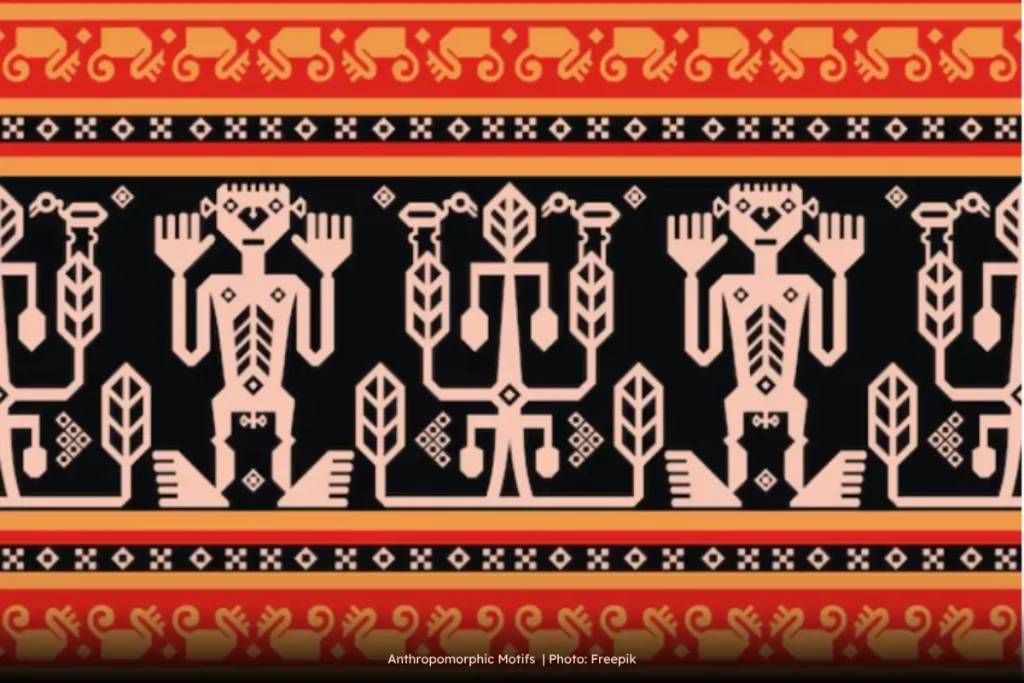
Human-shaped motifs are often linked to ancestors and are believed to provide protection to the wearer. Weaving is a bridge to eternity. Anthropomorphic (human-shaped) motifs act as a spiritual shield. Every cloth woven by a Torajan woman is a reminder that we never walk alone; the fingerprints of the ancestors are protected within every design we wear.
the speaking thread: how women read nature through their weaving
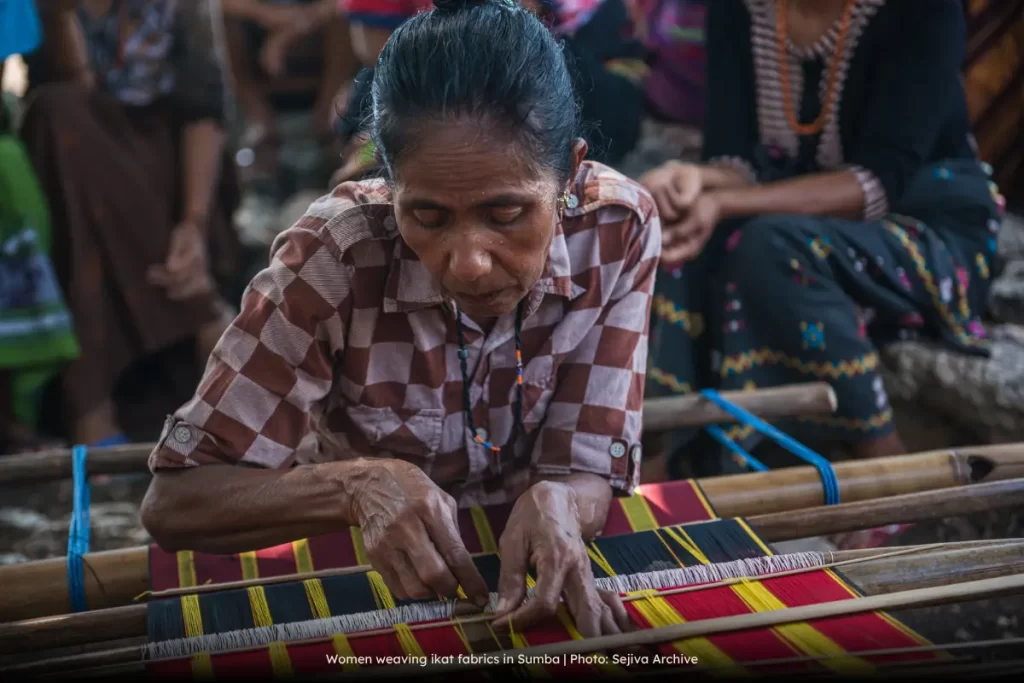
There is a fundamental reason why, across the Indonesian archipelago from the highlands of Toraja to the coasts of Lombok the loom remains almost exclusively in the hands of women. Weaving is the ultimate manifestation of Guardianship.
In traditional social structure, women are the protectors of the life cycle. Every thread is carefully chosen and placed, one after another, like words in a sentence, it is a prayer made manifest.
1. toraja
If you went to craft centers like Sa’dan To’barana, you would see weaving represents female authority in transferring knowledge across generations. From a young age, girls are involved in the complex process of weaving, from processing raw cotton to composing intricate, enigmatic motifs. Kathleen M. Adams (2006) in Art as Politics highlights that for Toraja women, weaving is a visual language and an expression of intellect. It is a space where they claim sovereignty over their identity. Just as a woman brings life into the world, she also “births” the cloth that will accompany a human being from birth to the final breath.
2. lombok
The tradition of nyesek (weaving) is seen as a manifestation of the independence of Sasak women. Nyesek is the moment a woman proves her mastery of high-level technical skills, as the process takes weeks and involves thousands of threads. Consequently, the resulting cloth often used as a dowry (Pau) becomes a symbol of the sovereignty and dignity she carries into a new chapter of life.
3. flores
In Flores, weaving is a symbol of the universe and social relationships. Woven fabric represents a woman’s dignity. While men work with iron tools and farming, women master the art of making fabric, which connects the human world with their ancestors. Woman in Flores ability to mix natural colors and traditional patterns proves her maturity and her loyalty to local customs.
4. toba
Toba weaving is the definitive female art. Through the loom, women transform raw cotton into a ‘second skin’ that carries the spiritual power (sahala) of the clan. The cloth produced by women serves as the medium for blessings to flow between the givers and the receivers
become a #positivetraveller
Indonesian history lives within a single thread. Mass tourism snaps this connection.Standard travel treats these sacred practices like cheap souvenirs, but you can choose a different path. Meeting the weavers fuels a thousand-year-old philosophy. Your presence keeps these looms loud.
Source:
Adams, Kathleen M. (2006). Art as Politics: Re-crafting Identities, Tourism, and Power in Tana Toraja, Indonesia. University of Hawaii Press