Ramadan in Indonesia is more than a sacred month of fasting. It is a cultural season, a time when faith, memory, and community move together in rhythm. Across the archipelago, welcoming Ramadan is not only about preparing the body for fasting, but also preparing the heart.
In a country shaped by diversity, Ramadan becomes a beautiful expression of cultural pluralism. Each region carries its own way of honoring the holy month, through cleansing rituals, communal meals, processions, and prayers. These traditions go beyond religious obligation. They are emotional preparation. They are acts of togetherness.
Here are five meaningful traditions that mark the arrival of Ramadan in Indonesia.
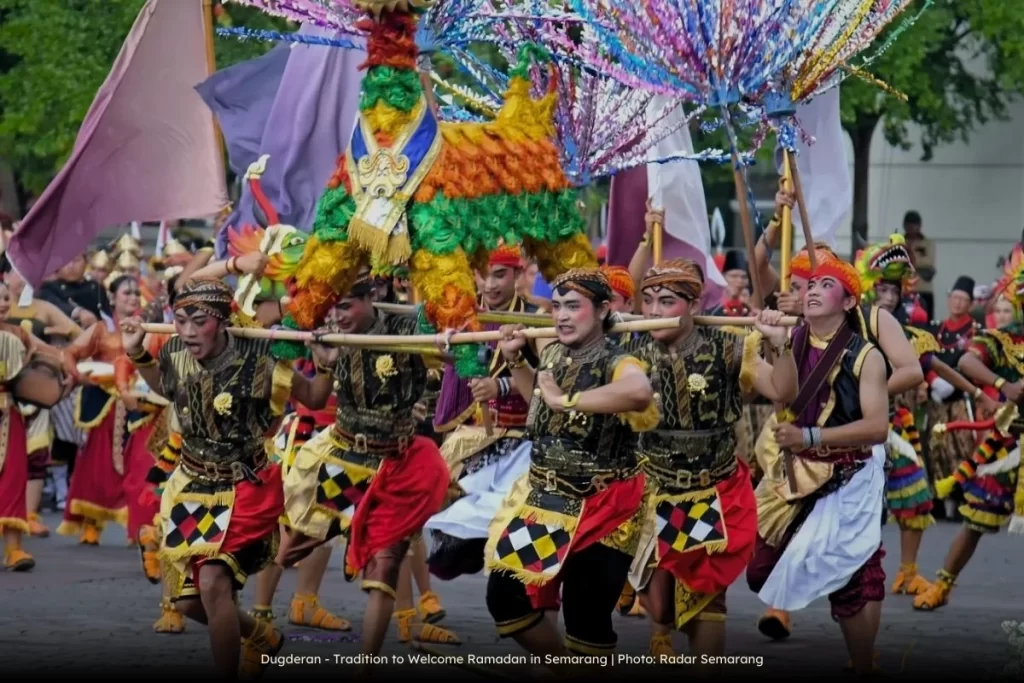
1. dugderan – the joyful signal from semarang
In the coastal city of Semarang, Ramadan is welcomed with Dugderan, a vibrant festival that dates back to the 19th century. The name comes from the sound of “dug” (drum) and “der” (cannon), symbolizing the official announcement of Ramadan’s arrival. At the heart of Dugderan stands the mythical Warak Ngendog, a colorful creature combining elements of different cultural symbols: Chinese, Arab, and Javanese, representing harmony among communities.
Dugderan reflects Indonesia’s layered identity. Ramadan here is not only a spiritual commitment but also a celebration of coexistence. It reminds us that faith can be joyful, inclusive, and deeply rooted in local wisdom.
2. padusan – cleansing before the sacred month
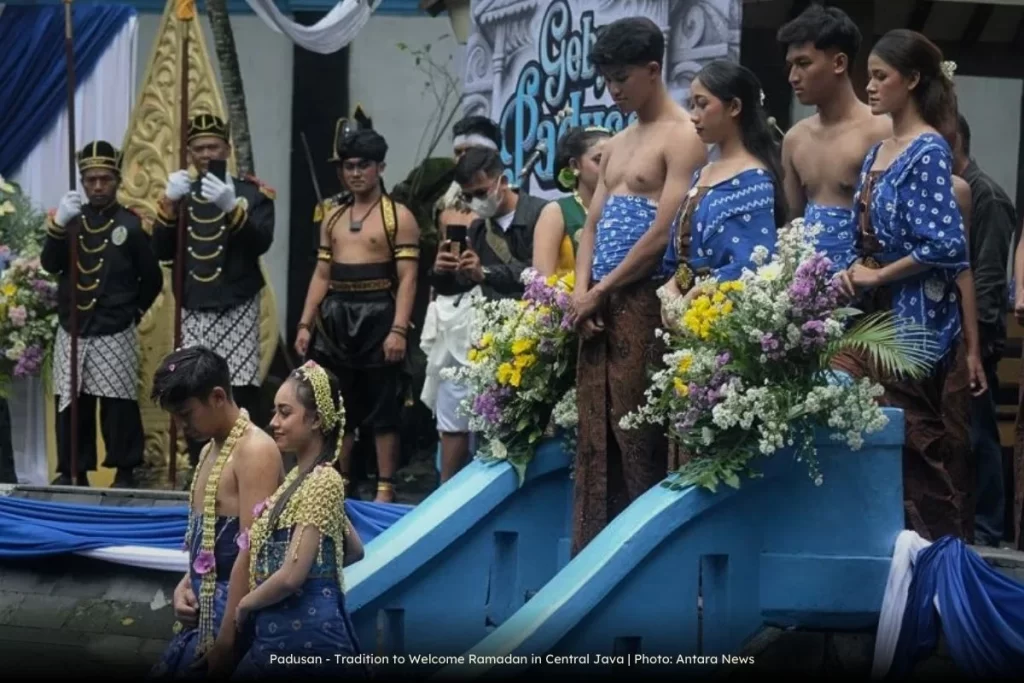
In parts of Central Java and Yogyakarta, many people practice Padusan, a ritual bathing in springs, rivers, or water sources before Ramadan begins. Derived from the Javanese word adus (to bathe), Padusan symbolizes purification, physically and spiritually. Families gather near natural water sources, not merely to wash their bodies, but to reset intentions.
Water, in this tradition, becomes a symbol of renewal. It represents entering Ramadan with clarity, humility, and readiness. The act of cleansing is less about ritual obligation and more about emotional alignment, letting go of past grievances before stepping into a sacred month of restraint and reflection.
3. munggahan – strengthening bonds before fasting
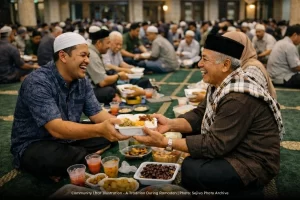
In West Java, particularly among Sundanese communities, Munggahan marks the days before Ramadan. Families gather for meals, prayers, and mutual forgiveness. The word munggah means “to rise.” Symbolically, it invites people to elevate themselves, spiritually and morally, before entering Ramadan.
Munggahan is intimate. It often takes place at home or in local mosques. Relatives reconnect, resolve misunderstandings, and share traditional dishes. In a fast-paced world, this tradition slows things down. It centers relationships.
Ramadan preparation, here, is relational. It begins with restoring harmony within families and neighborhoods.

4. nyadran – remembering ancestors with gratitude
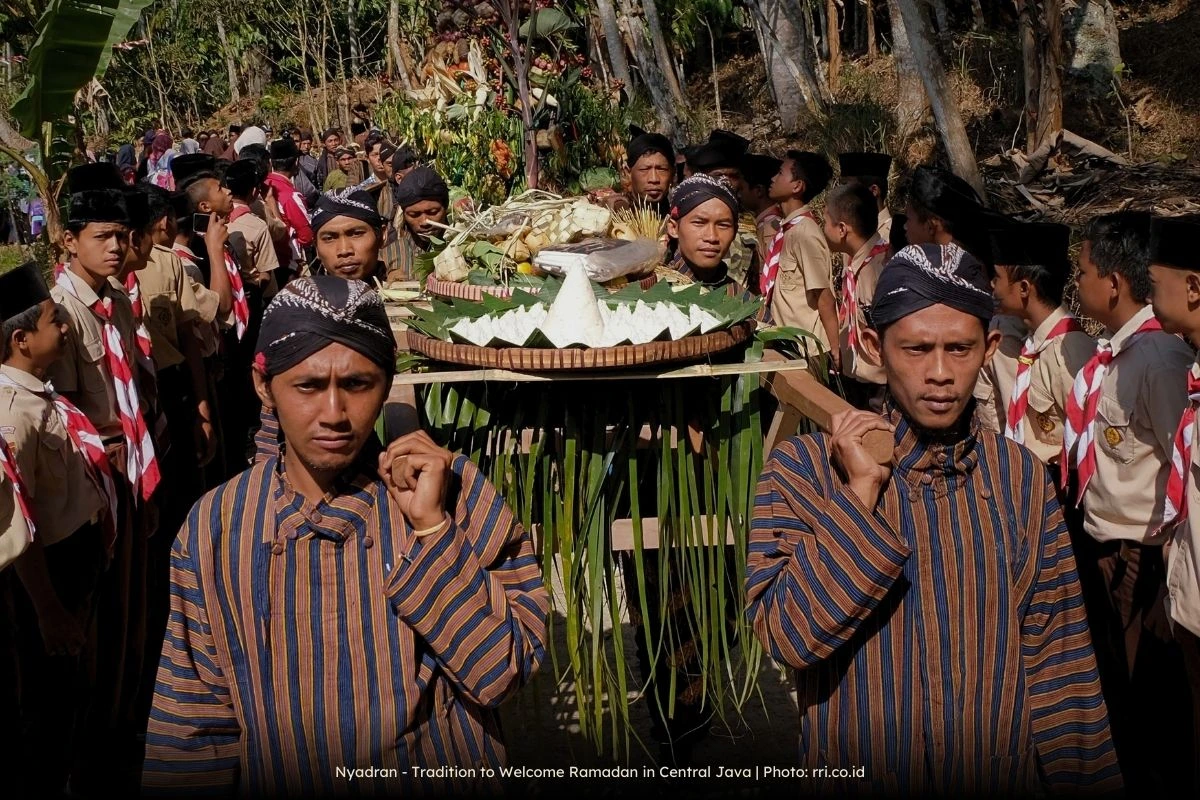
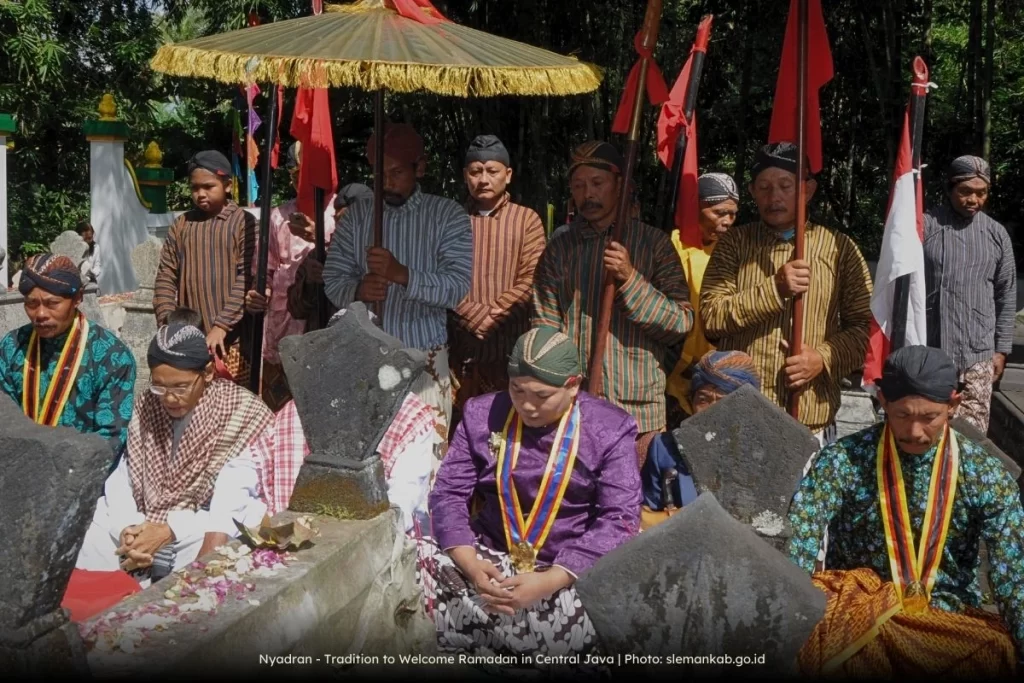
In rural Java, especially in Yogyakarta and parts of Central Java, communities practice Nyadran before Ramadan. Nyadran involves cleaning ancestral graves, offering prayers, and sharing food with neighbors. It is both remembrance and gratitude.
Rather than a solemn ritual alone, Nyadran is communal. People bring traditional meals to the cemetery, exchange stories about their ancestors, and strengthen bonds within the village. This tradition reflects a powerful idea: entering Ramadan with humility means acknowledging those who came before us. Gratitude becomes a bridge between generations.
5. megibung – communal harmony in bali
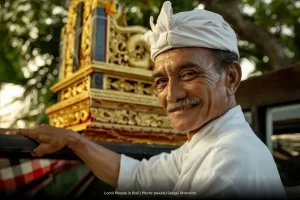
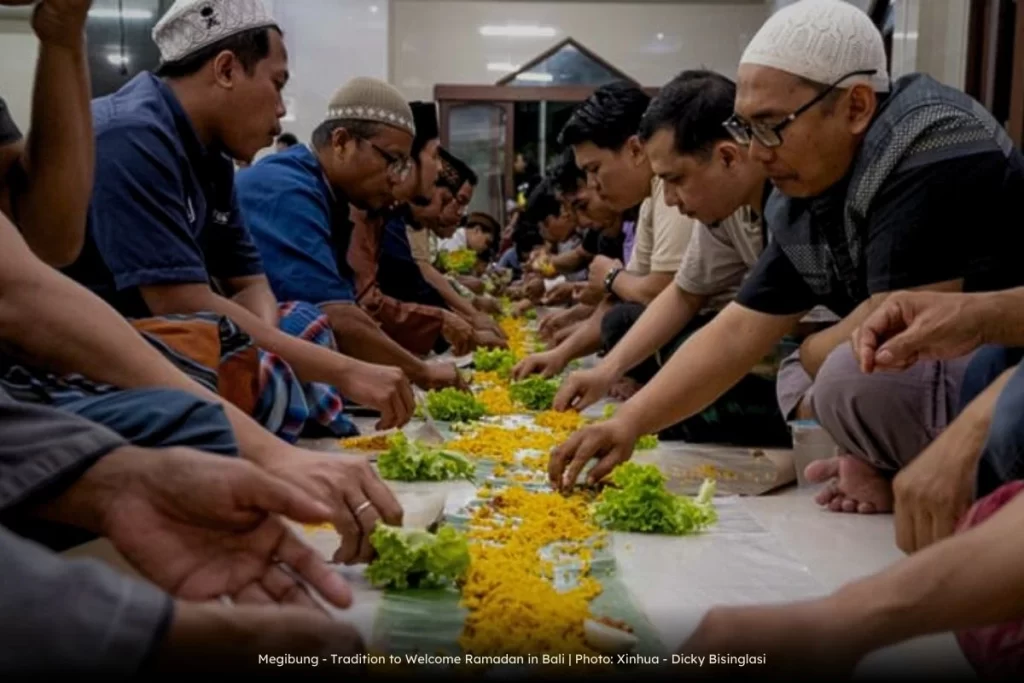
In Karangasem, Bali, the Muslim community practices Megibung, a tradition of eating together from one large tray. Though rooted in Balinese culture, it has been embraced by Muslim communities as a symbol of equality and solidarity. Participants sit in a circle, sharing dishes without hierarchy. Everyone receives the same portion. Everyone is included.
Megibung beautifully illustrates that Ramadan in Indonesia is shaped by local context. Even in a predominantly Hindu island, Islamic traditions adapt and harmonize with surrounding culture. It is a testament to Indonesia’s plural identity.
welcoming ramadan as more than a religious obligation
Across these traditions, a common thread appears: Ramadan in Indonesia is entered gradually and intentionally.
Before fasting begins, people cleanse through Padusan. Families reconcile during Munggahan. Ancestors are remembered in Nyadran. Communities celebrate unity through Dugderan. Equality is practiced in Megibung. These rituals transform Ramadan from a date on the calendar into a meaningful transition.
Rather than focusing solely on restrictions, Indonesians prepare the heart. They renew intentions, strengthen relationships, and reinforce social harmony. The holy month becomes a collective journey, one shaped by cultural identity as much as religious devotion.
entering the holy month with collective readiness
By the time Ramadan officially begins, preparation has already taken place. Forgiveness has been exchanged. Memories honored. Communities reconnected.
Fasting, then, is no longer just abstaining from food and drink. It becomes an extension of reflection, empathy, and strengthened bonds.
In honoring traditions like Dugderan, Padusan, Munggahan, Nyadran, and Megibung, Indonesians preserve both faith and heritage. Welcoming Ramadan is not a single ritual, it is a sequence of intentional moments that ensure the month begins with clarity and gratitude.
In a world that often moves too quickly, these traditions remind us to pause before entering something sacred. Whether through spiritual practice or cultural celebration, living consciously means understanding our connection to others and the impact of our presence within a community, a spirit aligned with the broader idea of Travel Positive, where meaningful experiences deepen relationships and leave a lasting imprint.
As Ramadan arrives, may it be welcomed not only with ceremony, but with intention, to grow, to reconnect, and to strengthen the communities around us.