Imlek, or Chinese New Year, is often recognized through red lanterns, lion dances, and family gatherings. But at the center of the celebration lies something deeply symbolic: food.
Traditional Imlek foods in Indonesia are more than festive meals. Each food carries meaning, about prosperity, longevity, harmony, and gratitude. To understand Imlek through its cuisine is to understand how culture speaks through flavor. Food becomes language. And every bite carries a wish for the year ahead.
Also read: 5 Best Destinations to Experience Imlek in Indonesia
food as cultural language
In Chinese tradition, food is chosen not only for taste but for symbolism. Words that sound similar to “wealth,” “growth,” or “long life” influence what appears on the dining table.
In Indonesia, these traditions evolved alongside local ingredients and culinary influences. Over generations, Chinese-Indonesian communities adapted foods while preserving their symbolic meanings. The result is a culinary heritage shaped by both ancestry and place. During reunion dinners, families gather around round tables, a symbol of unity and completeness. Elders are served first as a sign of respect. Certain foods are presented whole to represent wholeness in life. Every detail matters.
Among the many foods served during Imlek, several stand out for their rich symbolism and cultural significance.
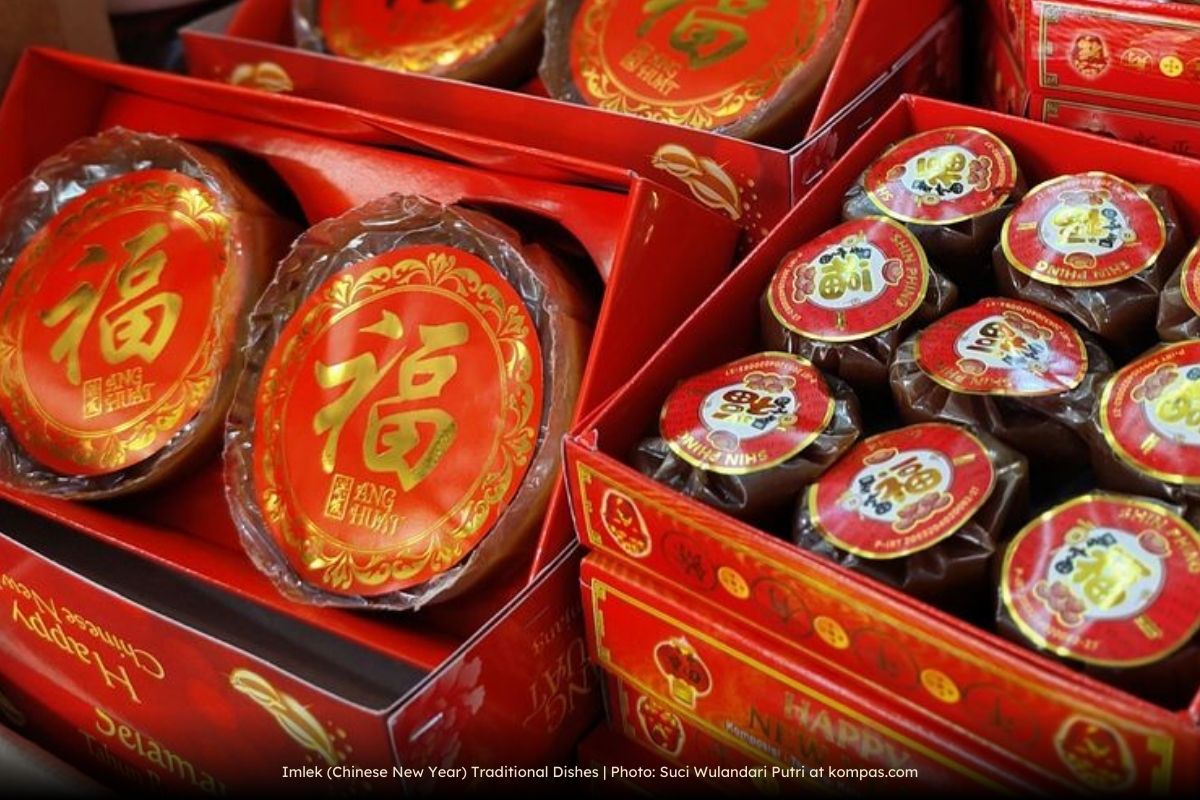
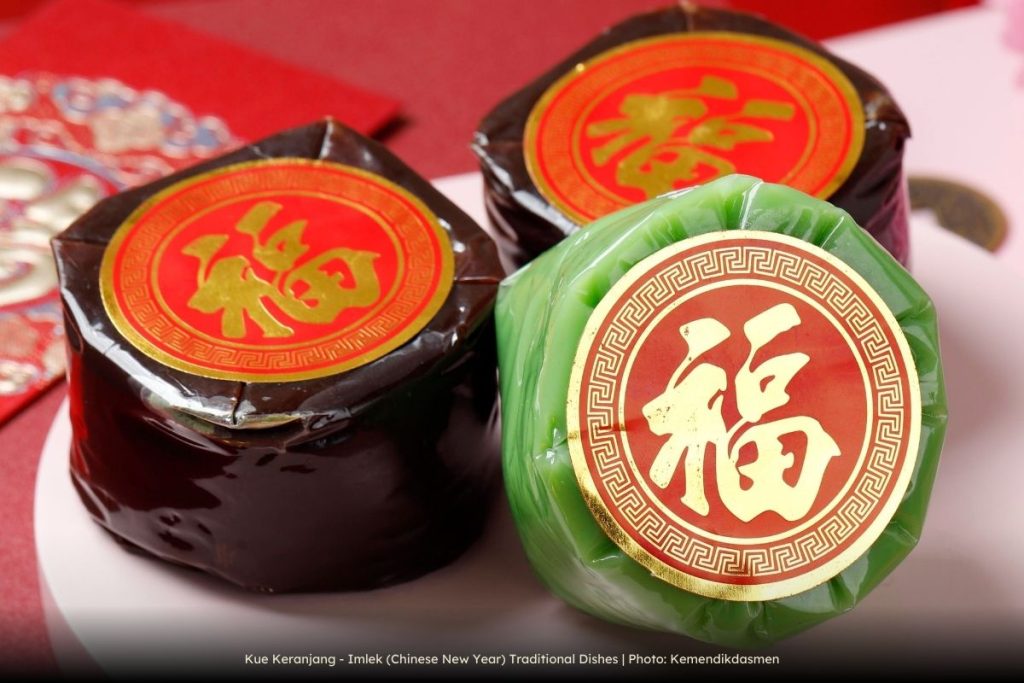
1. kue keranjang (nian gao): sweetness and rising fortune
One of the most iconic Imlek foods in Indonesia is kue keranjang, also known as nian gao.
Made from glutinous rice flour and sugar, this sticky, caramel-like cake symbolizes:
- Prosperity that “rises” year after year
- Strong family bonds (its stickiness represents unity)
- Sweetness in relationships
The word gao sounds like the word for “high” or “tall,” symbolizing growth and improvement.
In Indonesia, kue keranjang is often sliced and fried with egg or combined with local ingredients. This adaptation reflects how tradition evolves while maintaining its meaning.
2. lapis legit: layers of luck
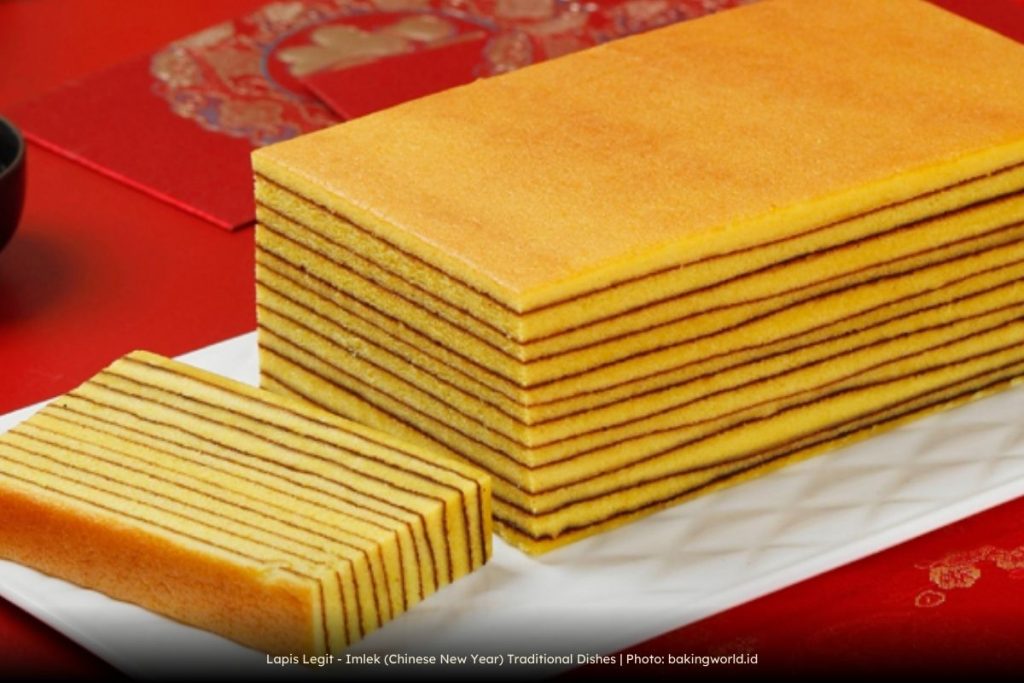
Although not originally from China, lapis legit has become a popular treat during Imlek celebrations in Indonesia.
Its many layers are often interpreted as:
- Layers of fortune
- Continuous blessings
- Patience and dedication
The cake itself requires time and careful baking, making it a symbol of perseverance. Its presence during Imlek shows how Indonesian and Chinese culinary traditions have blended over time.
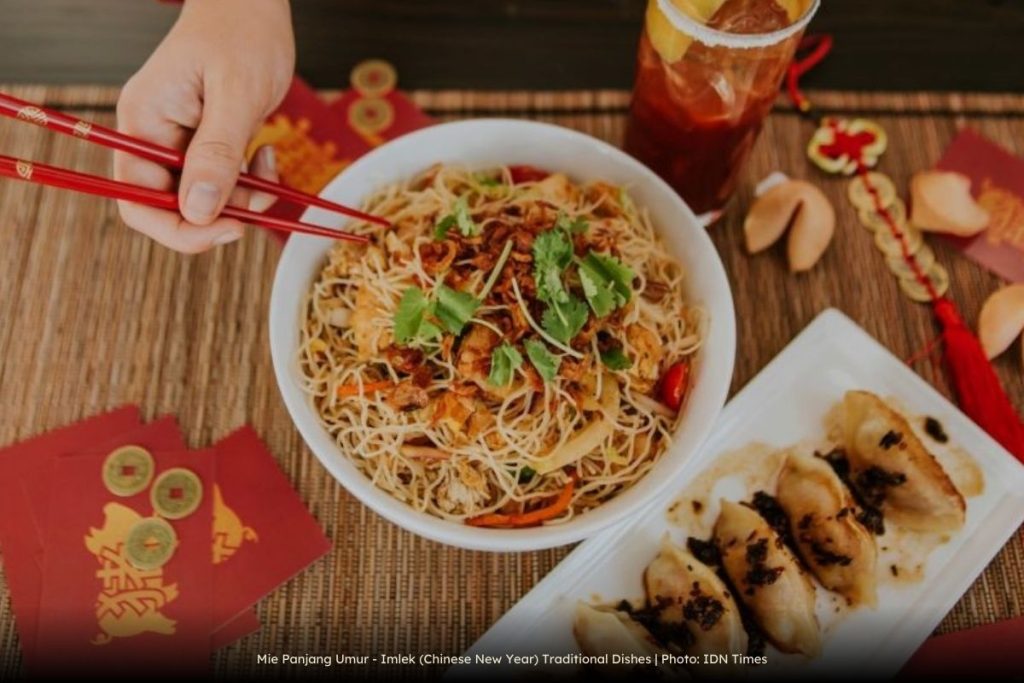
3. mie panjang umur (longevity noodles): a wish for long life
Longevity noodles are traditionally served long and uncut, symbolizing long life and resilience. Breaking or cutting the noodles is discouraged during the celebration, as it metaphorically shortens one’s lifespan.
In Indonesia, longevity noodles may be stir-fried with seafood, vegetables, or local spices. While flavors vary by region, the meaning remains consistent: a hope for health and endurance in the year ahead.
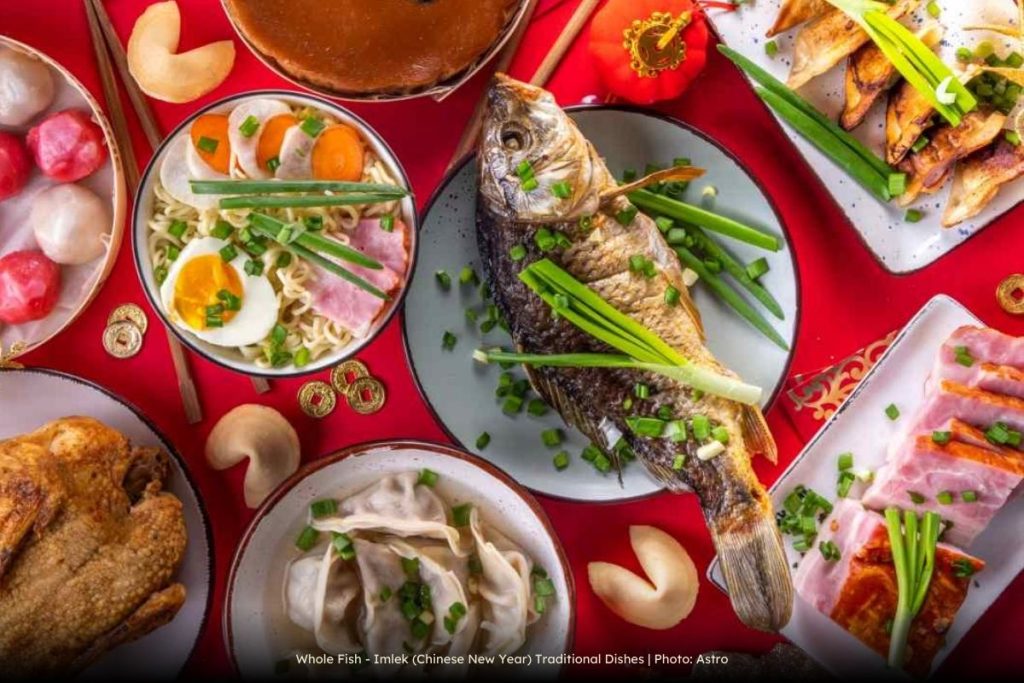
4. whole fish: abundance and prosperity
Fish is an essential dish during many Imlek reunion dinners.
In Mandarin, the word for fish (yu) sounds similar to the word for surplus or abundance. Serving fish represents the wish for prosperity beyond basic needs, a year of “more than enough.”
The fish is often served whole to symbolize completeness. In Indonesia, steamed grouper or snapper is common, seasoned with ginger, soy sauce, or local herbs.
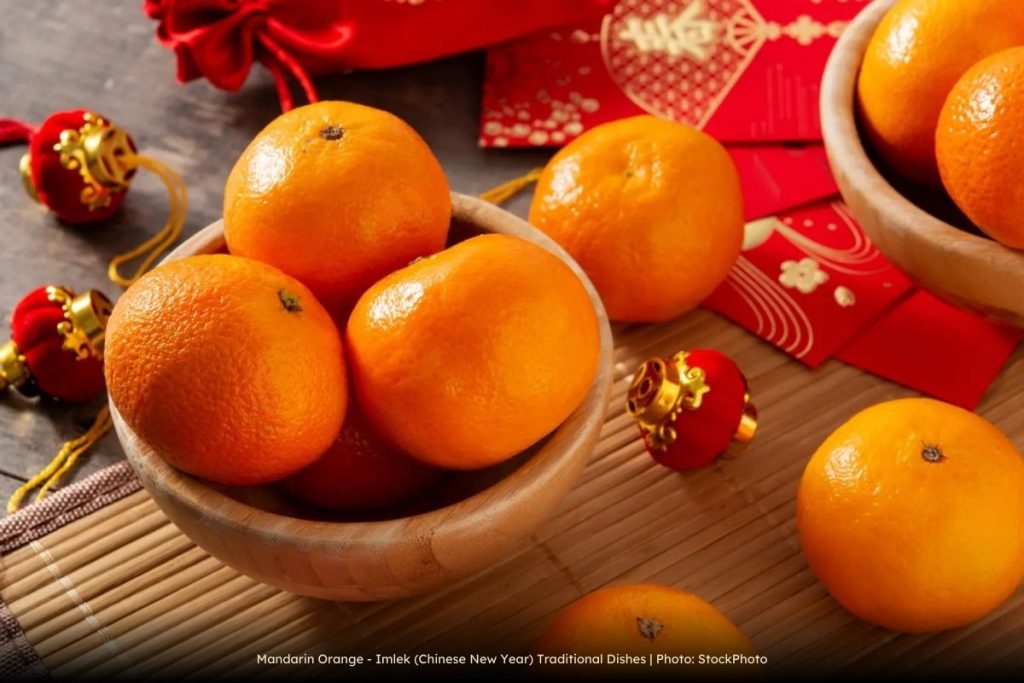
5. mandarin oranges: fortune and good luck
Mandarin oranges are displayed and exchanged during Imlek visits.
Their golden color symbolizes wealth, while their round shape represents fullness and harmony. Gifting oranges during house visits is a gesture of goodwill and shared prosperity.
Simple yet meaningful, they are among the most recognizable symbols of the celebration.
the reunion dinner: a ritual of togetherness
Beyond individual foods, the reunion dinner itself is a ritual.
Family members return home. Multiple generations gather at one table. Stories from the past year are shared, and hopes for the future are spoken aloud. The arrangement of foods, the order of serving, and even the language used at the table reflect values of respect, gratitude, and unity.
In Indonesia, this dinner often becomes a moment where cultural identity is reaffirmed, where heritage is preserved not through grand ceremonies, but through shared meals.
a culinary reflection of identity
Traditional Imlek foods in Indonesia show how culture survives through everyday practices. Recipes are passed down across generations. Symbolic meanings are explained to children. Local flavors blend with ancestral traditions.
Through food, stories of migration, adaptation, and resilience continue to live on.
Imlek is not only celebrated in temples or public spaces, it is sustained in kitchens and dining rooms. And sometimes, the deepest meanings are found not in grand performances, but in the quiet act of sharing a meal.