Every Cap Go Meh celebration in Singkawang carries a moment that both fascinates and humbles its audience: the appearance of the Tatung. For some, the ritual seems dramatic. For others, mysterious. But for the community that carries it forward, the Tatung tradition is neither spectacle nor performance, it is an act of faith, protection, and cultural continuity.
To understand Tatung is to look beyond what is seen. It is to understand how belief becomes embodied, how endurance becomes devotion, and how ritual becomes identity.
Also read: 5 Best Destinations to Experience Imlek in Indonesia
who are the tatung?
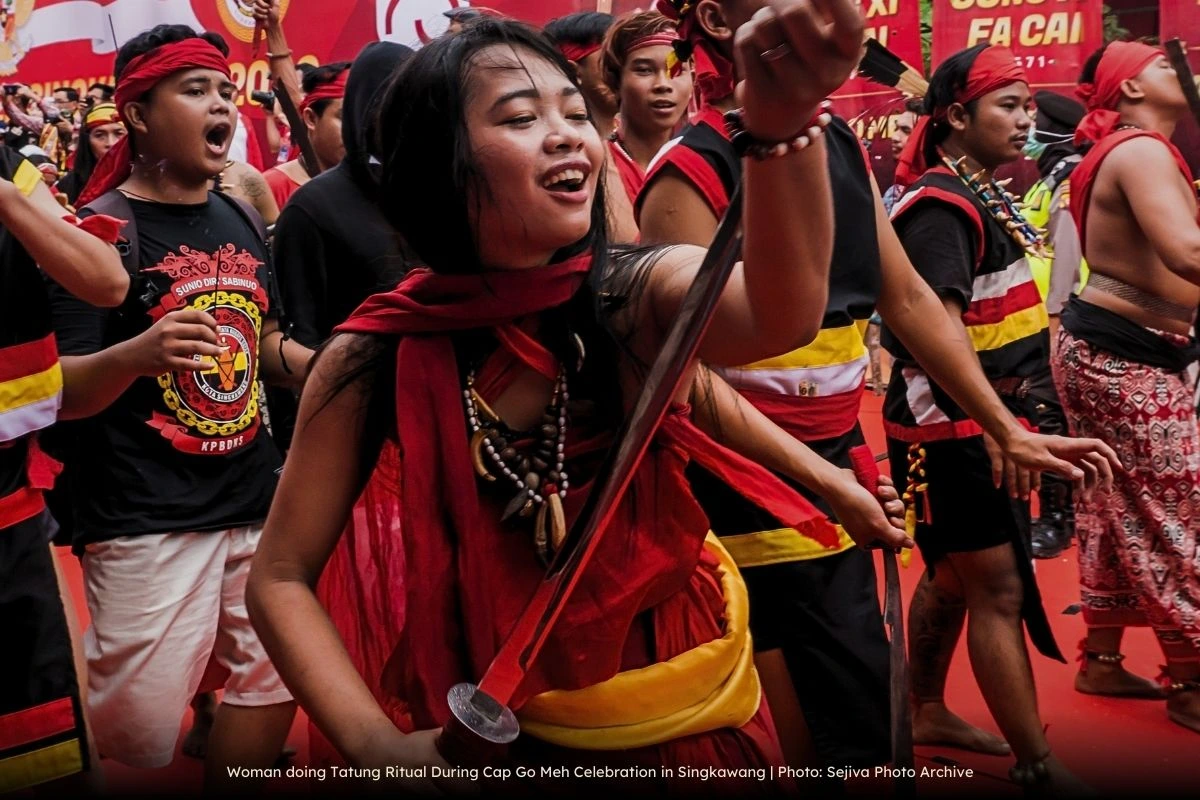
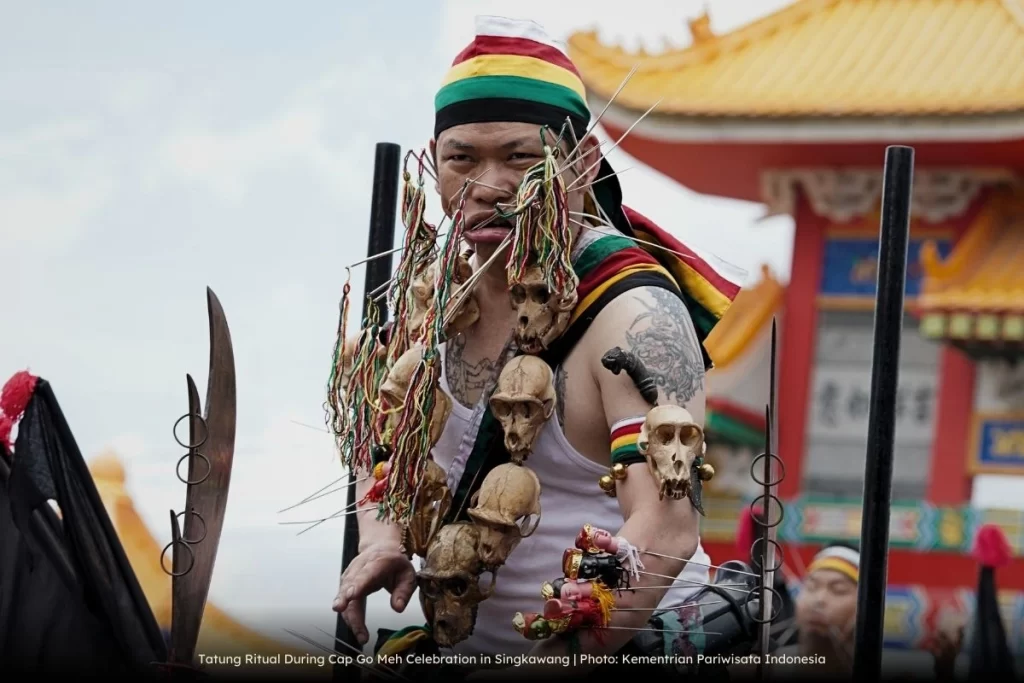
The word Tatung refers to spiritual mediums who participate in Cap Go Meh, the fifteenth day that closes the Imlek (Chinese New Year) celebration. During the procession, especially prominent in Singkawang, West Kalimantan, Tatung are believed to be guided or possessed by ancestral spirits or deities.
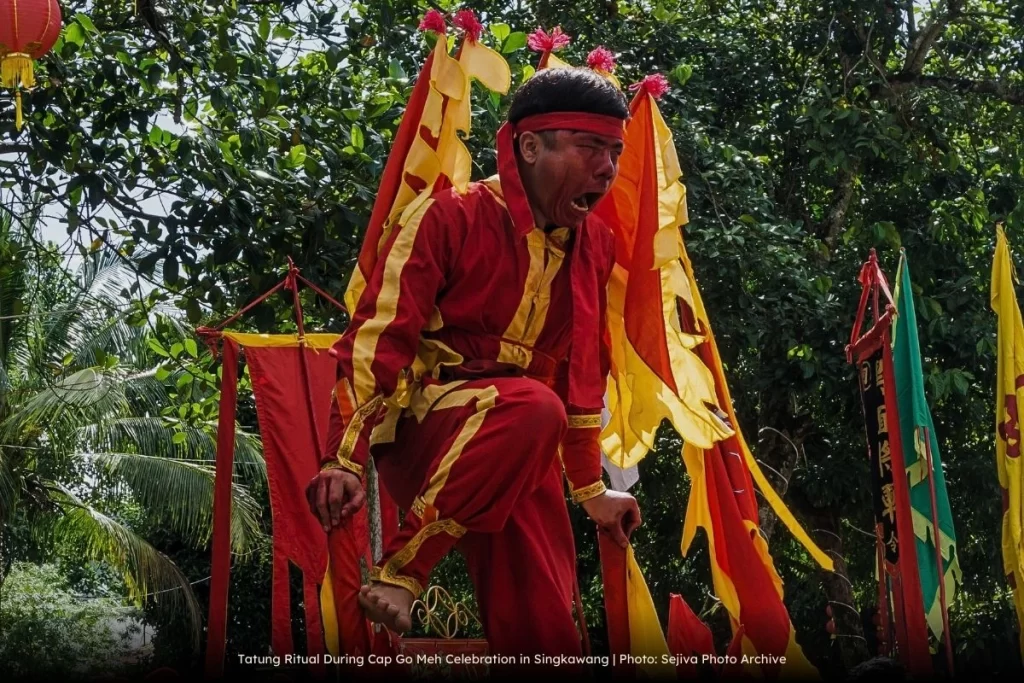
Throughout the ceremony, Tatung often performs acts of physical endurance: walking barefoot over sharp objects, carrying heavy altars, or piercing parts of their bodies. To outside observers, these acts may seem extreme. Within the ritual framework, however, they symbolize protection, purification, and communal safeguarding for the year ahead.
The Tatung are not entertainers. They undergo preparation, spiritual discipline, and guidance from elders before taking part. Their role is sacred, rooted in responsibility rather than performance.
Also read: Singkawang: Indonesia’s Most Iconic Cap Go Meh Destination
historical roots and local context
The Tatung tradition developed within Chinese Indonesian communities, particularly among Hakka descendants who settled in West Kalimantan centuries ago. Migration, trade, and community formation shaped Singkawang into a cultural center where traditions were preserved and adapted over generations.
Over time, Tatung rituals became a defining element of Cap Go Meh in Singkawang. The procession evolved not as entertainment, but as communal protection, a spiritual cleansing of the city at the close of the Chinese New Year.
Symbols seen during the ritual carry layered meanings. Red clothing represents protection and good fortune. Ceremonial weapons symbolize resilience under divine guidance. The procession route itself functions as a ritual purification of public space.
Local perspectives consistently emphasize that Tatung rituals are performed for the community’s spiritual well-being. Tourism may witness the event, but it does not define it.
faith as cultural expression
At its core, the Tatung tradition is an expression of faith. The ritual serves multiple purposes within the community:
- Cleansing negative energies
- Seeking protection for the coming year
- Expressing gratitude for blessings received
- Strengthening connection between ancestors and the living
Faith here is not abstract. It is embodied. Endurance becomes a visible symbol of spiritual strength and communal responsibility.
What may appear dramatic is, in fact, deeply disciplined. Preparation, prayer, and spiritual readiness precede the procession. The physical acts are not displays of bravado, they represent devotion.
Through Tatung, belief becomes visible, and identity becomes practiced rather than proclaimed.
ritual beyond spectacle
In today’s digital landscape, Tatung processions often circulate as striking images across social media. While visibility can increase awareness, it can also detach ritual from meaning.
When removed from context, acts of endurance risk being interpreted as exotic or sensational. Yet within the community, the ritual follows strict spiritual protocols. Elders and temple leaders ensure ceremonies remain sacred and aligned with tradition.
The intensity of the ritual may capture attention, but its purpose lies elsewhere, in protection, gratitude, and continuity.
Understanding Tatung requires slowing down. It requires recognizing that not every moment is meant to be consumed or captured.
cultural sensitivity and ethical storytelling
As Singkawang attracts more visitors during Cap Go Meh, cultural sensitivity becomes increasingly important.
Ethical engagement with the Tatung tradition involves:
- Avoiding sensational or exaggerated narratives
- Providing historical and spiritual context
- Respecting sacred boundaries
- Centering community voices
Responsible storytelling deepens understanding rather than amplifying shock value. It reframes endurance as devotion and ritual as responsibility.
This perspective aligns closely with the #TravelPositive movement, which encourages travelers to approach cultural encounters with humility, awareness, and respect.
When the question shifts from “How dramatic is this?” to “What does this mean to the community?” the entire experience changes.
from observation to connection
For visitors, the Tatung tradition offers an important reminder: cultural encounters require more than curiosity. They require awareness. When approached respectfully, witnessing the ritual becomes less about capturing dramatic moments and more about understanding what they represent.
In that understanding, travel shifts from observation to connection. The Tatung tradition is not meant to impress, but it is meant to protect, to give thanks, and to sustain a community’s spiritual rhythm. And when we approach it with humility, we learn to see culture not as spectacle, but as something lived and carried forward.