Every afternoon during Ramadan, something special happens across Indonesia.
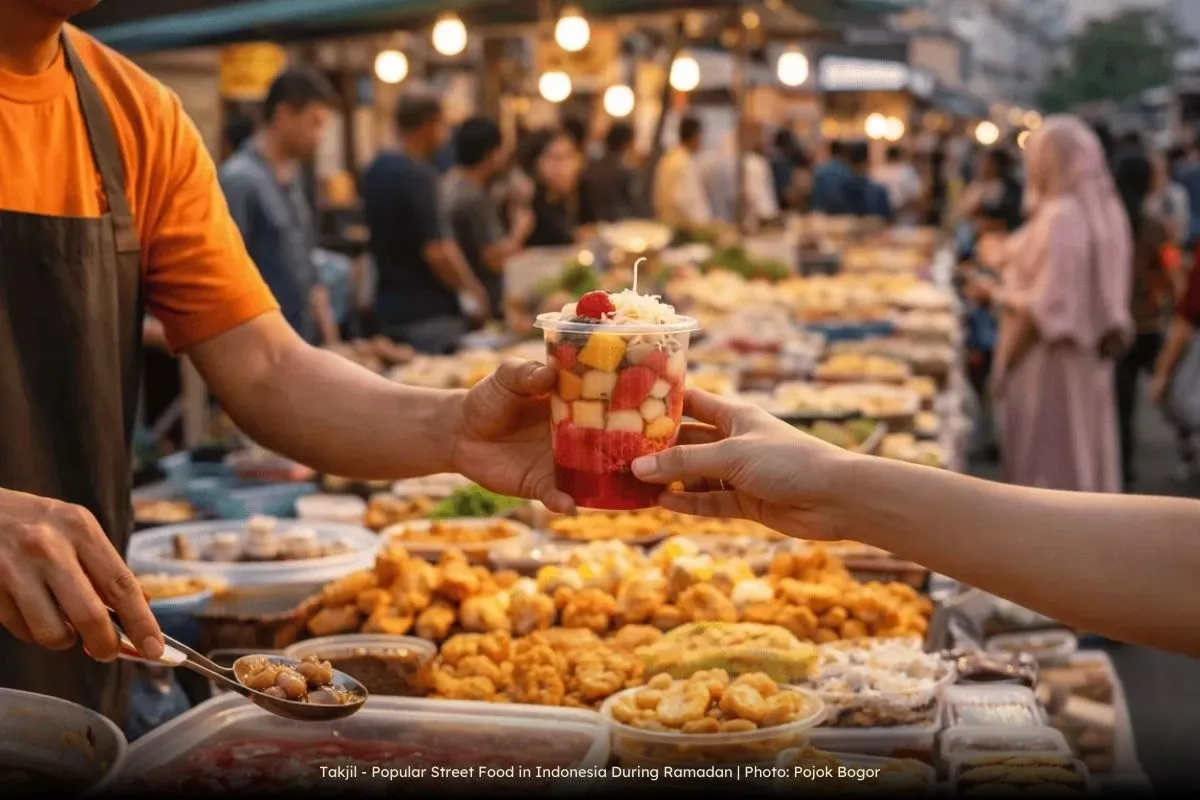
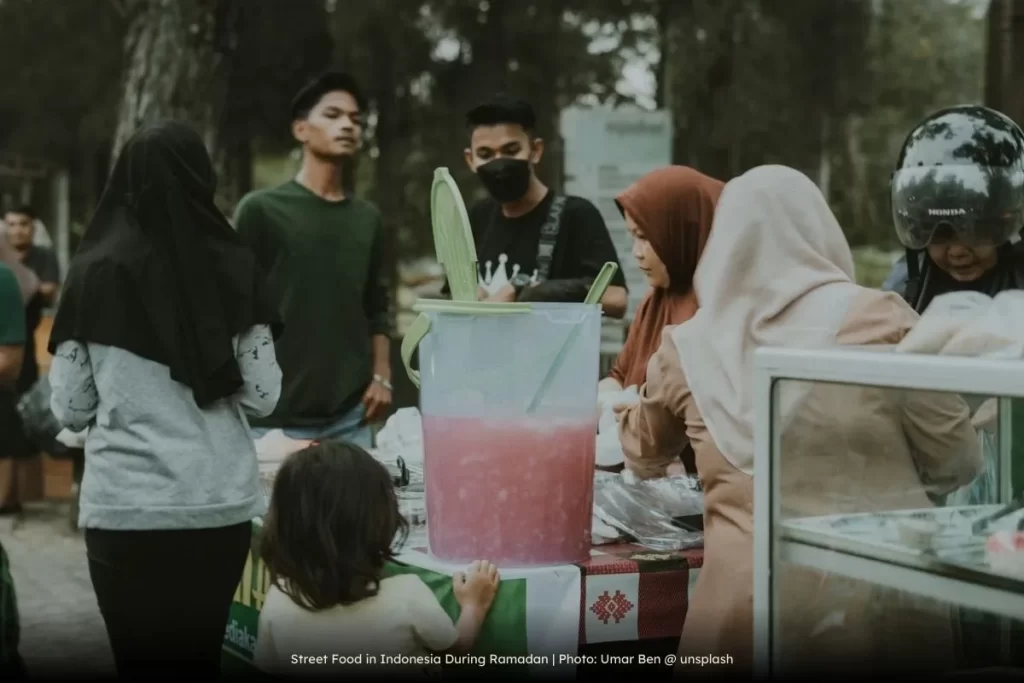
As sunset approaches, sidewalks transform into vibrant food corridors. Temporary stalls appear, colorful drinks lined up neatly, while the scent of coconut milk and palm sugar fills the air. This is the daily ritual of searching for takjil in Ramadan, the light dishes enjoyed for breaking fast in Indonesia.
No matter which city you visit, the experience feels surprisingly familiar as Ramadan street food brings people together in the same simple way.
Also read: Indonesia Tradition to Welcome Ramadan
what is takjil in ramadan?
Takjil refers to small, sweet, or light dishes consumed right at sunset to break the fast. The word comes from the Arabic concept of hastening iftar, reflecting the tradition of breaking the fast promptly once maghrib arrives.
While dates are traditionally recommended in Islamic practice, Indonesia has developed its own vibrant takjil culture. Today, the term is closely associated with Ramadan snacks sold in afternoon street markets, not just as food, but as a daily ritual of gathering, choosing, sharing, and reconnecting.
popular takjil in indonesia you’ll see every year
Although Indonesia is incredibly diverse, certain dishes consistently appear across regions. These foods have become the backbone of Ramadan street food culture.
1. kolak: the iconic sweet comfort
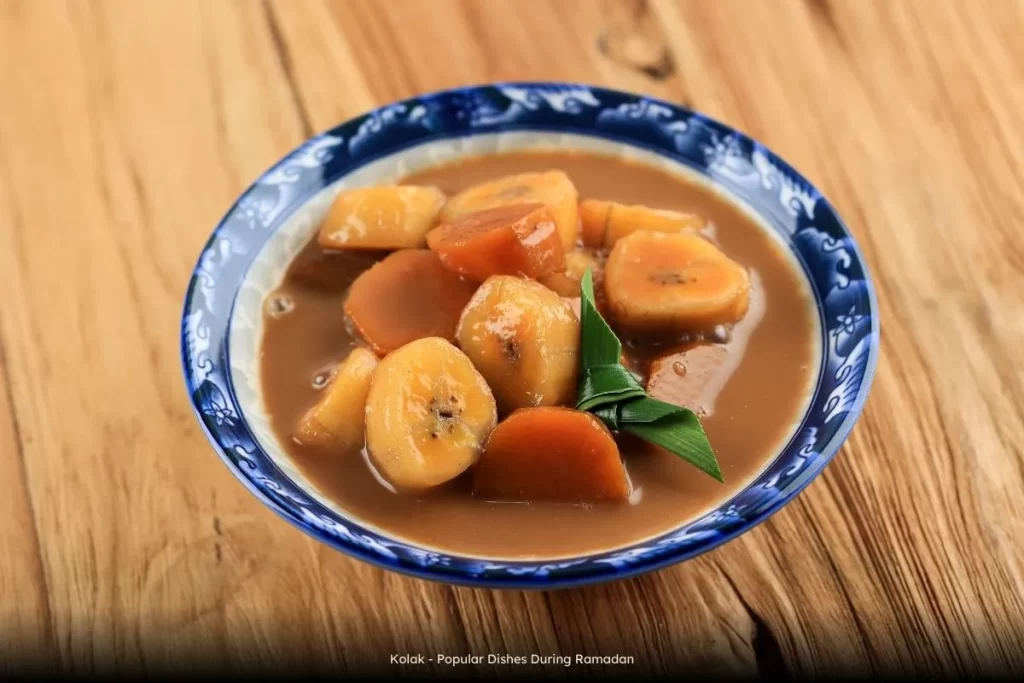
If there is one dish that defines takjil in Ramadan, it’s kolak.
Made from bananas simmered in coconut milk and palm sugar, sometimes with sweet potatoes or jackfruit, kolak is warm, sweet, and comforting. Its ingredients are affordable and locally available, making it accessible to everyone. For many Indonesians, kolak is the taste of childhood Ramadan evenings.
Kolak appears every Ramadan because it’s simple, nostalgic, and perfectly suited for restoring energy after hours of fasting.
2. es campur: the refreshing tropical classic
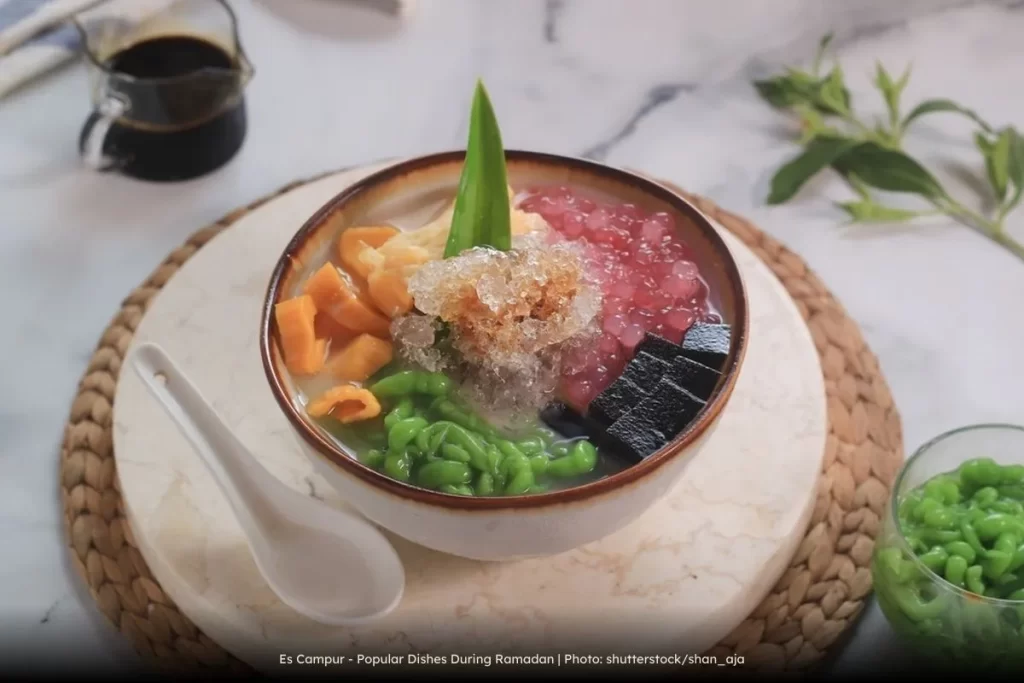
Indonesia’s tropical climate makes cold desserts especially popular for breaking fast.
Es campur, a colorful mix of fruits, shaved ice, syrup, jelly, and condensed milk is one of the most popular takjil in Indonesia. While ingredients may vary between cities, the refreshing sweetness remains consistent.
3. gorengan: the irresistible savory option
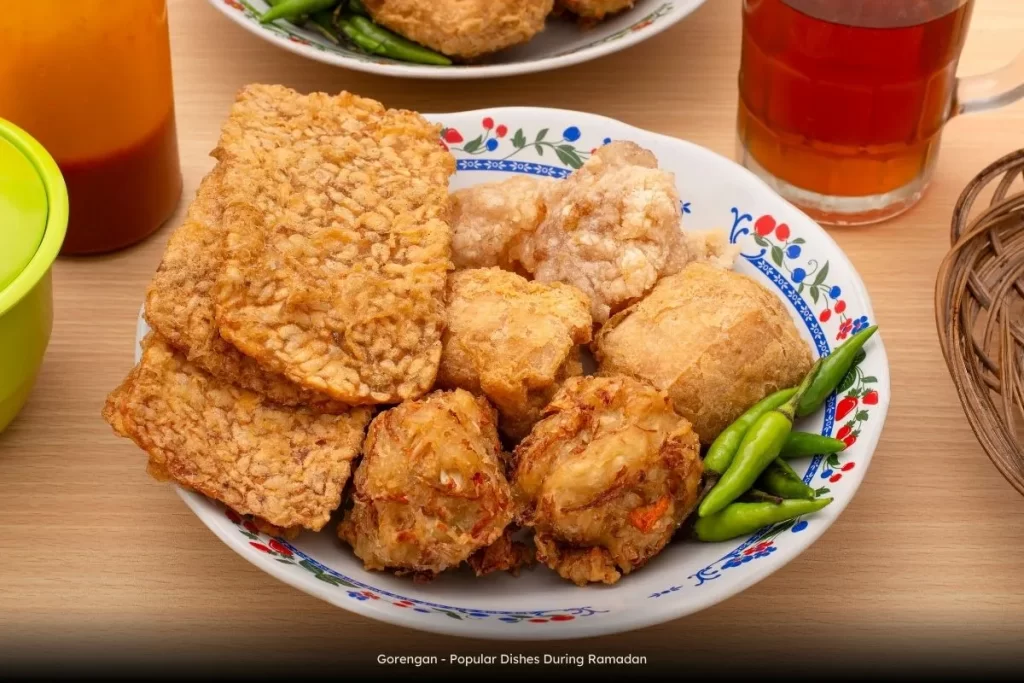
Not all takjil in Ramadan are sweet.
Gorengan, or assorted fried snacks, are a staple of Indonesian street food culture. Vegetable fritters (bakwan), stuffed tofu, fried bananas, and risoles are commonly found throughout the year. However, during Ramadan, they become true crowd favorites.
Warm, crispy, and easy to share, gorengan are often carried home just before sunset. No matter the city, they are almost always sold in every Ramadan street market, and in many households, breaking fast feels incomplete without them.
4. bubur sumsum: light and comforting
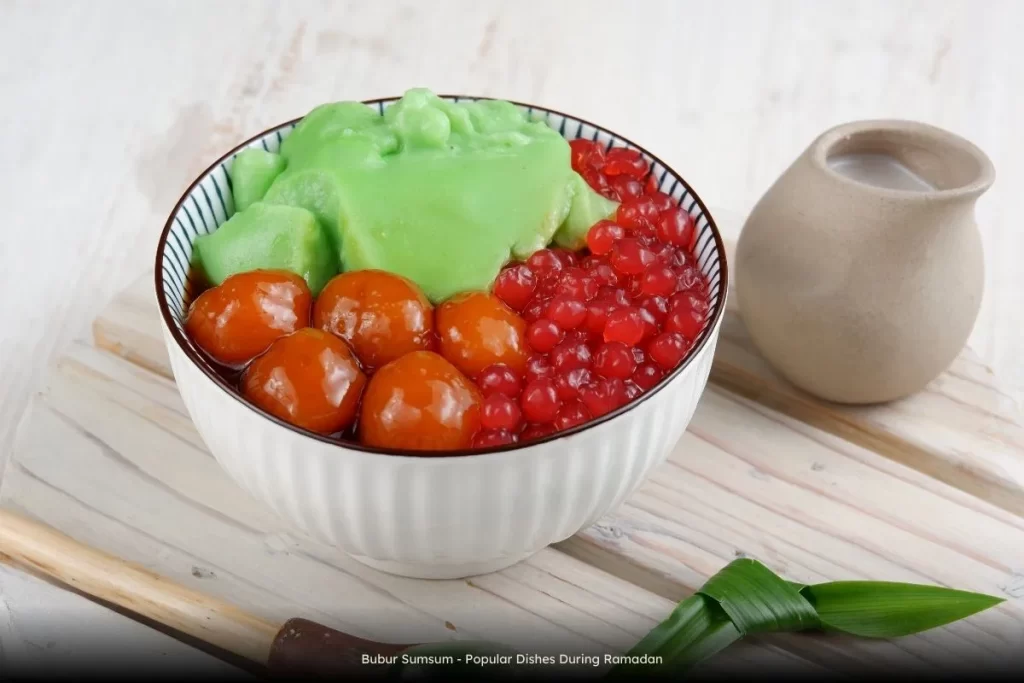
Bubur sumsum is a silky rice flour porridge topped with melted palm sugar syrup. Gentle on the stomach, it is often chosen as a light starter before a larger evening meal. Like kolak, it reflects the simplicity that defines Ramadan food traditions in Indonesia.
why these dishes always appear during ramadan
There’s a reason why these same dishes return every year.
- Accessibility and Affordability
Most takjil dishes use local ingredients such as coconut milk, palm sugar, rice flour, and bananas. This keeps prices affordable and allows vendors to prepare large quantities. For many small-scale sellers, Ramadan becomes an important source of seasonal income.
- Familiar Flavors Across Regions
Sweet, mild flavors dominate Ramadan street food. They are comforting and safe choices after a full day of fasting. Because these flavors are universally loved, they travel easily across regions. - Simplicity Over Luxury
Ramadan is a time for reflection, gratitude, and togetherness rather than indulgence. The humble nature of takjil mirrors these values perfectly. Expensive ingredients aren’t necessary. What truly matters is the sense of comfort and familiarity they bring.
where to find takjil in indonesia
Takjil stalls typically appear between 3:30 PM and 6:00 PM, just before maghrib. You’ll find them:
- Along neighborhood streets
- Near mosques
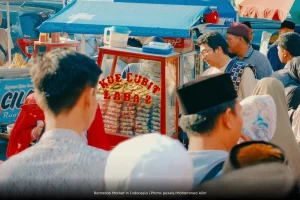
- In temporary Ramadan bazaars
- At traditional markets
In larger cities like Jakarta, Bandung, or Yogyakarta, entire streets can transform into dedicated Ramadan food markets during the holy month. For travelers, these markets offer one of the most accessible and meaningful ways to experience Indonesian Ramadan traditions firsthand.
Also read: How to Travel Respectfully During Ramadan
more than food: a daily ritual of togetherness
In today’s world, it’s easy to find premium desserts or trendy drinks. Food delivery apps offer endless options. Yet when Ramadan comes, many Indonesians still return to kolak, es campur, gorengan, and bubur sumsum.
You don’t need an explanation when you see kolak on the table before maghrib.
You’re familiar with the gentle sound of ice being stirred in a bowl.
You know the feeling of carrying home a pack of warm gorengan to share with family.
And perhaps that is the true beauty of takjil in Ramadan, not in how luxurious it is, but in how deeply familiar it feels.
This Ramadan, may you find comfort in simple flavors, warmth in shared moments, and joy in the small rituals before sunset. Whether you’re at home or traveling across Indonesia, may every sweet bite remind you that sometimes, the simplest tastes carry the most meaningful stories.