If Easter is usually synonymous with colorful eggs and party decorations, Larantuka Easter Tradition offers you something far deeper, and is not just another holiday. Far from the commercial noise, this town has guarded a 500-year-old tradition that remains perfectly intact. The merger of Portuguese and local traditions in Semana Santa, often referred to as enculturation (inkulturasi), is a complex process where European Catholic rituals, local ancestral beliefs, and social structures fused to create a unique cultural identity in Larantuka. Semana Santa will take you on a week-long journey of reflection, where every single day tells a new story.
the timeline: navigating the seven days of semana santa
Semana Santa, or Hari Bae (The Good Day), is a Holy Week ritual performed for seven consecutive days by the Catholic community in Larantuka. The name comes from the Portuguese Semana (week) and Santa (holy).
palm sunday (minggu palma)
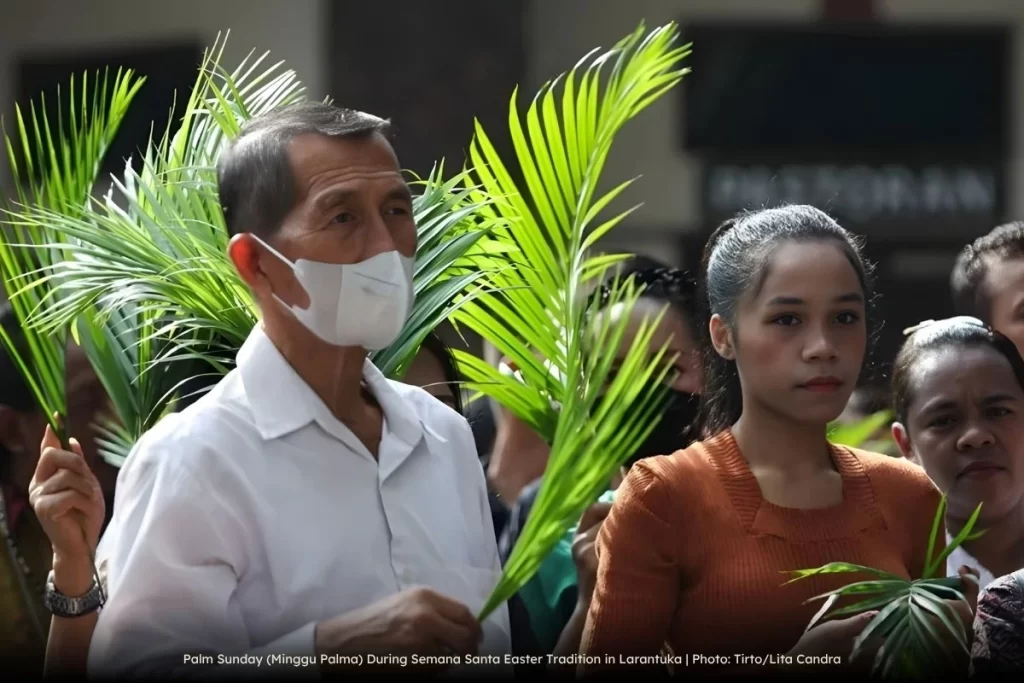
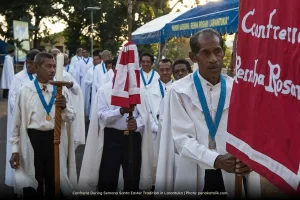
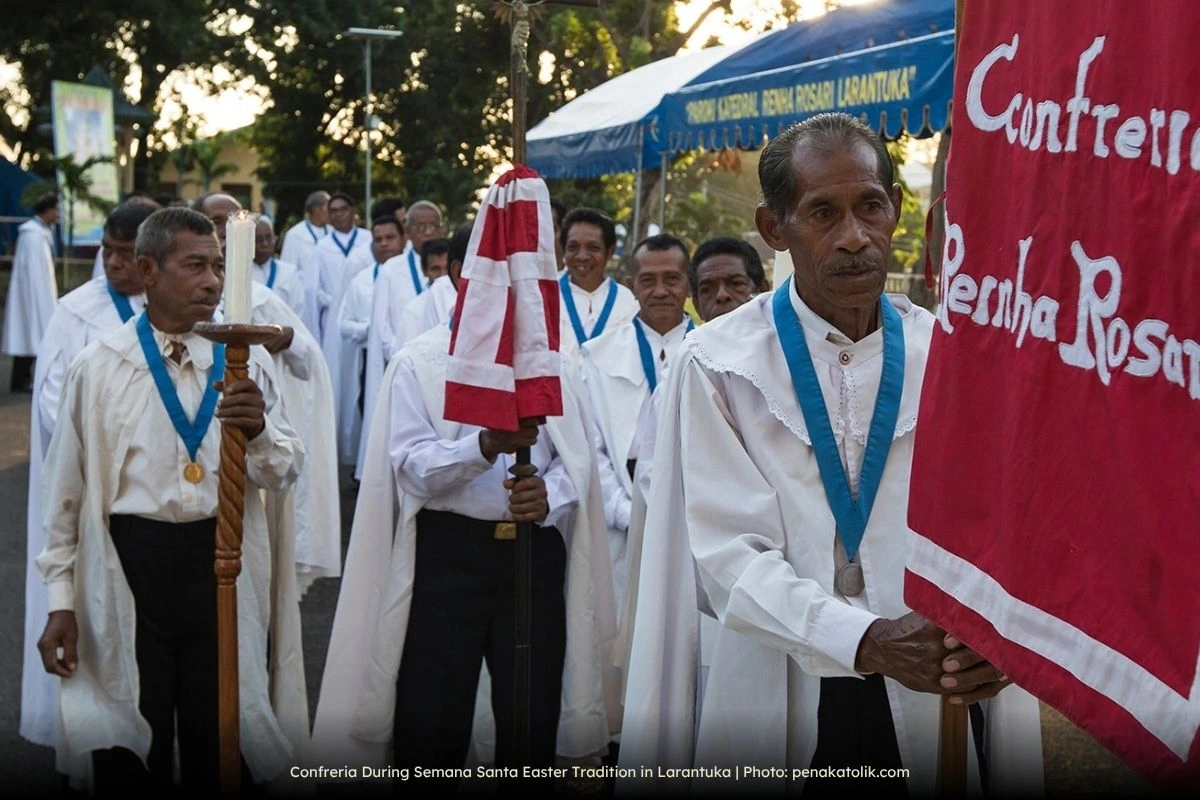
On the first day, you join Palm Sunday. The locals call it Dominggu Ramu or the “Sunday of Leaves.” Why? Because you’ll see the streets filled with people carrying palm fronds to be blessed. You’ll also witness the Confreria (the local Catholic organization that has guarded this tradition for centuries) and the local Catholic community circling the Cathedral to commemorate Jesus’ entry into Jerusalem.
ash wednesday (rabu trewa)
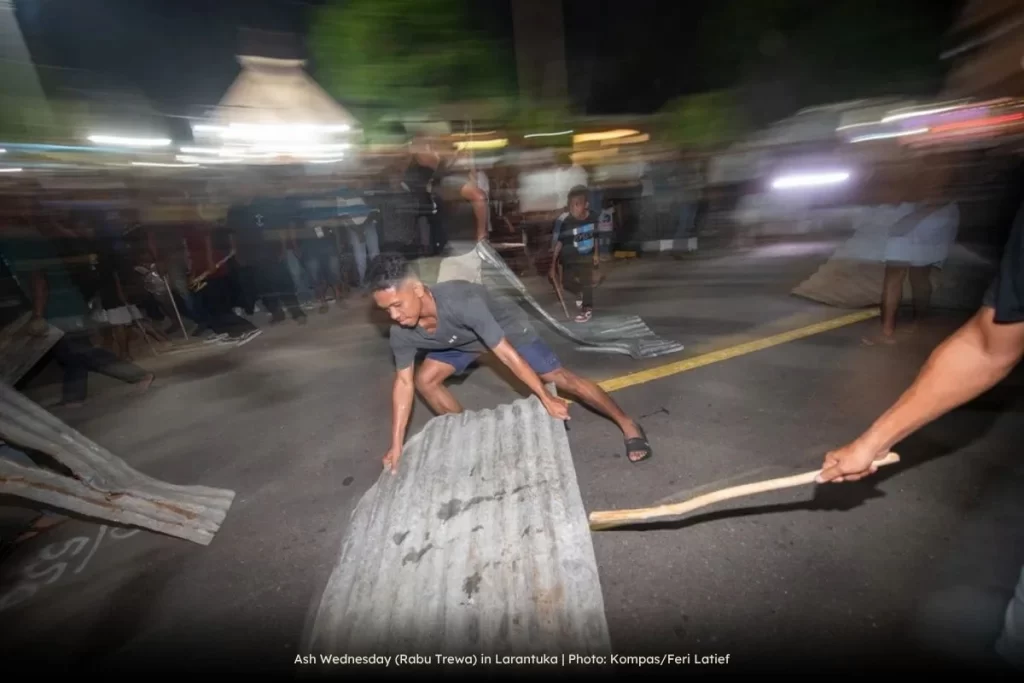
After Palm Sunday, you will experience Rabu Trewa. This is a very special tradition found only in Larantuka and the nearby areas.
The day starts with a morning prayer at the Chapel of Mary. These ceremonies follow strict, ancient customs passed down through local tribes. The prayers are led by the Mama Muji, a group of women who sing beautiful hymns in Latin or Portuguese.
In the afternoon, the Lamentations (the sorowful songs of Prophet Jeremiah) are held at the Reinha Rosari Cathedral. These rituals follow the old Roman Catholic traditions of Postoh. The most exciting part happens at the very end: everyone starts making a loud commotion, shouting “Trewa, trewa, trewa!” to break the silence.
Back in the day, the tradition involved destroying ships at the port and was filled with celebrations.
sesta vera (jumat agung)
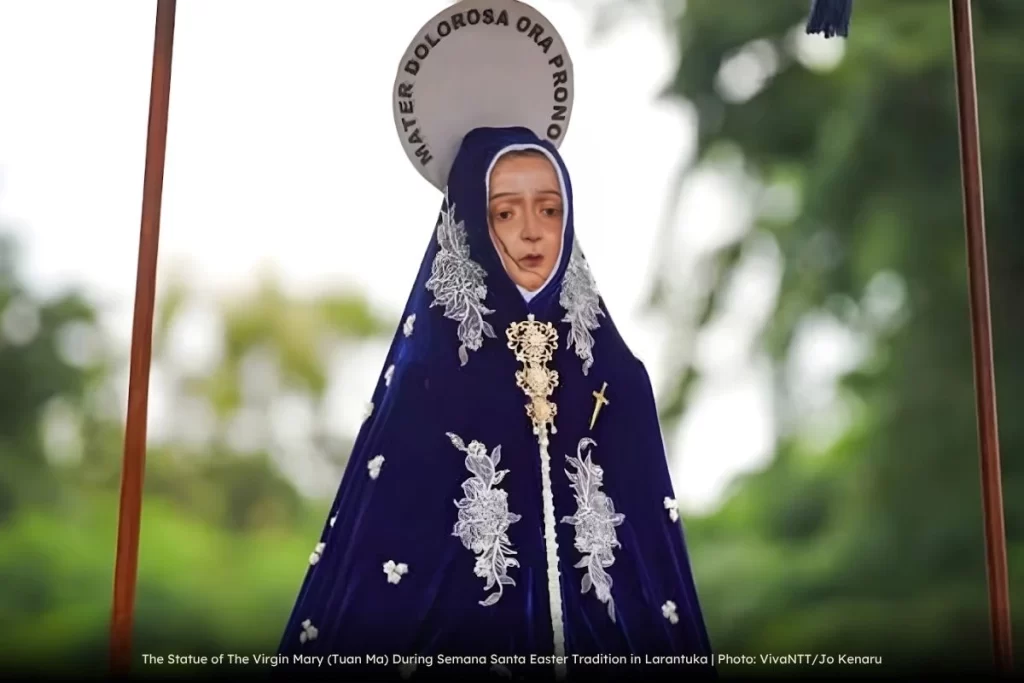
This is one of the most sacred and unique moments of the Easter celebration in Larantuka. On Maundy Thursday morning, the doors of the Chapel of Tuan Ma were officially opened. Members of the Confreria perform a ritual to clean the statue of the Virgin Mary in Maundy Thursday (Kamis Putih), known locally as Tuan Ma.
You can join the long line of pilgrims for the Cium Tuan ritual. In this tradition, people prostrate themselves and kiss the feet of the statue as a sign of deep respect and prayer. The queue can be very long, so you will need plenty of patience!
In the afternoon, just like in Catholic churches around the world, the Mass of the Last Supper is held to remember Jesus washing the feet of His disciples.
From late afternoon into the evening, you will see the local residents getting busy along the procession route. They began installing the Tikam Turo wooden or bamboo poles placed along the roadside. These poles will hold the candles that light the way for the grand Good Friday procession.
holy saturday (sabtu santo)
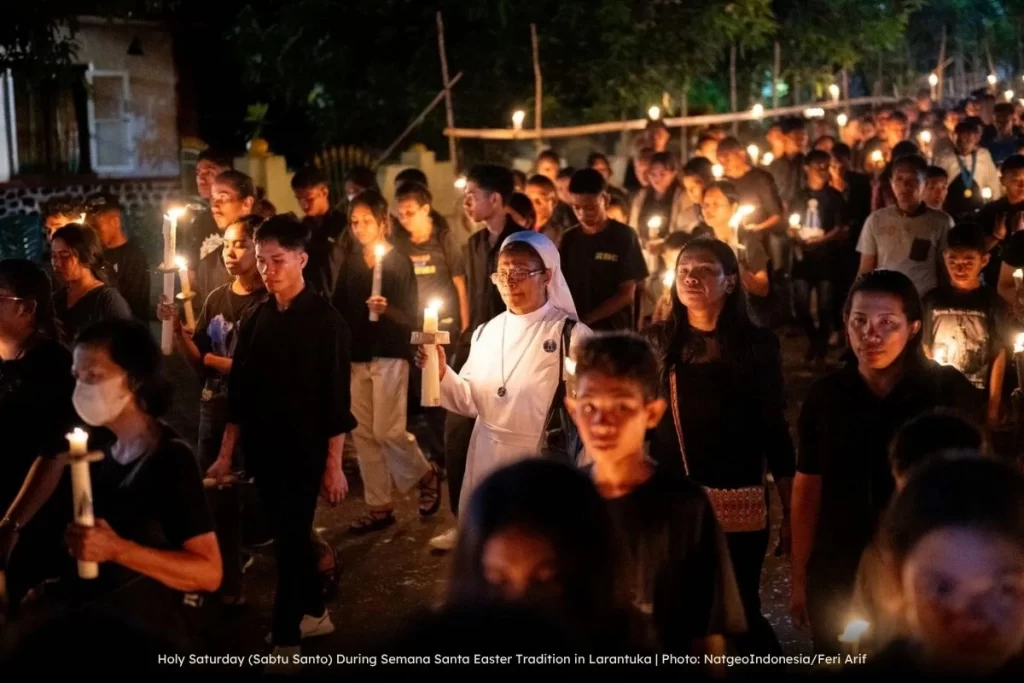
After a sequence of several days, you have a break time to return to a moment of silence and reflection. This marks the end of the devotion with a procession to return the statues of Tuan Ma and Tuan Ana (Jesus Christ) to their respective chapels, accompanied by the hymn “Virgem Mae de Deus.” In the evening, the faithful celebrate the Resurrection of Christ during the Easter Vigil Mass.
easter sunday (minggu halleluya)
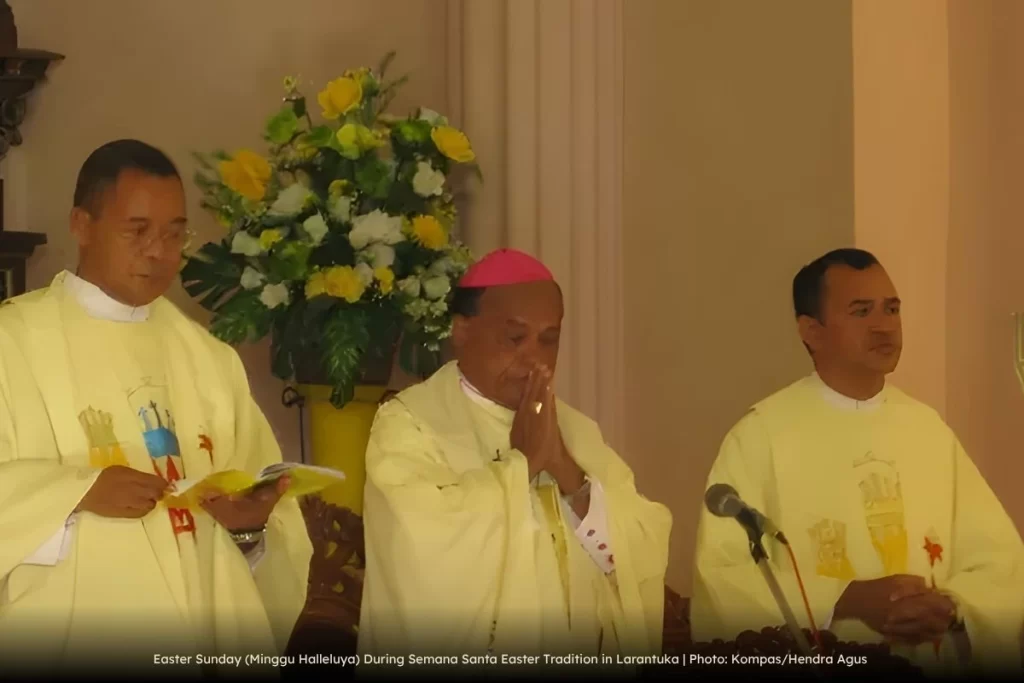
The final part of the journey is Easter Sunday. In the morning, the Easter Eucharist (Mass) is celebrated in the church. Later in the afternoon, the congregation gathers to escort the statue of Maria Halleluya from the Pantekebis Chapel. After the celebration, the statue is carried in a joyful procession back to the chapel to be returned to its throne.
With this, the long and sacred journey of Semana Santa, which reached its peak on Sesta Vera (Good Friday), finally comes to a close.
acculturation and tolerance
The Semana Santa events are always organized by the Confreria (Brotherhood of Reinha Rosari), a lay organization that ensures the rituals stay true to their medieval Portuguese origins.
However, beneath these deep Catholic traditions lies an incredible spirit of tolerance. You will see local Muslims and followers of other faiths actively helping the procession run smoothly. They do everything from handling security to providing food and supplies for the pilgrims. This proves that the tradition is a point of pride and a shared identity for the entire community of Larantuka.
#travelpositive guide: how to join in without disturbing
As travelers, our goal is to be empowering witnesses, not intruders upon the sacred.
best locations to witness semana santa:
- Larantuka Coastline: Ideal for capturing the grandeur of the Sea Procession without having to board overcrowded boats.
- Procession Route Corners: Stand behind the rows of candles during Good Friday night to experience the solemnity of the procession without obstructing the pilgrims’ path.
- Prayer Hill (Bukit Doa): This vantage point offers a panoramic view of the entire Semana Santa proceedings.
ethics and behavioral protocol:
- Dress Code: Wear polite and modest clothing. Black or dark colors are highly recommended as a sign of respect during this period of mourning.
- Silence is Key: Turn off phone sounds. Avoid talking loudly or laughing in the vicinity of the chapels.
- Camera Etiquette: Never use flash or block the path of praying devotees just for a photo. If possible, use a telephoto lens to take pictures from a distance.
- Respect Boundaries: Certain areas are closed to non-pilgrims; always ask a Confreria official before proceeding further.
Larantuka is preparing for the coming decade, during which the challenges of the modern era will continue to test the resilience of these traditions. As a responsible traveler, by visiting here, you are helping to support the local economy and ensure that these traditions remain alive.