Travel experiences are often defined by destinations. Ramadan in Indonesia invites travelers to focus on something else: participation.
One of the most meaningful ways to understand Indonesia during Ramadan is through community iftar (buka puasa bersama). These open breaking-of-the-fast gatherings are not designed as tourist attractions. They are social practices rooted in generosity, equality, and shared time.
For travelers seeking inclusive and responsible experiences, community iftar in Indonesia offers something rare.
Also read: Indonesia Tradition to Welcome Ramadan
what is community iftar (buka puasa bersama)?
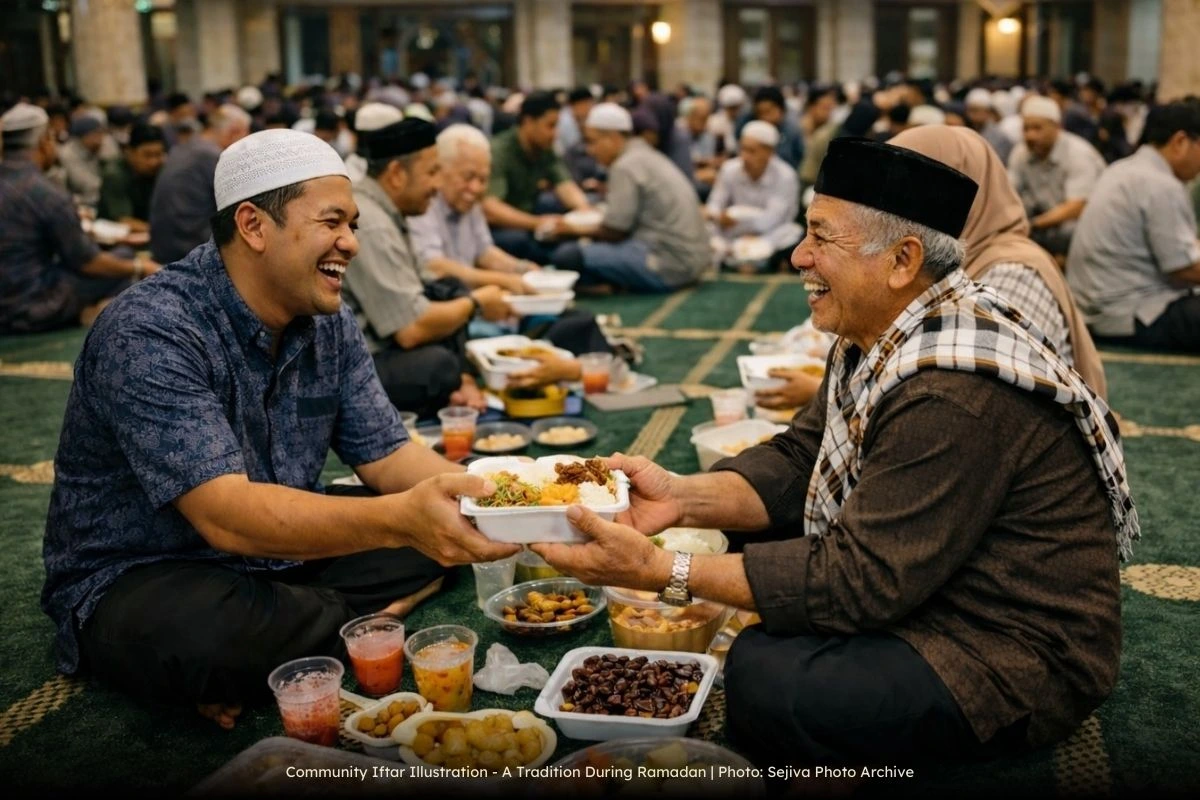
Community iftar refers to buka puasa bersama (bukber) events where anyone is welcome to participate. This event, mostly organized by mosques, neighborhood associations, and volunteer groups, and they operate without entry fees, invitations, or restrictions on attendance. This model reflects a deeper cultural value in Indonesia: hospitality as a collective responsibility. During Ramadan, this value becomes visible in public space.
At the same time, the tradition of bukber is not limited to large public gatherings. It has also become a familiar social ritual that brings together families, groups of friends, colleagues, and school alumni. Throughout the month of Ramadan, many people set aside evenings to reconnect through small-scale bukber dinners sometimes held at home, and other times at local restaurants or food stalls. These gatherings often become a moment to catch up, share stories, and strengthen relationships that may have grown distant in the busyness of daily life.
iconic locations for community iftar in indonesia
Although bukber can take place in many settings, most community iftar gatherings are commonly held in mosques. During Ramadan, many people are eager to share their blessings by contributing food, drinks, or donations for those breaking their fast. Held iftar at the mosque allows these contributions to reach a wider community worshippers, travelers, students, and sometimes even strangers passing by. As a result, mosques naturally become central spaces where generosity and togetherness are expressed through shared meals.
Here are some well-known examples of popular community iftar gatherings in Indonesia:
istiqlal mosque, jakarta
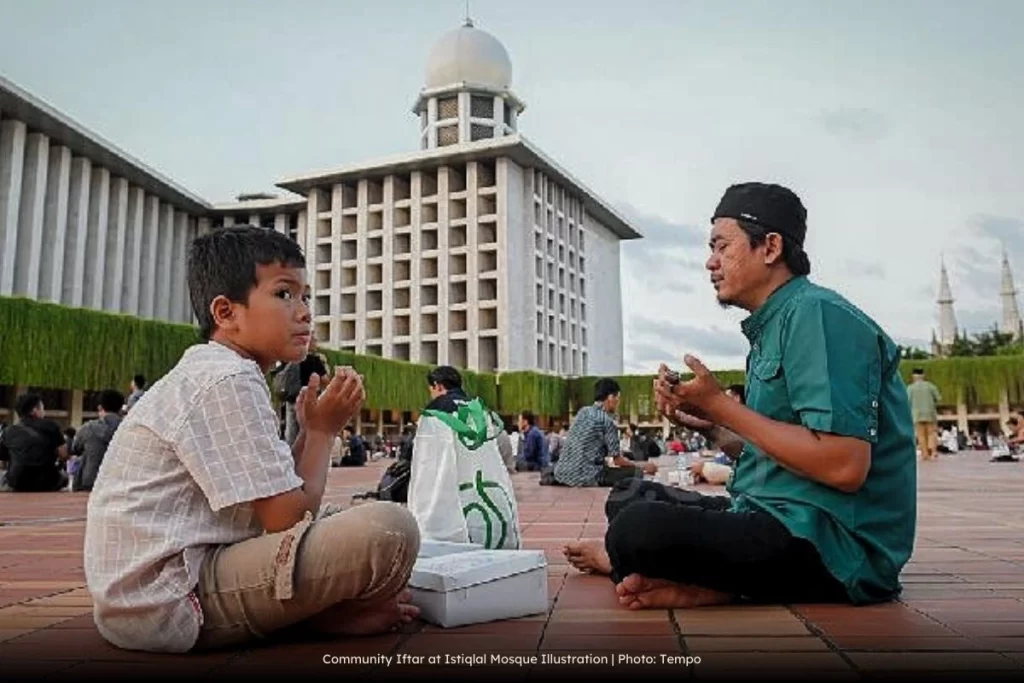
thousands of meals are distributed daily throughout the holy month. Visitors sit alongside office workers, street vendors, families, and students. The setting is simple. Everyone receives the same meal. The physical arrangement reinforces equality.
bandung grand mosque
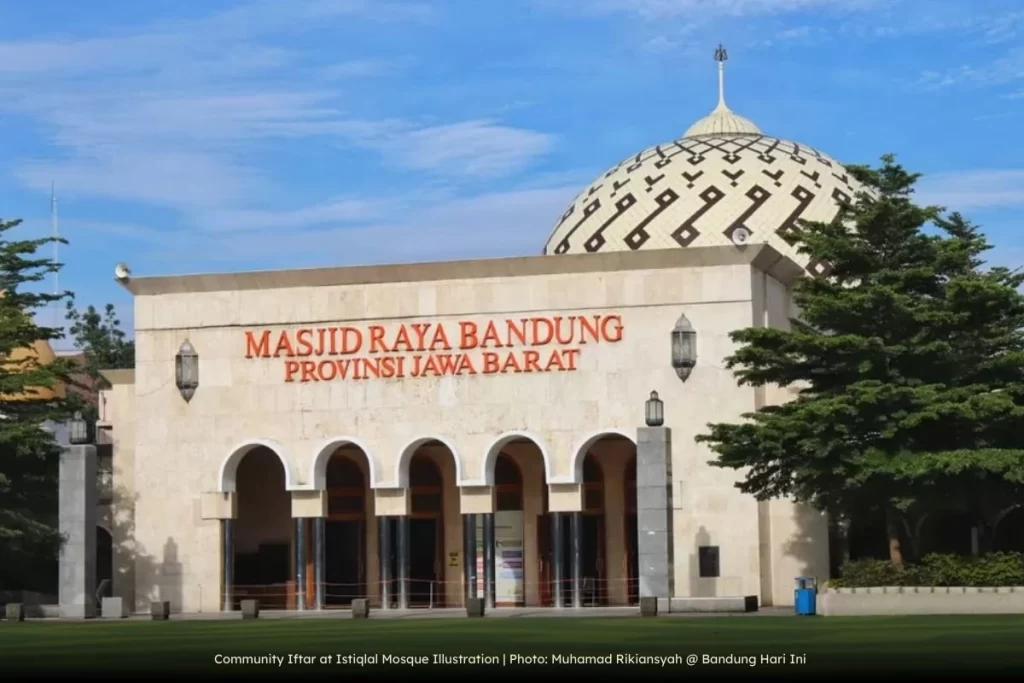
Located beside Asia-Africa Conference Road, the Bandung Grand Mosque serves as the official provincial mosque of West Java. During Ramadan, the mosque becomes a lively center of activity, distributing around 1,000 free takjil packages daily to worshippers and visitors. Its central location near the city square makes the atmosphere of breaking the fast especially vibrant and communal.
jogokariyan mosque, yogyakarta

Yogya has become nationally recognized for its Ramadan programs. Its open iftar system is efficient and structured, yet accessible. Travelers who attend are not separated from locals. They become part of the same collective rhythm.
food as a social bridge
In these gatherings, food carries deep social meaning. The collective silence before sunset shifts into shared action the moment the call to prayer begins.
This transition creates an immediate connection, even among strangers. Conversations are typically brief and unforced, often starting with a friendly question about where you are from. Food becomes a bridge simply because it is shared equally.
practical guide for travelers: how to participate respectfully

If you plan to join a community iftar, follow these practical considerations to ensure a respectful experience:
- Arrive Early: This ensures you can integrate smoothly into the seating arrangement before it gets crowded.
- Wear Modest Clothing: It is highly appreciated, especially in mosque environments; ensure shoulders and knees are covered.
- Respect the Spiritual Context: You are not required to fast, but being aware of the sacred timing enhances the experience for everyone.
- Wait for the Call to Prayer: It is essential to wait for the official signal before taking your first bite or sip.
- Observe and Blend In: Watch how locals behave and adjust naturally. The goal is not to “perform” cultural knowledge, but to belong with one another.
These small gestures reflect an important principle in #TravelPositive: approaching local traditions with curiosity, humility, and respect.
reframing travel through participation
Indonesia’s tourism narrative frequently highlights landscapes, heritage sites, and culinary diversity. During Ramadan, community iftar offers a different entry point into the country’s identity.
It reveals how generosity operates structurally.
It demonstrates how public space can temporarily transform into shared dining rooms.
It shows how belonging can exist beyond identity categories.
In this sense, community iftar reflects an approach to travel that resonates with the spirit of #TravelPositive, a perspective that encourages travelers to engage with places through respect, empathy, and meaningful participation rather than passive observation. Instead of simply witnessing culture from a distance, travelers become part of a moment shaped by local values and social connection.
For travelers seeking meaningful engagement rather than surface-level interaction, community iftar in Indonesia stands as one of the most inclusive travel experiences available during the holy month.
Not because it is designed for tourists, but precisely because it is not.