For many travelers visiting Bali, Nyepi often sounds like a unique holiday: the airport closes, the streets fall silent, and an island known for its vibrant energy suddenly becomes completely still.
But for the Balinese people, Nyepi is far more than a day without activity. It is a collective moment of reflection built around a central philosophy known as Catur Brata Penyepian.
These four principles teach something rarely practiced in modern life: the power of choosing restraint.
For travelers who want to understand Bali more deeply, learning about Catur Brata Penyepian is not just about travel etiquette. It is about seeing how an entire community practices intentional living, or living with conscious awareness.
what is catur brata penyepian?

Catur Brata Penyepian refers to the four main prohibitions observed during Nyepi, the Balinese Hindu Day of Silence.
These principles guide the community to pause daily activities for one full day as a form of spiritual reflection and harmony with nature.
The four principles include:
- Amati Geni – no fire or light
- Amati Karya – no work
- Amati Lelungan – no travel
- Amati Lelanguan – no entertainment
For the Balinese community, these practices create intentional silence, a condition that allows space for personal introspection and social harmony.
the 4 principles of nyepi and their meaning for travelers

1. amati geni: no fire, no light
Amati Geni means refraining from lighting fires or using excessive light. Symbolically, fire represents energy, activity, and human ambition. By minimizing light, people are encouraged to quiet external impulses and return to inner calm.
On the night of Nyepi, Bali is even visible as dark from space. For travelers staying on the island, this becomes a rare opportunity to witness a remarkably clear night sky free from light pollution.
But beyond the visual phenomenon, Amati Geni reminds us that sometimes peace comes from the ability to pause.
2. amati karya: no work
The second principle is Amati Karya, which means refraining from work. In a modern world driven by productivity, stopping work can feel uncomfortable. Yet in the philosophy of Nyepi, taking a pause becomes a way to restore balance in life.
This also means understanding that public services, transportation, and tourism activities temporarily stop. Not due to limitations, but because the entire community is observing a shared day of reflection.
3. amati lelungan: no travel
For a traveler, this principle may feel the most noticeable. Amati Lelungan means refraining from traveling. Roads become empty, the airport closes, and people remain at home. Behind this restriction lies a deeper philosophy. Movement is paused so that people can stop moving physically and begin moving inward.
In the context of conscious travel, this principle reminds us that travel is not always about going somewhere. Sometimes, the most meaningful experiences happen when we pause and observe.
4. amati lelanguan: no entertainment
The final principle is Amati Lelanguan, which means refraining from entertainment. Televisions are turned off, music stops, and recreational activities are suspended. The purpose is not to remove joy, but to create space for deeper awareness.
Without the distractions of entertainment, people have the opportunity to reflect, meditate, or simply experience silence. For travelers used to fast-paced itineraries, this experience often becomes a reminder that stillness itself can be a meaningful part of the journey.
why restraint is central to nyepi

When viewed as a whole, Catur Brata Penyepian is not merely a set of prohibitions. It teaches one central value: restraint as a conscious choice. In a world that constantly pushes us to do more, own more, and move faster, Nyepi demonstrates the power of saying “no.”
Refraining from work, travel, entertainment, and excessive activity opens space for things often overlooked: reflection, balance, and connection with nature.
parallels with conscious travel positive
For modern travelers, the philosophy behind Catur Brata Penyepian closely aligns with the idea of conscious positive travel. Both perspectives emphasize that travel should not simply be about consuming destinations, but about being aware of the local people, cultures, and environments that shape the places we visit.
This perspective reflects the core values of travel positive where travel becomes a relationship between people, nature, and culture, rather than a transaction. Understanding traditions like Nyepi allows travelers to appreciate the cultural wisdom that guides how communities live in balance with their surroundings.
When travelers understand and respect Nyepi, they do more than follow local rules. They engage with a cultural practice that demonstrates how humans can live more harmoniously with both nature and community traditions.
In just one day of silence, Bali quietly shows the world that sustainability does not always begin with technology. Sometimes, it begins with cultural values and the collective choice to practice restraint.
conclusion: a lesson from nyepi for every traveler
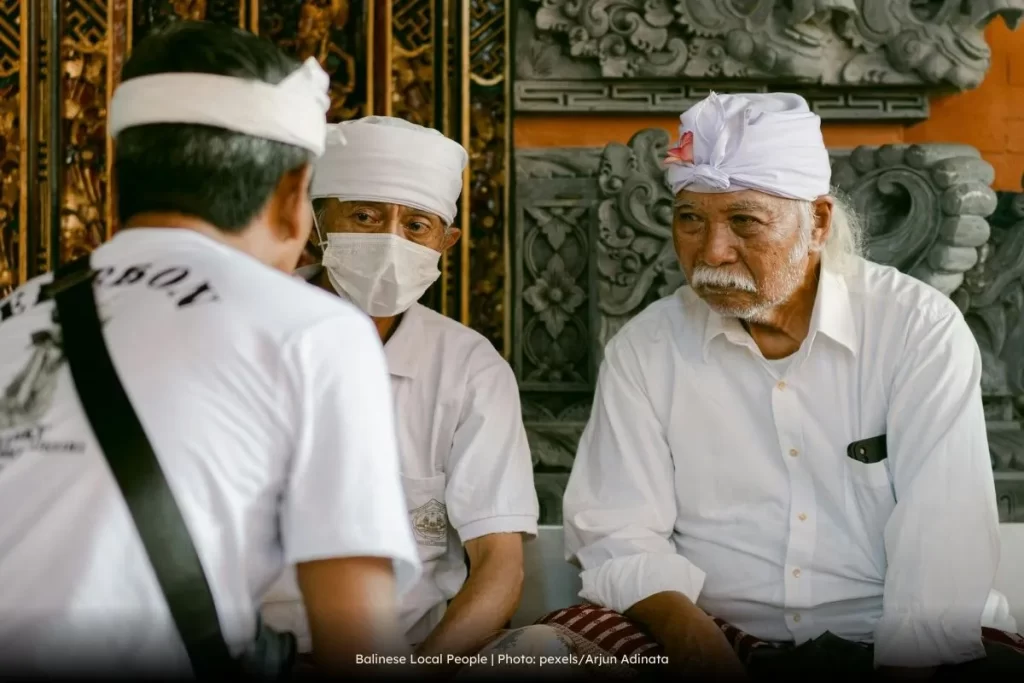
Catur Brata Penyepian teaches that silence is not emptiness. It is space for reflection.
The four principles of Nyepi, Amati Geni, Amati Karya, Amati Lelungan, and Amati Lelanguan create a day when the entire island of Bali pauses from its usual rhythm.
Understanding this philosophy offers travelers a new perspective on travel itself. Sometimes, the most meaningful experiences do not come from the places we visit, but from how we choose to be present within them.
If you plan to visit Bali during Nyepi, take the opportunity to experience something rare in modern travel: a silence filled with meaning.